Winter wardrobe TLC: How to wash and store your favorite sweaters
Published on February 23, 2026
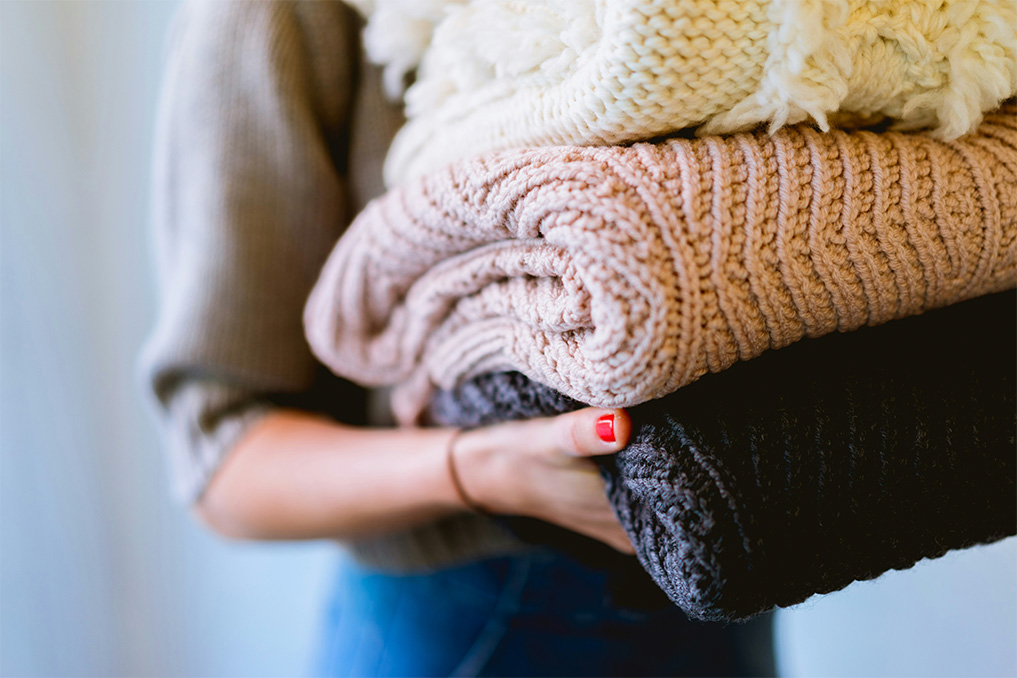
WASH (as gently as you can!)
All knit sweaters require gentle care, but some fibers can handle a bit more of a tussle than others. The best practice is to check individual garment labels, but here is a helpful rule of thumb for classifying sweater fabrics:
- Animal fibers (wool, merino wool, cashmere, mohair, angora) → gentlest care
- Plant fibers (cotton, linen/flax, bamboo, hemp, ramie) → gentle care
- Synthetic fibers (acrylic, polyester, nylon, lycra, rayon → easiest care
For sweaters with fiber blends, care for the sweater according to the most delicate fiber category.
Knits do best when washed in cold water. For animal fibers, this typically means washed by hand in a small basin or sink. Most plant fibers and synthetic fibers can tolerate a cold wash on delicates in the washing machine, but turn them inside out before washing to lessen friction!
Any gentle detergent is acceptable for plant and synthetic. Specialized wool detergent can be helpful, but if you are in a pinch, a small dab of shampoo can work for many animal fibers, which are, after all, hair!
While proper washing is pivotal, avoid overwashing your knits to prolong their life! If a full wash isn’t essential, you can air out your knits in between wears. A rolled sweater, firmly zipped into a freezer bag, can be placed in the freezer overnight to refresh fibers and deodorize. Wearing an undershirt can also help keep sweaters fresher for longer. Keep in mind that a thorough wash once or twice a season is often enough!
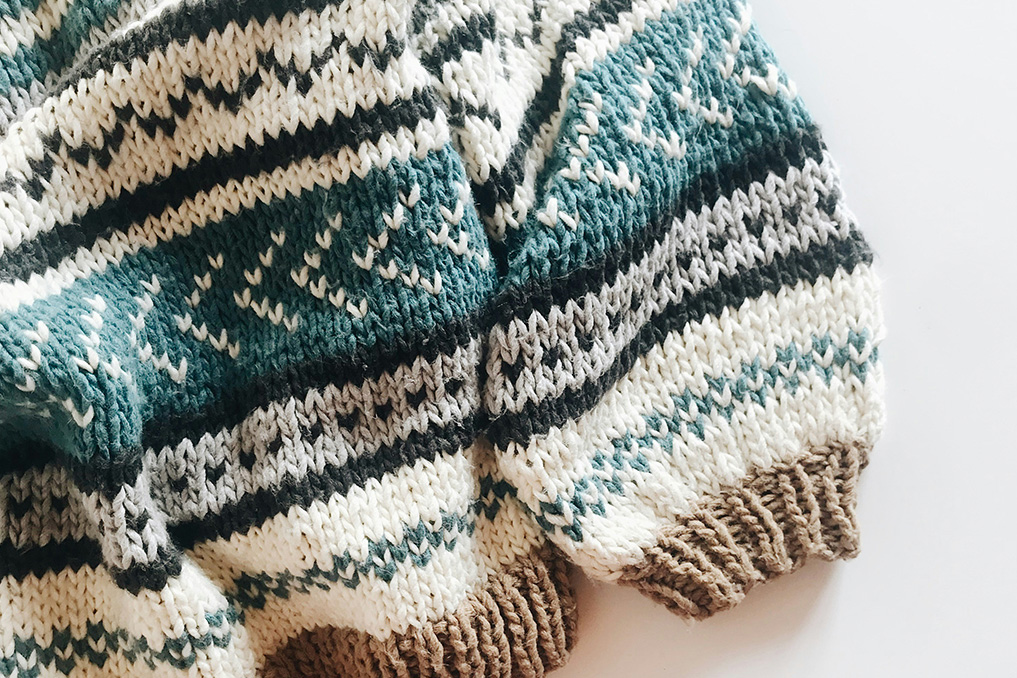
DRY (lying flat)
Synthetic fabrics can handle a gentle tumble in the dryer, but animal fibers and plant fibers need to air dry. Sweaters should always be laid out flat to dry. Collapsible mesh sweater drying racks are perfect for this, but you can also lay them out on top of a clean towel. Never hang sweaters to dry as it can stretch and misshape the knit. Avoid the temptation to leave them to dry near a heater or a radiator, as the heat can shrink the more sensitive fibers!
Ensure that the sweaters are completely dry before returning them to your drawer. If your laundry area is damp, consider running a low dehumidifier or a fan to help circulation.

STORE (loosely folded in a breathable container)
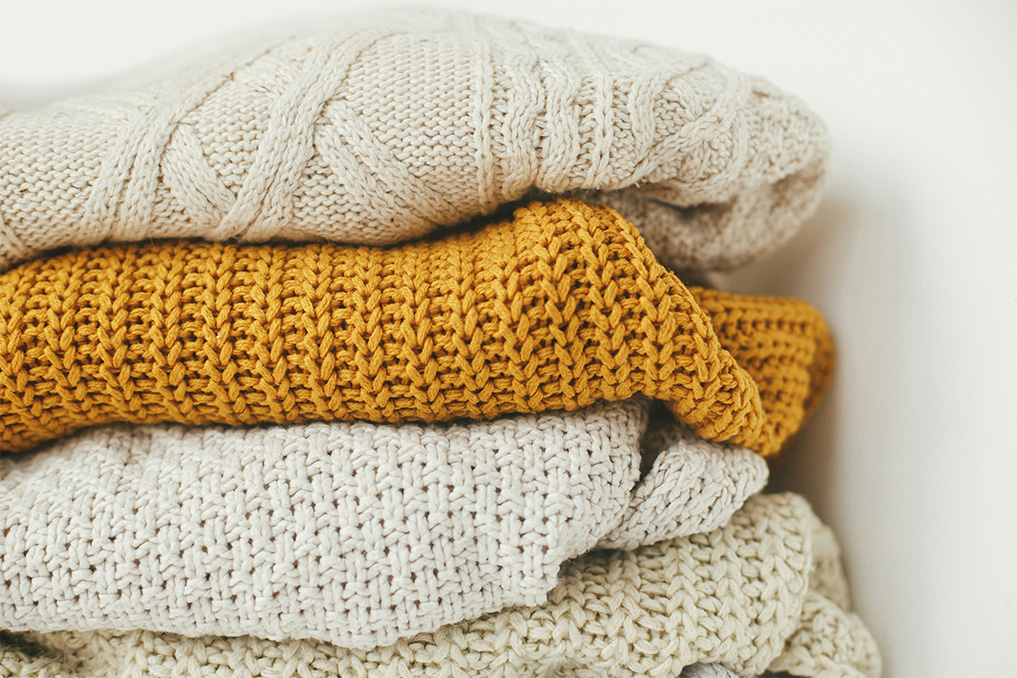
Sweaters should be folded for storage. Fold loosely, but evenly, to prevent stretching. Here are several options for folding styles. Heavier sweaters should be stacked on the bottom and lighter or more delicate sweaters get the top.
Ideally, if you have drawer space, you can store your sweaters there year-round. However, if you need to place them in a closet, consider a cotton storage bin or canvas tote. A breathable bin helps prevent moisture from being trapped inside. If you must use a plastic storage tote, ensure that the sweaters are completely dry and consider adding a desiccant. Vacuum bags can be great for space limitations, but should never be used with animal fibers since it can crush the delicate natural fibers. Find a cool and dry place and your sweaters will be well cared for until the next season.
PROTECT (keep bugs away and pills at bay!)
Lavender sachets and cedar blocks can be excellent non-toxic ways to protect your sweaters from insects. If you store your sweaters clean and dry, there is less risk of pests being attracted to them, but it is still advisable to take steps to deter moths. Cedar blocks can be sanded down each year to keep their smell fresh, and lavender sachets can be replaced when their scent fades. Never put essential oils directly onto your knits, and do not use these methods unless you are storing them in a breathable container.
Is your sweater pilling? This is not a sign of poor quality but rather expected maintenance for natural fibers! Short hairs like wool and cotton pill easily, but the solution is simple. If you have a vast sweater collection, it may be worthwhile to purchase a fabric shaver or a sweater comb. However, small scissors and an eye for precision can get the job done in 5-10 minutes per sweater. Never pull at the pills, as this can damage the weave, but snipping them off every year or two will vastly improve the look of your sweater and keep it in tip-top shape!
Related Posts

Why busy moms (especially) need a hobby
By Jessica Nardi

The great secret of holiness: A step-by-step guide to Confession
By Lindsey Fedyk


Shrimp Fra Diavolo
By Calista Boskus