The Phantom of the Opera: Why a rewatch is exactly what you need this Advent
Published on December 6, 2025
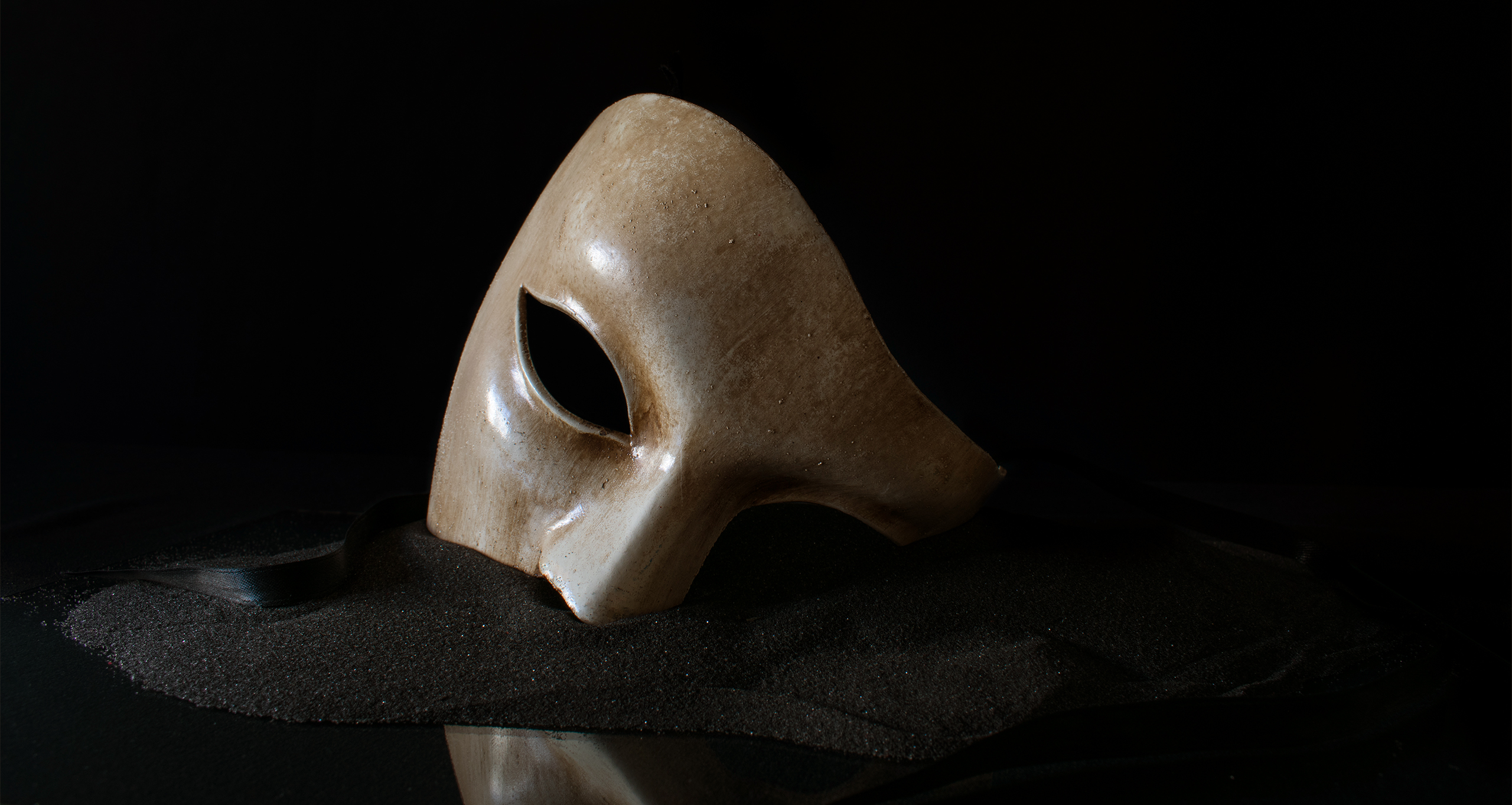
Advent-specific movies are hard to come by. The Phantom of the Opera (2004) is an unexpectedly appropriate movie to watch during Advent. It has themes of light and darkness, a haunting soundtrack, and yes, even a magical snowfall! This film will help you ponder fallen humanity’s need for a savior while you wait in hopeful anticipation this Advent season.
The lure of darkness
“Nighttime heightens, sharpens each sensation…
Turn your face away
From the garish light of day,
Turn your thoughts away from cold unfeeling light,
And listen to the music of the night.”
This haunting ballad sung by the Phantom is a poignant illustration of the lure of darkness. Fallen humanity is caught in a tension between concupiscence and our identity as adopted children of God. Throughout the film, the Phantom is a complex and very human depiction of darkness. He bears wounds from society’s mistreatment, but cannot rise above his unfortunate circumstances to become the hero. Advent is a fitting time to contemplate this lure of darkness. We cannot pull ourselves out of our sinful state apart from the grace and mercy of God — we need a savior. This side of heaven we will always be tempted by the empty promises of the darkness, but during Advent especially, we wait in anticipation because the Light of the World will soon be with us.
Disfigurement by sin
The physical disfiguration of the Phantom’s face is an obvious image for humanity’s disfiguration by sin. Just as the Phantoms’ face is a barrier to him living a healthy and well-adjusted life in the light of day, so too can a habitual life of sin keep us from the life of grace that God extends to us. The Phantom does his best to hide the disfigurement with his iconic mask, but the horror that Christine experiences when she removes his mask shows us that hiding his true self only harms his ability to enter into an authentic relationship. We all have woundedness that we try to hide. The Phantom’s pitiable state is a powerful reminder that only the Light can bring true healing, and no amount of disguise can cover a disfigured soul. The Phantom takes his efforts a step farther than a physical mask in his attempt to manipulate Christine to do his bidding. She sings the poetic line “I am the mask you wear” while the Phantom echoes “It’s me they hear.” Disfigurement by sin only becomes worse when we attempt to hide it, let it fester, and inevitably pass on its poison to those around us. This challenging lesson is tragically on display throughout the film.
Freedom is found in the light
“Let me be your freedom,
let daylight dry your tears,
I’m here with you, beside you,
to guard you and to guide you.”
Raoul sings these uplifting and comforting words to Christine in “All I Ask of You.” Raoul offers a more Christ-like counterpart to the dark themes personified by the Phantom. His love song to Christine is presented in striking contrast to the Phantom’s “music of the night” that glamorizes darkness and sensuality. Throughout the story, Raoul represents freedom and authentic love and is ultimately the only hero who is able to save Christine from the Phantom’s snares and her own confused delusions. Raoul’s true love for Christine is protective and secure, and is a reminder that pure love can always conquer the darkness.
Longing: possession vs. gift
Themes of longing are also prevalent throughout the film. The deep melancholy of the songs and the complexity of characters make it an emotionally involved viewing experience. Viewers are forced to grapple with their own sentiments as they bounce between sympathy for the Phantom and outrage at his crazed schemes. Longing is a powerful human emotion that does have its place in a virtuous Christian life, especially during Advent. But if longing is not properly oriented, it can become vicious. The Phantom’s longings are complex but often tip into obsession and possession. The Phantom desires control from his beloved as he sings “my power over you, grows stronger yet.” His infatuation with Christine is not a desire to serve, but a desire to possess. Conversely, Raoul longs for Christine with a more pure and balanced love. He desires marriage and is willing to lay down his life for her. Raoul’s longing is properly manifested as a love that is willing to give of itself and steps outside itself. This human self-gift mirrors, in a small way, the divinely perfect self-gift of God both within Himself in the Trinity, and in the gift of His Son as savior of the world.
At the very end of the story, the filmmakers leave us with a puzzling but compelling scene. Elderly Raoul visits the gravesite of his beloved Christine. On the tombstone, he finds a red rose left by the Phantom. Viewers are left pondering this strange parallel — are both lovers now on equal footing? Now that Christine is gone and can no longer be possessed, perhaps the Phantom has had a change of heart due to the compassion shown to him by Christine. Has he now come to understand love?
Related Posts

St. Joseph’s Day Bread
By Brittany Makely

10 Easter basket fillers that aren’t candy
By Grace Porto


Thank you for this thoughtful essay. I was a huge Phantom fan in its hey day but never would have thought of it in such a meaningful way. I would love to see more of your reflections on modern culture.
Great reflection⭐️
It is time for a replay! Thanks for the critique and insight!