The great secret of holiness: A step-by-step guide to Confession
Published on February 21, 2026
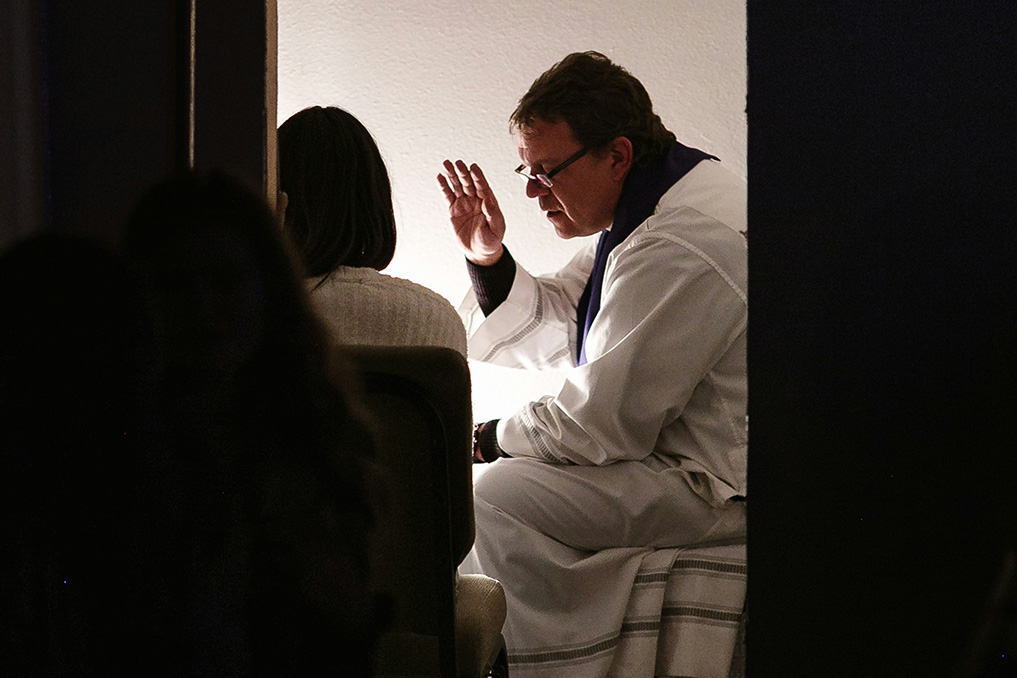
As the liturgical colors turn purple and the Church enters the desert with Christ for 40 days, many faithful Catholics have virtue-building and entering into a penitential spirit on their minds. While the sacrament of Penance and Reconciliation can (and should!) be received all year, the liturgical season of Lent is a special time Mother Church provides for the faithful to focus on ways of overcoming vice and growing in love and likeness of Christ.
Whether you’re a regular penitent or hoping to come to a better understanding of the sacrament, read along for some practical tips, burning questions, and spiritual insights from an interview with Father Louis Cona, a priest of the Diocese of Rockville Centre, New York.

What is sin and how does confession help?
The Catechism of the Catholic Church (1440) states that sin is “an offense against God, a rupture of communion with him” while also damaging “communion with the Church.” For conversion and repair to occur, the sacrament of Penance and Reconciliation are a great gift that “entails both God’s forgiveness and reconciliation with the Church.”
The sacrament of Reconciliation is one of the two healing sacraments. The penitent is there to receive the “grace that heals,” said Fr. Cona. “That same free choice of the will that sinned now seeks reconciliation to heal the will and the heart.”
When we confess our sins to the priest, we must remember it is not the priest but God alone who forgives sins. Christ, in His ultimate act of sacrificial love, has redeemed us with His blood and in His mercy, forgiven us.
“But he entrusted the exercise of the power of absolution to the apostolic ministry,” states the catechism (1442). “The apostle is sent out ‘on behalf of Christ’ with ‘God making his appeal’ through him and pleading: ‘Be reconciled to God.’”
And while it is vital to remember the healing and saving grace does not come from the conversation between the confessor and the penitent, it’s perfectly normal to have some questions about how one’s time in the confessional should go.
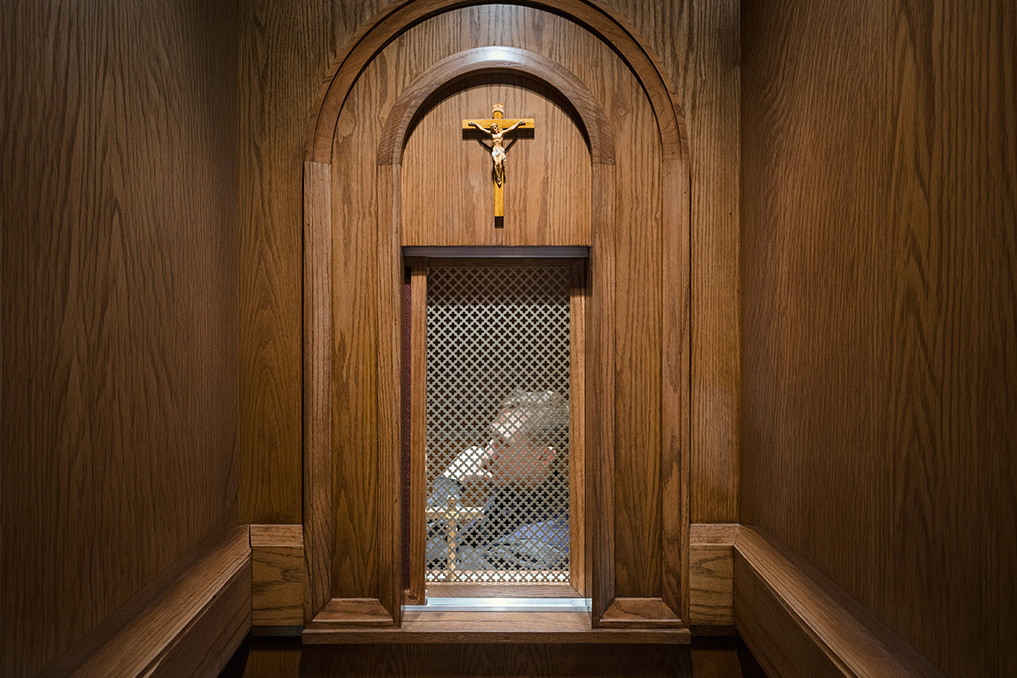
How much (or how little) should I tell the confessor?
The general rule of thumb is to tell the priest the transgression you committed and how many times. Fr. Cona’s advice is “less is more” as a general guideline. “However, sometimes the priest needs a little more context. But I would allow the confessor to guide that. For example, if a penitent says they lied three times in the past month, the priest may find it helpful to know who they lied to. Trust the confessor to lead you,” explained Fr. Cona.
Fr. Cona mentioned that sometimes it may feel healing for the penitent to be more specific, and then it is perfectly acceptable for them to provide more context. With lines forming outside of the confessional, however, be mindful that the sacrament doesn’t require a backstory. Fr. Cona reiterated that if the priest thinks more details would be helpful, then he can ask for that information.
Does my parish priest remember my sins?
It might feel difficult or embarrassing to spell out one’s faults and shortcomings in the confessional and then chat with your parish priest at fellowship after the liturgy.
Fr. Cona was quick to say, “No, priests don’t remember specific sins. Sin is boring, it’s not exciting. We’ve heard it all. It’s virtue that’s exciting, not vice.”
There’s grace surrounding the sacrament, and not to mention poor memory and the sheer volume of confessions heard each week.
If the temptation arises to withhold sins or skip confession out of embarrassment or shame, go behind the screen (remember, it’s not about conversing with the priest!) and ask Jesus for courage and a true desire for the sacrament that gives both forgiveness and healing.

Where does shame come into play?
Anxiety that may arise surrounding the sacrament of Reconciliation might stem from feelings of shame. Fr. Cona said that when shame cuts in, we have to be aware of the actions that follow.
“The enemy makes us feel shame and wants us to turn inward. The Good Spirit convicts us in order to break us out of ourselves and run to God,” he explained. “Any time shame suffocates or turns us inward or makes us quiet, that’s a red flag. That’s from the evil one. Ask the Holy Spirit, the Good Spirit, to convict us and break us out of ourselves and turn toward God and the Holy Church.”
“A good confession shouldn’t be embarrassing, but exciting,” Fr. Cona added. “It’s all about coming to know yourself better. A good confession helps us overcome shame, heal our will, and come to a better knowledge of self. Give Jesus the burden, clear it out, bring it into the light.”
How often should I go to confession?
As confession is about coming to a better self-knowledge in order to master our impulses and passions, Fr. Cona recommended about once a month for a layperson. Catholics are required to go to confession at minimum once a year, but Fr. Cona explained that a good and true examination of conscience would be really difficult with that length of time between confessions.
As a person returns regularly to the sacrament they may begin to see trends in their temptations and occasions of sin, and that will greatly help with their knowledge of self as they aim to grow in self-love.
“If you wait six months, it’s hard to look back and assess,” Fr. Cona said. “Once a month allows you to really take stock of the ways you failed to follow the Lord and grow in that self-knowledge, which will, God willing, bring about growth in virtue.”
There are beautiful devotions, such as the first Saturday devotion, that require a monthly Confession. Finding a devotion to connect confession with is a rich and powerful way to encounter the sacrament and grow in greater love of God and His church.
A confessor will sometimes say, “Praise God for a good Confession.” Is there a bad Confession?
Fr. Cona agreed that he will thank God out loud for a good Confession, and hopes that gives confidence to the penitent. He said that some qualities of a bad Confession would be one where the penitent shows no contrition, where the penitent isn’t prepared and didn’t adequately examine their conscience, or where the penitent is afraid to confess and withholds sin.
“If the penitent gives into fear and doesn’t bring sins into the light, that’s not allowing the healing power of the sacrament to transform them,” he said. “A penitent needs to jump in and continue recognizing the Good Spirit bringing them back to God, not turning inward.” Another quality of a bad Confession would be one where the confessor has to pull teeth or the penitent only provides very vague examples of sin.
“Let’s say the person says ‘I have bad thoughts.’ The priest would want them to elaborate or explain other transgressions,” Fr. Cona explained. “But when you’re out of sync with going to Confession or even just knowing yourself well enough to name your sins, you become numb to the movements of God.”
Any tips for those who struggle with scrupulosity?
Scrupulosity is an anxious and excessive fear of sin and doubting of one’s actions, sometimes finding fault and transgression where there is none. Fr. Cona encouraged anyone dealing with scrupulosity to turn to the saints who struggled with it. Additionally, Fr. Cona said to “lean into God’s mercy and trust the confessor’s advice, not doing any more penance than the confessor recommended.”
For everyone, and especially those who have a more scrupulous mindset, Fr. Cona said it helps to shift the perspective of what a spiritual life actually is. He said, “View the spiritual life, not as an obstacle course of do’s and don’ts, but of friendship with Christ. He is our friend. We have a deeply loving Father. Assess your moral life in the context of friendship with Jesus and His love for you.”
Confession is a treasure of the Church
The sacrament of Reconciliation is not a reset, but a moment of true growth.
“It’s not about resetting the scoreboard like at a basketball game, but it’s an upward climb toward virtue. The sacrament of Reconciliation is healing the will, healing the heart, the affections, the loves, and to help bring it to a higher plane, Fr. Cona explained. “Look what Jesus does, He takes the simple loaves and fishes and elevates them, He puts them on a higher plane. We are always moving forward when we walk with Jesus, not just going back to square one. With Him we go forward in love and purity.”
Fr. Cona added that he never feels “more a priest” than at the altar during the Holy Sacrifice of the Mass and in the confessional.
“The sacrament of Reconciliation is a great secret of holiness. It’s a true treasure of the Church,” he said.
As the Church journeys for 40 days and awaits the glory of Christ’s victory over sin and death, let us run to God’s loving mercy in the sacrament that forgives and heals.
Related Posts


Shrimp Fra Diavolo
By Calista Boskus

7 ways to dress femininely and artistically
By Ava Cilento

Lent challenges for the whole family!
By Grace Porto