The people who walked in darkness: The origins of Christmas lights
Published on December 22, 2025

“The people who walked in darkness have seen a great light; those who dwelt in a land of deep darkness, on them has light shined.”
As winter drags on, the days grow shorter and the nights extend until much of our days are spent in darkness. As the shadows grow long, strings of lights appear as people all over the world begin their preparations for Christmas day. Red, yellow, green, pink, and white, these colorful lights are synonymous with Christmas in much of the world.
Where did Christmas lights originate? Is there a deeper meaning hidden behind their joyful twinkling?

Oh Christmas tree
To discover the origin of Christmas lights, we need to go back to the origin of the Christmas tree. This tradition dates back to Germanic paganism and nature worship, which was then baptized and adopted by the newly converted Germanic tribes and peoples to become a Christian symbol.
The tree would be set up during medieval moral plays to represent the tree of knowledge of good and evil. It was hung with apples to tempt Adam and Eve, who, eating of them, plunged the world into the darkness of sin. Later the tree, still hung with various fruits and decorations, became affiliated with Christmas, with its evergreen needles symbolizing the eternal nature of Christ.
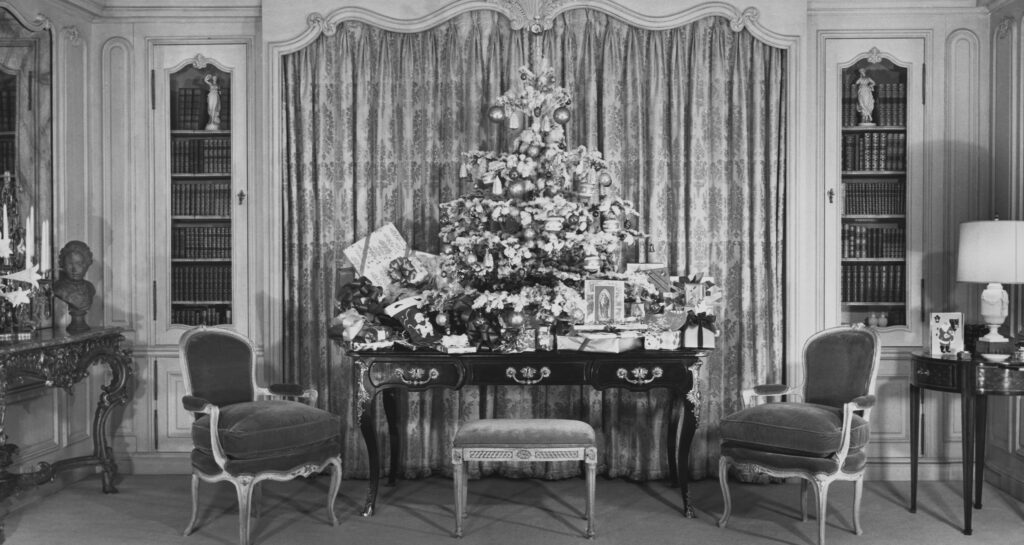
The tree was decorated with ornaments of various intricacies, small wafers to represent the holy Eucharist, strings of berries and popcorn, small figurines and other ornaments. Small candles were fixed to the tree with wax or pins in order that the decorations may be seen better. Later, small decorative candle holders were made of metal. The tree would be cast in a gentle flickering light, which added a lovely glow to the darkness of winter.
It’s electric
By 1882, the Christmas tree had made its way from Germany to the White House. President Franklin Pierce put up the first Presidential Christmas tree in 1856 and by 1870 freshly cut evergreen trees were being sold to Americans everywhere as they too began decorating the trees and placing their presents beneath their bows.
One of Thomas Eddison’s coworkers, Edward Hibberd Johnson, had an idea to revolutionize and capitalize the Christmas tree. He painstakingly handwired a string of 80 colorful lights and put them on display to the wonder of all who passed by. Two years later he outdid himself with a string of 120 colorful bulbs.
Electricity was not readily available and the production of such a festive wonder was not cheap. In 1900, a string of 16 bulbs went for a costly $12 (around $350 by today’s standards). However, by the 1930s Christmas lights became a staple of Christmas decorations everywhere, and Eddison’s company made a great deal of money.

Commercial or Christ-like?
While electric Christmas lights may have begun as a money-making scheme, they too help illuminate the Christian reason for the season. The original candles on Christmas trees helped better showcase the beautiful mysteries of faith represented in the ornaments. Our modern electric lights can shed light on the mystery of faith at the heart of the holiday season.
At the beginning of the Gospel of John, he writes of the coming of Christ: “The light shines in the darkness, and the darkness has not overcome it.”
Like the light that vanquishes the darkness, the coming of Christ into the world vanquishes the darkness of sin and death. He came in the darkness of a stable at Bethlehem to die on a tree for our sins. Now we string trees with lights as we remember the child who was born in darkness to be the Light of the world.
Christmas lights are beautiful. Many families will walk or drive around their neighborhoods clutching cups of hot cocoa and gazing at the elaborate and colorful displays. The lights make us pause and bring light to the darkness of the cold winter months.
Our spiritual lives too are brightened by the lights of the season. Whenever you stop to admire Christmas lights, remember that those lights are not just a commercial decoration but a reminder of the Light of the world, who was born to vanquish the darkness forever.
Related Posts

Easter outfits for the whole family
By Jessica Nardi

3 delicious desserts for your Easter spread
By Lindsey Fedyk

10 classic novels every girl should read before she turns 18
By Grace Porto

Gathering for a Paschal feast: An Easter dinner menu
By Calista Boskus
It gives us light in the darkness, just like our savior. I like that concept.
I get very disappointed when people write these articles and know so little of what they’re talking about. And what makes me even more sad are the editors who do not take the time to document the authenticity of what is being discussed. So much of the time they’re in this mode of, just publish! This leads to a great deal of error and misconception.
https://www.catholic.com/magazine/online-edition/st-boniface-and-the-christmas-tree
Couldn’t agree more. The celebration of the summer solstice dates back many 100s of year before Rome, not able to change the winter solstice pagan celebrations, usurped the practice and laid a random date for their religious purpose. Ancient societies worshiped the movement of the seasons, often based on agricultural cycles. They were pluralistic. When will Christians realize that they are not all that? That there are millions of people that don’t need gods to be good or the promise (sic) of afterlife to do right. Organized religion has done more evil that any other man made activity. How can anyone possibly be a catholic when the very basis of evil in the form of an organization that promotes and hides pedophiles and rapists, refuses to protect children by claiming children and women victims are responsible for their assaults?
You might want to google “All the good things done by organized religion”.
Have done, advanced course study that included pseudo-science and comparative religions.
Your comment has nothing to do with this article. Just some random person looking for a Christian website to spew and rant about their hatred of the faith on. Begone Satan!
Exactly!
Duh – of course it does; the pagan and christian winter celebrations. Deflect much?
How can something begone that doesn’t exist?
“One of the difficulties with this view is that it suggests a nonchalant willingness on the part of the Christian Church to appropriate a pagan festival, when the early church was so intent on distinguishing itself categorically from pagan beliefs and practices.”
So it’s easy to say, “Oh, yeah, don’t you know in the 300s that Christians just took all this pagan stuff?” And then you go back and read what the Christians of the 1, 2, 300s had to say, and they were really emphatic on how they were unlike the pagans and differentiated themselves in a variety of ways. So Hillerbrand explains, “A second view suggests that December 25 became the date of Jesus’s birth by a priori reasoning that identified the spring equinox as the date of the creation of the world, and the fourth day of creation when the light was created as the day of Jesus’s conception, i.e., March 25th. December 25th, nine months later, then became the date of Jesus’ birth.”
Now, we’re going to get into that a little more later because we’re going to see there’s plenty of historical evidence that that theory is actually the right one, but basically, this is what you need to know. The early Christians believed the world began on March 25th, the spring equinox, and that Jesus was also conceived on March 25th, the spring equinox, and that he died on that day. Now, you don’t have to agree with those beliefs, but the significant thing is those are not based on anything in paganism. Those are based on a Christian conception of cosmology of the days of creation, and of the importance of Jesus as the light and as the new dawn of the world. All of this stuff. So the early Christians in the 200s, not the 300s, were making this argument and saying, “Okay, well if Jesus was conceived on March 25th, do the math, nine months later, December 25th. That’s his birthday.”
Hilderbrand also adds that for a long time the celebration of Jesus’ birth was observed in conjunction with his baptism, celebrated January 6th. This is called Epiphany or Theophany, depending on if you’re the West or the East. But that’s pretty significant, because if the idea is the celebration of Jesus’ birth was to steal attention from one of the December pagan feasts, why celebrate it in January? And Hilderbrand is not alone. Andrew McGowan, in How December 25th Became Christmas for Biblical Archaeology Society, says most significantly, the first mention of a date for Christians, circa 200, and the earliest celebrations that we know about, circa 250 to 300, come in a period where Christians were not borrowing heavily from pagan traditions of such an obvious character.
So, the idea that this is just papered over paganism might be something everybody “knows” in quotation mark, but like so many things in the popular imagination or from the internet, it turns out not to really be true when you dig in.”
Excerpt from Catholic Answers
Thank you for the intelligent and thoughtful conversation. There is a lot to unpack here and would love to go point by point. Wish there was a way to have those direct conversations. Over the years I have reached out to the local religious organizations to have those conversations. Over a period of a year I reached out to christian and non-christian churches by telephone and email and the only one that engaged was the local Rabbi. The catholics were the worse as they kept promising that someone would contact me and never did. I don’t think that I am trying to paper over anything, just bring up the facts that like all religions the christian’s were pragmatic in their faith by usurping pagan etc. practices when their faith recruiting was not enough. Belief is just that, no credible proof of any divinity. How do you know that your god is the one and only, there are many to choose from and they all say that their’s is the one and only truth?
It’s too bad public school officials don’t convene a national seminar inviting Catholic officials and scholars to explain to them how to resolve the sexual abuse of minors that is plaguing their schools.
Of central interest to the Catholic League is the proportion of the clergy who had a substantiated accusation made against him in the past year. There were two. That’s right. There were two substantiated accusations in the entire nation made against 48,176 members of the clergy. This means that a whopping 0.004 percent had a substantiated case of sexual abuse made against him by a minor.
There is no institution in the nation, secular or religious, where adults regularly interact with minors which can beat this record. None.
You mean the same catholic officials that condoned the sexual abuse of children/women by doing nothing about the rapists? Or the ones that were complicit by just moving the predators to other parishes, so they could repeat the behaviors?
Edison is spelled with one d not 2!
And “bow” is spelled “bough.”