Irish Thunder: Blessed Fulton Sheen and the drama of truth
Published on September 22, 2026
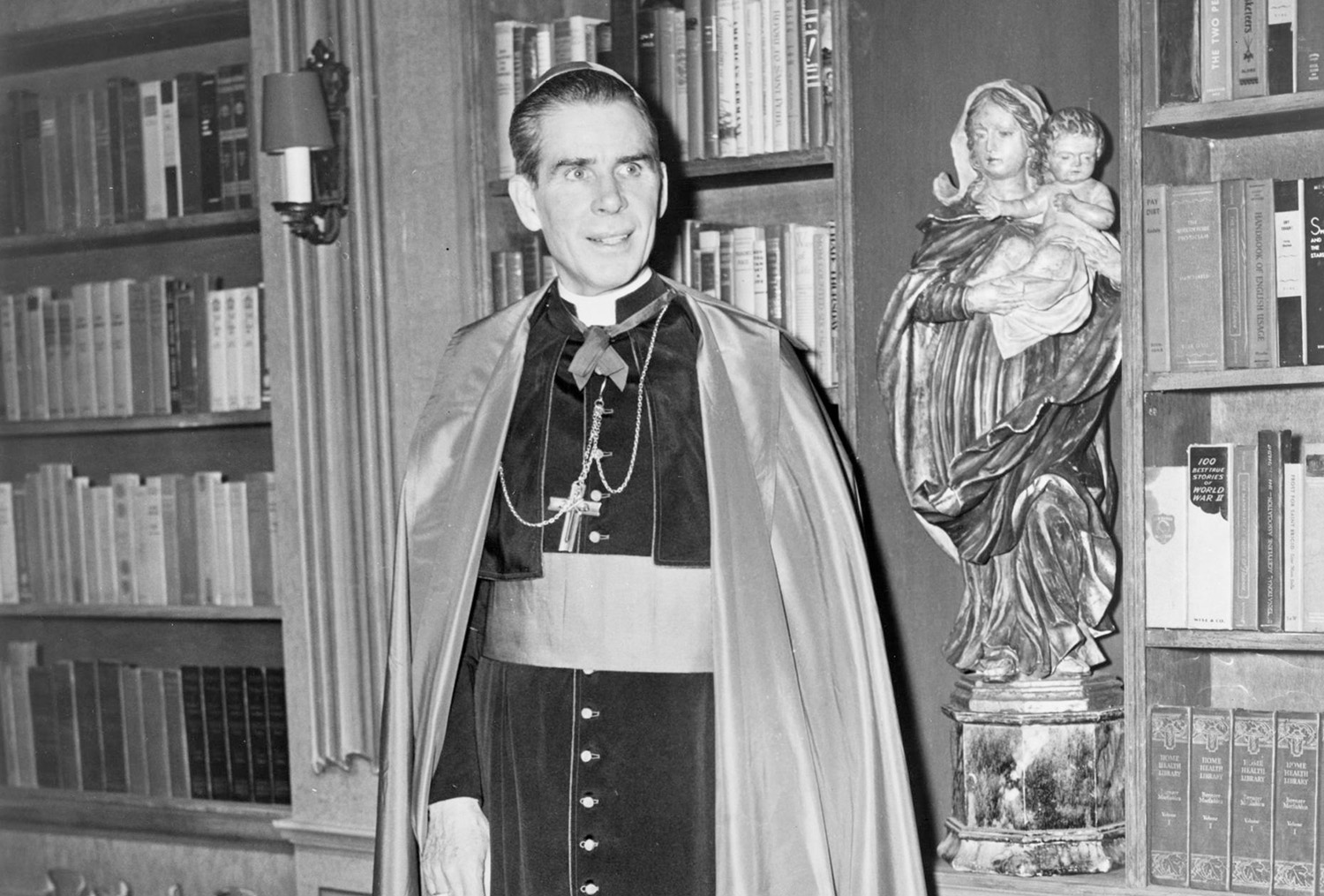
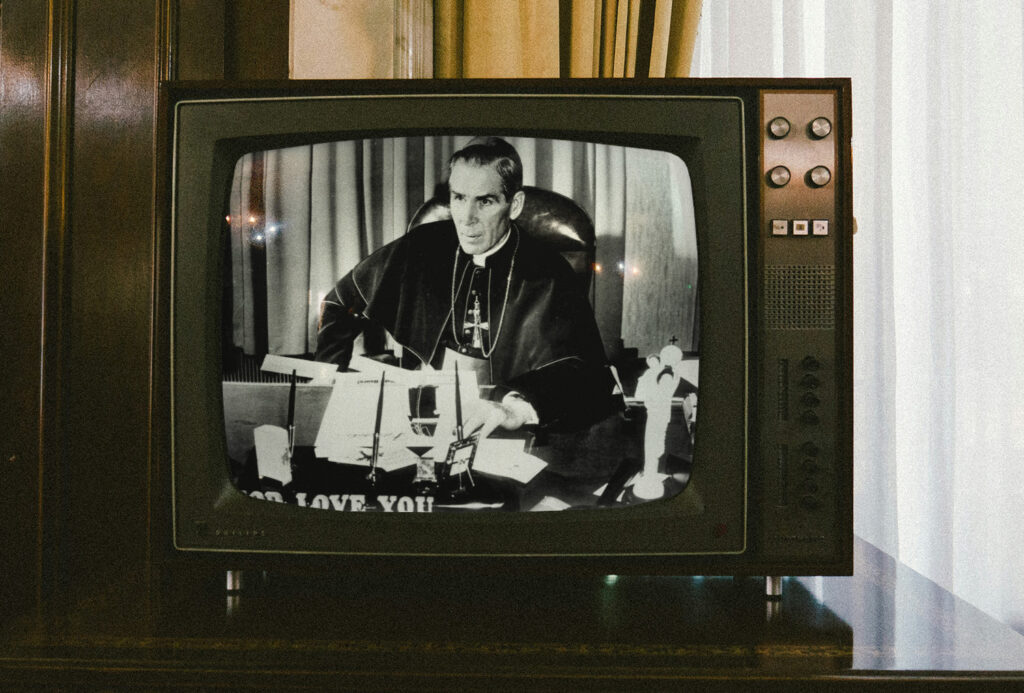
Every now and then, episodes of Blessed Archbishop Fulton J. Sheen’s Life Is Worth Living flicker onto EWTN. Even through the grainy filter of mid-century television, the effect is instantaneous. Dressed in a flowing ferraiolo, chalk in hand, and fixing his piercing gaze directly into the camera lens, he stops you in your tracks.
What is striking isn’t merely the vintage charm; it is how uncannily contemporary he feels. Like a masterfully delivered Sunday homily that inexplicably zeroes in on exactly what you need to hear, soon-to-be Blessed Sheen’s broadcasts cut through time. Seven decades later, his voice still convicts, entertains, and inspires. He remains profoundly prophetic because the spiritual fault lines he mapped in the 1950s — the hollow promises of collectivism, the despair of consumerism and the lure of toxic forms of psychology — are the very battles we are fighting today.
As the Church celebrates his beatification, this milestone should be far more than a fond historical retrospective. It is an invitation to a deep, joyful renewal of the Church’s voice in the modern world.

The lost art of masculine drama
Modern digital media is choking on rage. If you look at today’s online commentators, “boldness” has been reduced to sneering hostility, while “charity” is too often confused with timid compromise. At the same time, we have developed a somewhat narrow understanding of Christian joy. In our culture, joy is frequently depicted as something light, soft, or bubbly. For men in particular, this shallow caricature can feel unnatural and unconvincing.
Blessed Fulton Sheen offered a completely different model: unapologetic masculine gravitas paired with luminous warmth.
Blessed Sheen’s joy was not frivolous; it was dramatic, commanding, and fiercely grounded in the reality of the Cross. His drama was not the depressed or sinful kind that keeps people addicted to TV shows they shouldn’t watch.
Rooted in the joy of his faith, Blessed Fulton Sheen wielded an intense, theatrical presence — what can only be described as his trademark “Irish Thunder.” He could command the stage with thunderous conviction against the errors of the age, only to disarm the entire room moments later with a self-deprecating joke about his wardrobe, a playful nod to his off-camera “angel” cleaning the blackboard, and a warm, sincere smile.
He showed that authentic Christian strength isn’t cynical or menacing. Men today long for that combination of high-stakes drama, intellectual courage, and openhearted charity.

A bishop, not a partisan: Confronting both capitalism and collectivism
Part of Blessed Sheen’s enduring genius was that he never allowed himself to become the mascot of a secular political faction. He was not a partisan pundit; he was a bishop of the Catholic Church.
When Blessed Sheen launched his famous broadsides against Soviet communism, he did not treat Marxism merely as an economic rival to the West. Having read Marx, Lenin, and Stalin closely, he diagnosed Communism, alongside the Church’s social encyclicals, as a tragic Christian heresy — a pseudo-religion that took Christian concepts of brotherhood and care for the poor and stripped away the transcendent.
Crucially, Blessed Sheen was equally unflinching in his critique of Western materialism. In works like Communism and the Conscience of the West, he pointed out that totalitarian collectivism was born from the moral failures of raw, laissez-faire capitalism that treated human beings as mere economic units. He warned that the West could never defeat Communism through secular wealth or military might alone; if society abandoned its moral and spiritual foundations, it would simply slide into socialism as a shortcut to materialistic ends.
“Monopolistic capitalism concentrates wealth in the hands of a few capitalists, and communism in the hands of a few bureaucrats, and both end in the proletarianization of the masses,” he wrote.
Blessed Sheen stood firmly on Catholic social teaching, showing that the only real answer to the world’s hunger is Christ.

Legitimizing psychology grounded in truth
Blessed Fulton Sheen brought that same balanced brilliance to the emerging world of modern science and mental health.
In the 1940s and 50s, when Freudian psychoanalysis was taking the intellectual world by storm, Blessed Sheen was a pioneer in validating legitimate psychology for healing mental suffering. Yet he drew a firm line where Freudian ideology overstepped into philosophy, reducing human motivation to raw animal drives and treating moral conscience as a pathology.
In his landmark book Peace of Soul, Blessed Sheen warned against psychoanalysis meant to anesthetize guilt through worldly means and urged Catholics to seek true “peace of soul,” which comes only from confronting sin, taking moral responsibility, and receiving divine mercy.
“It takes no courage to admit that one is guiltless, but it takes a heroism of which few are capable to take the burden of one’s guilt to Calvary and to say to the Christ on the Cross, ‘That Crown of Thorns my pride placed there; those nails were driven by the hammer of my avarice; the scourges that fell on Thy flesh were swung by my lusts and my cupidities,’” he wrote.
Rediscovering Blessed Sheen
If we want to see our culture renewed, we cannot rely on the bitter methods of modern media outrage. Getting past the selfishness and false philosophies of our age requires returning to the full, unvarnished beauty of the Gospel.
Blessed Fulton Sheen proved that you do not have to dilute the truth to win the hearts of millions. He met the secular world on its own airwaves with beauty, intellectual rigor, artistic flair, and genuine love for souls. As we celebrate his beatification, let us recover that apostolic spirit — speaking with the drama of truth, the warmth of authentic joy, and the unwavering conviction that life, in Christ, is truly worth living.
Related Posts


5 ways to prep your yard for outdoor fun this fall
By Rose Church

A girl’s guide to shopping for a wearable Miraculous Medal
By Ava Cilento
Bishop Sheen: Beatified in prime time
By Johanna Duncan