Love and detachment: Why everyone should read ‘Till We Have Faces’
Published on July 12, 2026

I’ve always struggled to understand the Christian tradition of detachment, even of friends and family. Did it mean that I shouldn’t fully love those around me? That I should reserve some part of my heart from them?
Then I read the C.S. Lewis novel Till we Have Faces. A retelling of the ancient Greek myth of Cupid and Psyche, the novel explores how love, when it becomes possessive and jealous, can prevent the beloved from flourishing. It is also a parable for how our love for others must be subordinated to our love of God.

Plot summary
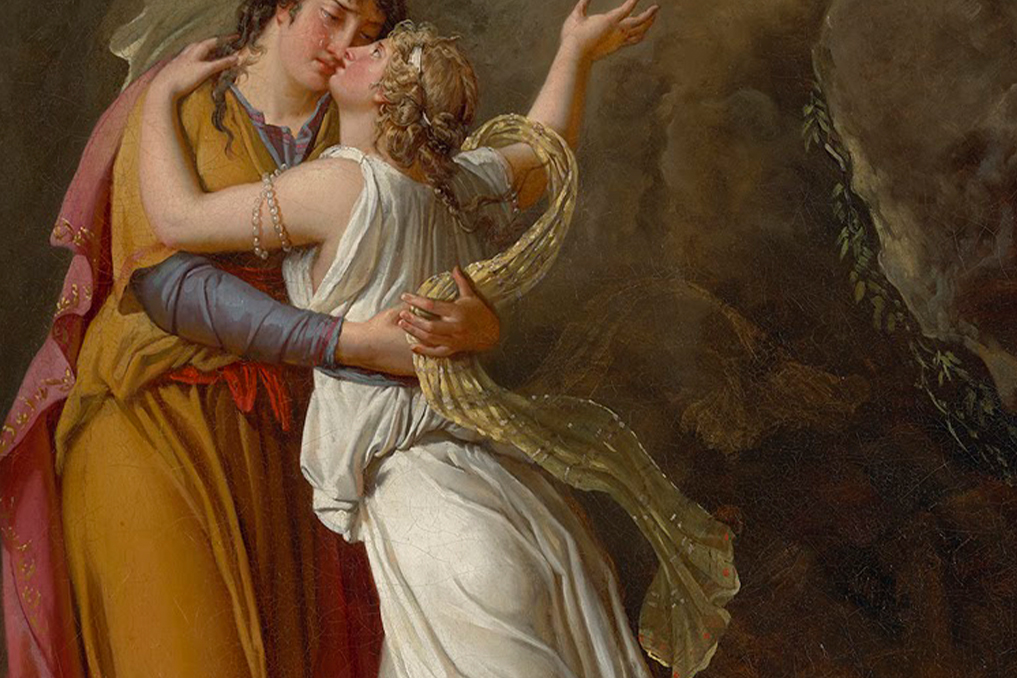
The novel is told from the perspective of Oural, a princess in the fictional kingdom of Glome. Oural adores her beautiful younger half-sister, Psyche.
The town treats Psyche almost as a goddess, but then turns on her and blames her for a fever that ravishes the city. The high priest announces that Psyche must be sacrificed to Ungit, the goddess of love. She is tied to a tree on a mountain and abandoned.
Oural is tortured by the loss of her sister and journeys to the mountain where she was sacrificed to bury her remains. She is shocked to find her alive, and her sister tells her that she is married to the god of the mountain, who only comes to her in the darkness of night, and forbids her from seeing her face.
Convinced that her sister is mad, Oural demands that she test the “god” by holding a candle to his face at night, and threatens to kill both Psyche and herself if she doesn’t comply. Psyche is saddened but agrees. Oural later learns that Psyche has been sent into exile. Meanwhile, the god tells Oural, “You also shall be Psyche.”
Possessive love and resentment
Oural writes that her book is a complaint against the gods, blaming them for all her misfortune:
“Now, you who read, judge between the gods and me. They gave me nothing in the world to love but Psyche and then took her from me. But that was not enough. They then brought me to her at such a place and time that it hung on my word whether she should continue in bliss or be cast out into misery.”
However, Lewis indicates that devouring, possessive love is the cause of Oural’s misfortune, which becomes very clear when she goes to comfort Psyche before her death.
Psyche even tells Oural that she has always had a longing for death, sparking Oural to ask, “Ah, Psyche, have I made you so little happy as that?”
Psyche explains that it was “when I was happiest that I longed the most,” adding, “For indeed it now feels not like going, but like going back. All my life the god of the Mountain has been wooing me. Oh, look up once at least before the end and wish me joy. I am going to my lover.”
When Oural hears this, she becomes angry that her sister isn’t more pained by their separation.
Oural’s possessive love is again demonstrated when she issues her ultimatum to Psyche to test the god of the mountain to stop Oural’s wrathful killing. This love, Psyche tells her, is like hatred.
“Oh, Oural — to take my love for you, because you know it goes down to my very roots and cannot be diminished by any other newer love, and then to make of it a tool, a weapon, a thing of policy and mastery, an instrument of torture — I begin to think I never knew you,” she tells her.

Devouring love in our lives
Reading the novel, I was struck by Oural’s capacity for love, and how quickly that was twisted into jealousy. I saw how possessive love had crept into relationships in my own life, when I started caring more about what a person meant to me than their ultimate flourishing.
The Catechism of the Catholic Church defines charity as “the theological virtue by which we love God above all things for his own sake, and our neighbor as ourselves for the love of God.” So when we love our neighbors, in order to love them fully, we have to acknowledge the ultimate purpose of our love — that this person is created in the image and likeness of God, and created for God’s love.
When we start loving our neighbor for our sake rather than God’s sake, our love becomes like Oural’s devouring love. We don’t want anything to separate them from us, so we discourage them from growing, changing, or even becoming more prayerful, lest they become “too good” for us. It ends up poisoning the very thing we seek to preserve above all else — our relationship with this loved one.
Jealousy is a natural human temptation, but Till we Have Faces is a haunting reminder of just how destructive it can be. We must take our jealousy to God and beg Him to transform it to a selfless love for our neighbor. When we feel rejected or slighted, when our loved ones seem to be drifting away from us, we can take consolation in Our Lord’s Sacred Heart, knowing that He was rejected before us.
At the end of the novel, Oural has a series of visions in which the gods give her various tasks to atone for her previous jealousy, and she reconciles with her sister in what seems to be the afterlife, then she awaits the arrival of the god of the mountain.
Like Oural, if we want to love others well and allow them to flourish, our love must be purified by God. May we all pray to love God more than we love our neighbors – and to love our neighbors as ourselves.
Related Posts

Irish Thunder: Blessed Fulton Sheen and the drama of truth
By William Nardi


5 ways to prep your yard for outdoor fun this fall
By Rose Church

A girl’s guide to shopping for a wearable Miraculous Medal
By Ava Cilento