Sometimes grace is failure
Published on May 23, 2026

After high school, I entered a convent to discern religious life for several years. I loved living in a convent, the scheduled prayer time, the serenity of the cloistered halls, and the wisdom and holiness of the women I lived with.
One night at dinner during my first year at the convent, I sat near a sister I had never met before. She wanted to hear about my postulant year, but I was far more interested in how her year had been going; about teaching and being a fully fledged religious sister.
When I asked how her year went, though, she looked at me and said, “You know I’ll be honest with you sister, I’ve had a really hard year — I’ve really failed in a lot of ways.”
Surprised, I listened as she went on to tell me about her year, teaching a grade she had never taught before. She talked about having a hard time connecting with students, failing to meet learning benchmarks, and parents who demanded the impossible. I tried to listen as compassionately as I could, and then offered a phrase that had often been passed on to me.
“Well, God gives you the grace for anything he asks you to do.” She smiled at me, who must have seemed, at that moment, very young.
“He does,” she said, “and sometimes that grace is failure.”
Her words came back to me over two years later, when I found myself in a plane flying home, leaving the convent. At that moment, I felt like a failure. Now, years later, I see the wisdom in her words.
A history of failure
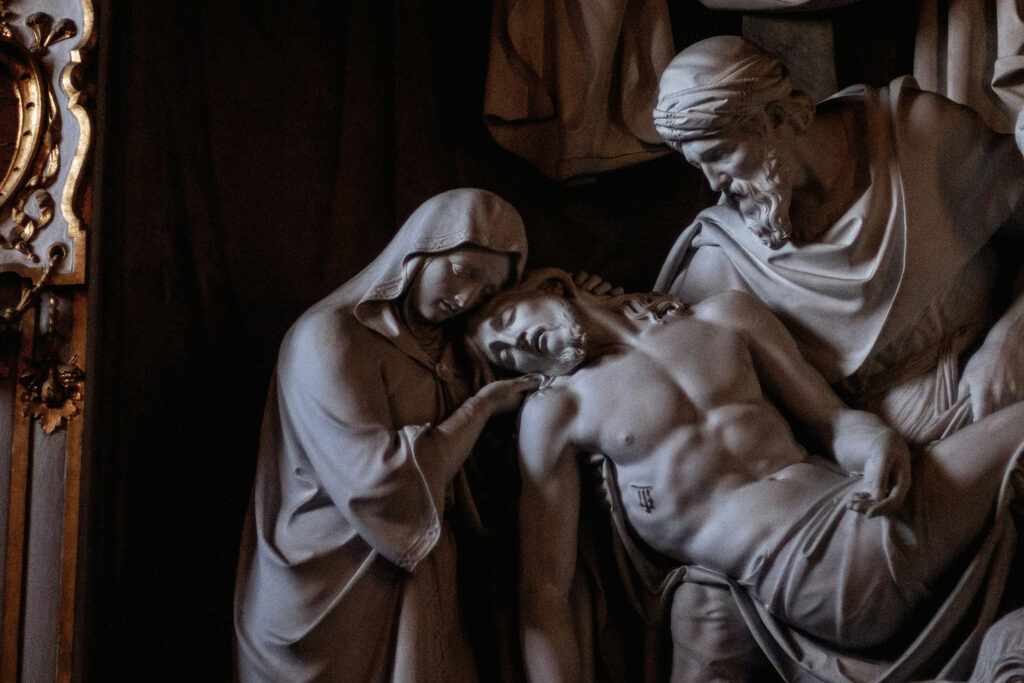
Grace-filled failures date back to the beginning of human history. In the Exultet at Easter we sing about the Felix Culpa of Adam and Eve—their “happy fault,” a kind of happy failure. Then, in the Bible, the long line of our spiritual ancestors fail time and time again. Sometimes that failure is God’s action; think of Job and the loss of his family, home, and health. Other times our ancestors made their own failure; think of David and Bathsheeba or Moses and the promised land.
More recently there have been other holy failures, such as St. Mark Ji TianXiang, who could never defeat his opium addiction but died a martyr. Bl. Charles de Foucauld, is another example, a missionary who converted no one during his lifespan.
Failure, therefore, is not in and of itself a problem. It is how we respond to that failure that makes all the difference.

Faith, not success
Our world is dominated by measurements. We measure our weight, our calories, our steps, likes on our photos, and more. It can be difficult to detach from the idea that success is what gives meaning to our lives. In reality, faithfulness and perseverance through hardship is the goal.
As Mother Teresa said, “God has not called us to be successful. He has called us to be faithful.” Failure, failing to live up to the measurements of life, while disheartening and demoralizing, is an opportunity and a grace. It is faith, not success that should be our goal.
Ironically, failure can be what spurs us on to success. An article from the Harvard School of Business discusses how failure can help one to foster self-awareness and come up with strategies to succeed the next time.
Failure, whether personal, social, or spiritual, can be the thing that puts us back on the right path, if we choose to see it not as the end of the road but as the beginning.
When I left the convent five years ago, I felt like a failure, and didn’t know what to do next. Now, looking back on the past five years, the friends I’ve made, the experiences I never would have had, I can see that sometimes the greatest grace God could give is failure.
Related Posts
The non-sewers’ guide to All Saints’ Day costumes
By Grace Porto
How JP2 teaches us the concept of healthy leisure
By Ava Cilento

Accessorizing 101: How to mix and match colors and textures
By Jessica Nardi

Custody of the eyes
By Rosie Hall