Unpacking Hippolytus: What an ancient Greek play can teach us about chastity
Published on May 22, 2026
“A curse on all women! I shall never stop detesting them, not even if someone says I complain about them all the time.” This quote is not from a modern podcaster or an anonymous account on X. It is from the ancient Greek play Hippolytus, the story of a hero who refuses to sacrifice to Aphrodite.
While we are quick to dismiss ancient literature as unrelatable, its lessons are applicable in every era. Hippolytus shows that sexual repression is not the same as chastity. Mere abstinence rooted in pride, fear, or contempt for the opposite sex leads to isolation, resentment, and tragedy. Abstinence rightly ordered toward and rooted in love leads to holiness.
The plot of Hippolytus
Written by the Greek playwright Euripides and first performed in 428 BC, Hippolytus follows a proud young man devoted to Artemis, goddess of chastity. The illegitimate son of King Theseus Hippolytus scorns Aphrodite, provoking the goddess’s wrath.
In revenge, Aphrodite causes Hippolytus’ stepmother, Phaedra, to fall in love with him. When her secret love is exposed and rejected, Phaedra takes her own life, leaving behind a false accusation that condemns Hippolytus.
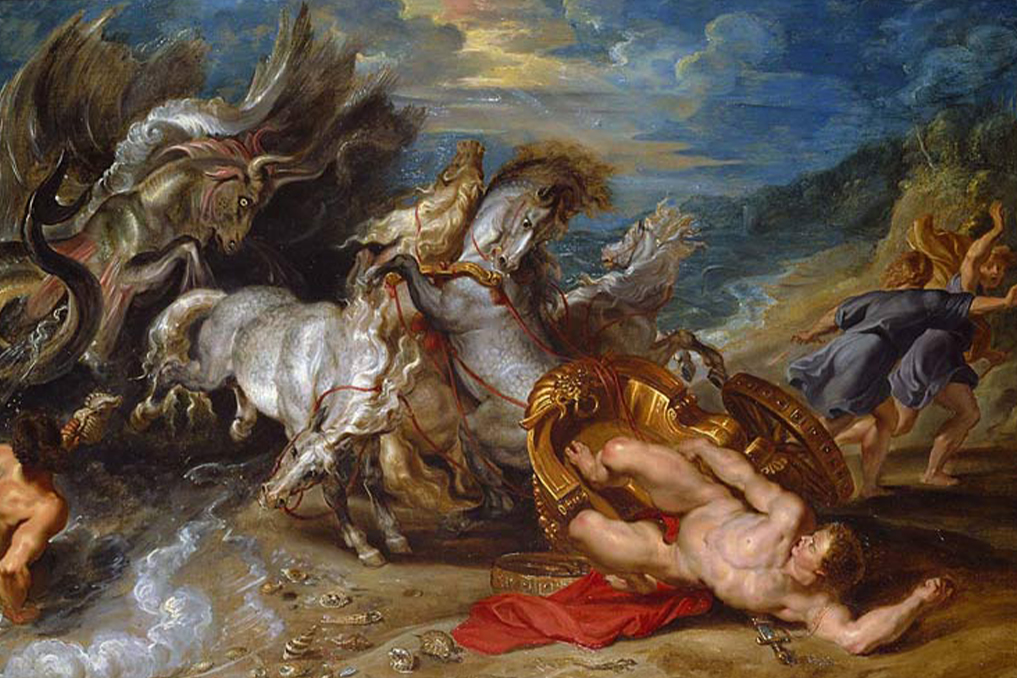
Deceived, Theseus curses and exiles his son. Only after Hippolytus is mortally wounded does the truth emerge — too late to undo the tragedy.
Themes in the play
Hippolytus follows the typical structure of an ancient tragedy: An overall moral character has a “tragic flaw” that leads to his demise. Hippolytus isn’t the villain, but the flaw of pride motivates his abhorrence for romance and his refusal to sacrifice to Aphrodite. His pride directly causes Aphrodite to curse him, leading to the tragic events of the play.
Aphrodite’s character tells the audience as much in the opening monologue of the play: “I look with favour on those who give my power due respect, but I strike down all those who, stuffed with pride, disparage me.” While she does not resent Hippolytus’ devotion to Artemis, she states that because he “has slighted me, today I will avenge myself on him.”
The play also shows Hippolytus repeatedly extolling his own virtue. At one point, he tells Theseus, “This sunlight and earth you see around us do not hold a man more virtuous than me, no matter how much you deny the fact.”
However, we do see other characters warn Hippolytus of his failure to sacrifice to Aphrodite, indicating that Hippolytus is not as perfectly virtuous as he claims to be since his pride prevents him from properly honoring the goddess. After he refuses to honor Aphrodite, his servant warns him that men “ought to hate being proud and failing to treat everyone politely” and that because of this, Hippolytus ought to revere all of the gods and goddesses equally.
“When young men think as he does, we must not do the same, and so, great Aphrodite, as I pray at this statue in your honour, I will use language that befits a slave,” the servant adds. “If being young makes a man’s heart impetuous and proud and he says foolish things, you should forgive him and act as if you have not heard.”
Is Hippolytus chaste?
One of the questions that the play raises, especially for modern Christians entangled in the gender wars, is whether or not Hippolytus is chaste. While he abstains from women, the play shows clearly that this comes from a place of disorder rather than properly ordered love.
His tirade against women again indicates a lack of any properly ordered love of the opposite sex: “O Zeus, why did you ever set women in our sunlit world to lead men astray with their corrupting ways? If you wanted to propagate a race of human beings, you should not have done so using women,” he laments.
This attitude is, sadly, becoming increasingly common in the wake of the sexual revolution. The growing trends of the “manosphere” indicate as much: These men are disgusted by hookup culture and promiscuity, but they assume that all women are lustful and conniving, and thus think happy marriages are unattainable.
Such manosphere content is often just the inversion of radical feminism, wherein women become disgusted and disenchanted by men, insisting that they are always domineering and obsessed with sex.
These attitudes are a far cry from Catholicism’s teachings on chastity, even if they also result in abstaining from premarital sex. Catholicism teaches that chastity is not just the denial of sexuality, but a proper integration of it, ordered toward the good: “The chaste person maintains the integrity of the powers of life and love placed in him. This integrity ensures the unity of the person; it is opposed to any behavior that would impair it. It tolerates neither a double life nor duplicity in speech.” (CCC 2338)
Thus, a chaste Catholic is one who knows that marriage between a man and woman is good, and refrains from sex outside of marriage because he knows that it is sacred. Further, marriage is an image of God’s love for his people. A priest, monk, or consecrated religious sacrifices marriage because it is good, sacrificing it for an even greater intimacy with Our Lord.
Which way forward?
Ultimately, Hippolytus’ pride ends in the destruction of his family’s happiness and his own life. On a civilizational level, we recognize that his rejection of romance and femininity cannot be a path forward to forming healthy marriages and families.
But the Catholic Church gives a robust understanding of human sexuality, marriage, and chastity, rooted in the goodness of God’s creation and an understanding of God’s love. Catholic men and women should immerse themselves in the Church’s teachings on marriage and chastity, recognizing the gift of the opposite sex and that marriage is a reflection of God’s love for us.
Related Posts


5 ways to prep your yard for outdoor fun this fall
By Rose Church

A girl’s guide to shopping for a wearable Miraculous Medal
By Ava Cilento

Bishop Sheen: Beatified in prime time
By Johanna Duncan