Pre-Cana convos: Uncomfortable conversations to have before you get married
Published on February 13, 2026

Engagement can feel like a whirlwind, full of dress-fitting appointments, arguments with the florist, and constant seating arrangement adjustments. But engagement is still a period of discernment for you and your fiancé to ensure you are ready for the sacrament of marriage. With that in mind, here are some uncomfortable but essential topics you should discuss before approaching the altar.

1. Finances
It’s important for both the man and woman to understand each other’s financial situation before marriage. Do either of you have significant debt — student loans, credit cards, car payments, or a mortgage? Do either or both of you have savings or retirement accounts? What are your expectations for standard of living, and will you have to adjust that based on your financial situation? Is one of you more comfortable with or better suited to handling the logistics of household finances? Set up a realistic household budget based on your current circumstances, and consider what types of adjustments you are willing or expect to have to make based on future life changes like completing school, paying off debt, buying a home, or having children.

2. Role expectations
It’s also important that both parties understand how they will fulfill their roles as husband and wife. While Scripture gives the basic guidance that the man should be the head of the household and the woman should submit to him, the specific, practical aspects are up to the couple to discern prudentially. Is the husband going to be the only breadwinner? Will the wife be a stay-at-home mom? What are each of your expectations regarding tasks like housework and child care?

3. Family of origin
Our families of origin inform our image of a healthy marriage, as well as how parents should raise their children, even if only on a subconscious level. Couples can ask each other:
What are the family structures within your families of origin — were your parents married or divorced? What healthy behaviors did they model, and what unhealthy behaviors do you need to guard against in your own marriage? What values and traditions did they teach you that you would like to maintain in your family? What do you want to change?
In addition, couples should discuss how they expect their families of origin to continue to be a part of their lives. For example, what are the expectations for visiting in-laws? What will you do to take care of your parents when they are aging?

4. Mental health
Do either of you have a history of mental illness, or have mental illness in your family? If you are struggling with serious mental illness, are you seeking help in therapy or counseling? Do either of you struggle with addiction, and if so, is the addiction in remission?

5. Sexual past and fertility
In marriage, you will give yourself entirely, both physically and spiritually, to your spouse. Thus, it’s important that you can be honest with each other about your sexual past, while being prudent in how much you should share. Refine author Rachel Killackey explains what to share at the different stages of a relationship and how to get help if you’re nervous about disclosing your past.
Couples should also discuss their fertility and the use of natural family planning (NFP) in marriage. Make sure to read Paul VI’s Humanae Vitae to understand the Church’s position on why contraception is immoral, and how and when to use NFP. Then discuss the implications with your significant other — under what circumstances do you think it would be important to space or delay children?
6. Religion
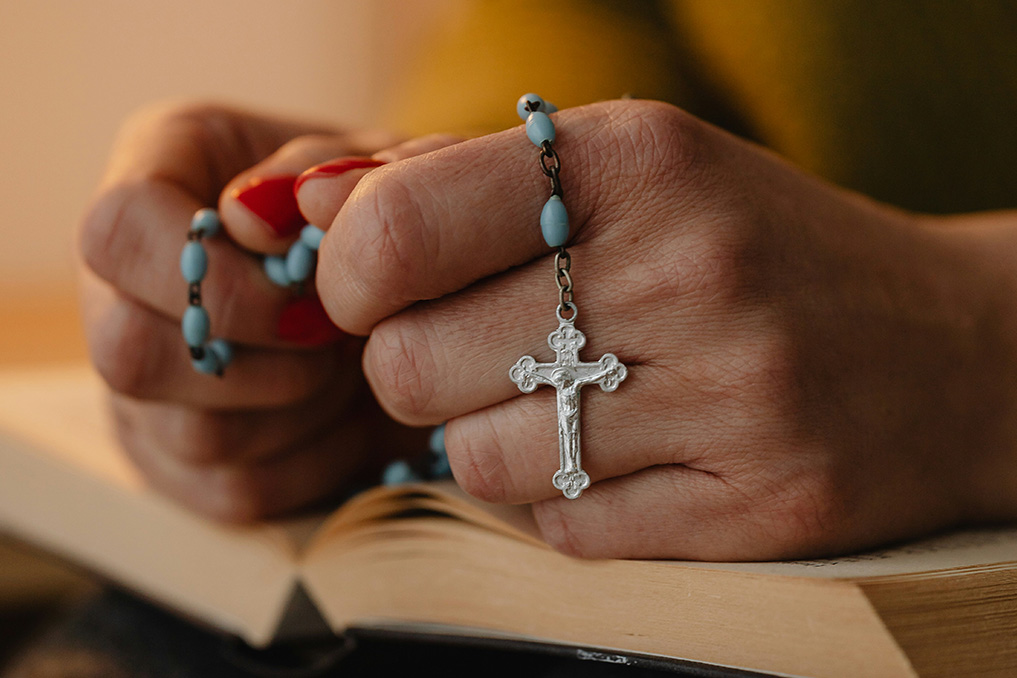
Finally, it is very important to discuss the role of religion in your marriage. The Catholic Church advises against mixed-religion marriages — in fact, a couple must have a dispensation from their local bishop in order for a mixed-religion marriage (even if the non-Catholic person is a baptized Christian) to take place.
In the meantime, you can start making the sacraments a center of your relationship by attending Mass together and attending Confession regularly. You can even choose a devotion to start praying together regularly, or do a consecration as a couple to Our Lady or St. Joseph.
Marriage is a vow that lasts until death, so it’s important to bring up hard topics while you’re still engaged. Starting marriage with honesty and mutual agreement on expectations provides a steady foundation for weathering the normal challenges married life will bring. Pray for grace, prudence, and discernment, and be sure to get input from the priest preparing you for your marriage!
Related Posts
The non-sewers’ guide to All Saints’ Day costumes
By Grace Porto

How JP2 teaches us the concept of healthy leisure
By Ava Cilento

Accessorizing 101: How to mix and match colors and textures
By Jessica Nardi

Custody of the eyes
By Rosie Hall