Why great literature feels like prayer
Published on April 4, 2026
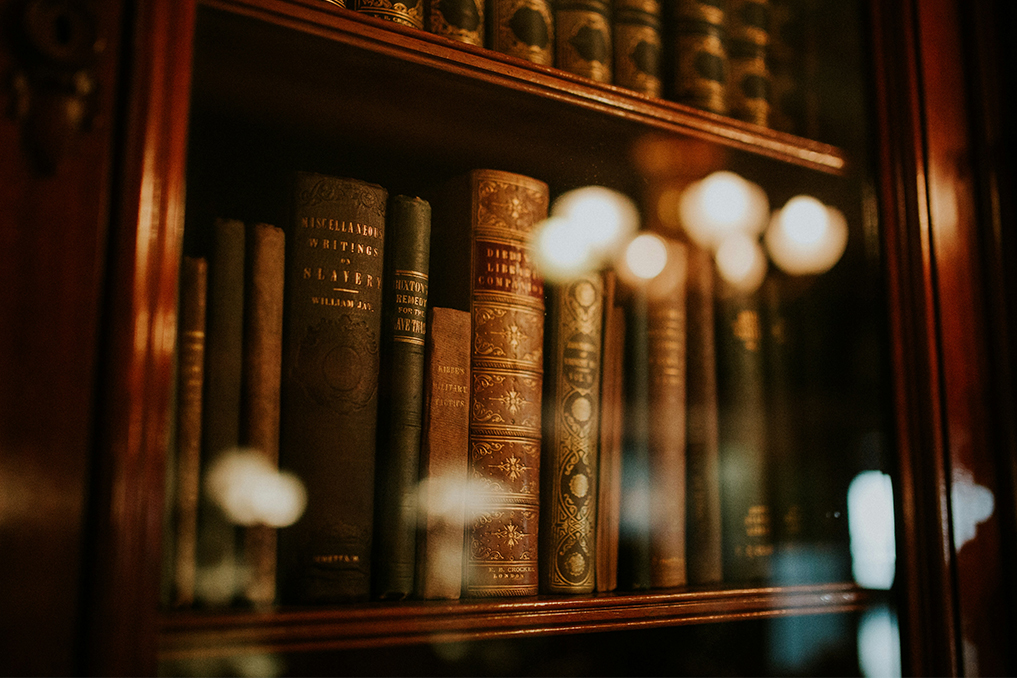
Have you ever put down a book and had chills running up and down your spine? It’s as though you’ve tapped into something that you always knew and believed but had never impacted you before. We all know books have the power to make us cry. They often teach us something about the world in which we live.
But books can also teach us how to pray.
Great literature feels like prayer, and for good reason. While nothing can replace quality quiet time on your knees before God, the skills and benefits of prayer and good literature are not that different, and we all could benefit from a bit of both.

Moral imagination
Intentionality — by which I mean paying focused attention — can change your life. In good literature, the author will draw our attention to the important details in a way that will make us see the world in a different way. This intentionality will help foster a moral imagination, a moral lens through which to see and navigate the world.
Think, for example, of The Velveteen Rabbit. It is a classic work of children’s literature that teaches that it is not our appearances that make our lives worth living, but how much we love and are loved. The Skin Horse tells the little stuffed rabbit: “Generally, by the time you are Real, most of your hair has been loved off, and your eyes drop out and you get loose in the joints and very shabby. But these things don’t matter at all, because once you are Real you can’t be ugly, except to people who don’t understand.” To be real is to love and be loved — which is what makes our lives beautiful.
Prayer teaches the same thing. By reflecting on your life and bringing it to prayer, you come to appreciate the goodness and the depth of the world around you. You build a moral imagination — the capacity to see what is truly valuable in life and what is just window dressing. You learn time and time again that “If I speak in the tongues of mortals and of angels, but do not have love, I am a noisy gong or a clanging cymbal. And if I have prophetic powers, and understand all mysteries and all knowledge, and if I have all faith, so as to remove mountains, but do not have love, I am nothing.”
Show don’t tell
Good literature is not about moral statements. It is about good storytelling. The lessons we learn from great literature come through the virtuous or vicious actions of the characters played out on the page. A story, in which the truth is shown to the reader, is far more compelling than if the truth is simply told.
Take, for example, Charles Dickens’ classic (and best) novel A Tale of Two Cities. At the end of the book, Sydney Carter, the dissolute character, takes the place of Charles, the hero and young lover, at the guillotine. Carter sacrifices himself for Charles so that he may live a long and happy life with the woman he loves. In doing so, Carter wins the hearts of the readers and shows the dignity and beauty of self sacrifice. The last line of the book comes from Sydney Carter’s lips, standing at the guillotine before he dies: “It is a far, far better thing that I do, than I have ever done; it is a far, far better rest that I go to than I have ever known.” This scene is so poignant, so precious, because it shows true virtue in a unique and beautiful way.
So, too, prayer is a “show, don’t tell” event. It is rare for God to give us direct instruction. It is rare that a voice comes from the darkness and whispers step-by-step directions into our ears. Rather, we must seek to understand the Lord in the way he normally speaks — through the stories and mouths of those around us. Through nature, parables, signs, or the simple faith of others…God shows, he rarely tells. There is a reason, after all, Christ spoke in parables. Literature, good literature, can help us to see what God is trying to show.

Empathy
Literature is human — usually stories by humans about humans (or human-like beings), and reading good literature teaches us something about the human person and human nature. It can show us the deepest black that man can sink to (Macbeth by Shakespeare), the mind of a madman (“The Tell-tale Heart” by Edger Allen Poe), or the actions of a saint (The Lord of the Rings by J.R.R. Tolkien). We learn the backstories of villainous actions, what it takes to learn true virtue, and what happens when God’s grace is refused. In short, the depths and breadth of the human heart are shown in literature.
This teaches us empathy. T.S. Eliot’s “The Love Song of J. Alfred Prufrock,’ brings us to that horrible state of indecision: “Do I dare / Disturb the universe? / In a minute there is time / For decisions and revisions which a minute will reverse.” Mark Twain takes us through the terribly confused morals involved in slavery. Huckleberry Finn’s crisis of conscience over whether to betray the runaway slave Jim is heartrending: “s’pose you’d a done right and give Jim up, would you felt better than what you do now?”
Prayer also teaches us empathy. Life, especially life with other people, can be confusing and even hurtful. To take a moment of reflection in prayer, to put ourselves in the other person’s shoes, teaches us an empathy that can also be reinforced by reading good literature.
Desolation
Let’s be real.
Not every good book is a page-turner. Anyone who has gotten stuck on Victor Hugo’s overly detailed descriptions of the labyrinthine Paris sewage systems in Les Miserables, or fallen asleep halfway through Dostoevsky’s beautiful (but extremely lengthy) prose in The Brothers Karamozov, knows that classic books can be exceedingly dull at times. Yet the best things are worth working through. Not every page of every book will be as readable as Winnie-the-Pooh (another fantastic classic). Yet great books reward the patient, diligent reader.
So too with prayer. Not every prayer will be answered clearly or in the way you expect. Not every meditation will be accompanied by consolation and insight. Prayer, at times, feels like slogging your way through Moby Dick; or The Whale. Many readers have beaten their heads against the massive book, wondering why Melville spent pages on the intricacies of whaling knots, oars, or refining whale oil. He devoted one entire chapter to describing the tail of the sperm whale.
Prayer often feels like that.
Time will show that both good literature and prayer reward the persevering and the attentive. Both activities are important and meaningful, and both are worth working through. So, dear reader, I encourage you to pray well and to read often — both activities will give you the tools you need to aid you in the pursuit of the other.
Related Posts

My petition to bring back Sunday suppers
By Calista Boskus

Good Friday: What to eat and what to do
By Lindsey Fedyk
O truly blessed night: A meditation on the Exultet
By Rosie Hall