‘Heidi’: A breath of fresh mountain air
Published on July 29, 2026
This article is part of a Zeale Lifestyle series featuring reviews of classic literature from the 1000 Good Books Project, started by a Catholic homeschooling family on a mission to bring an affordable, trustworthy, comprehensive library of audiobooks to families.
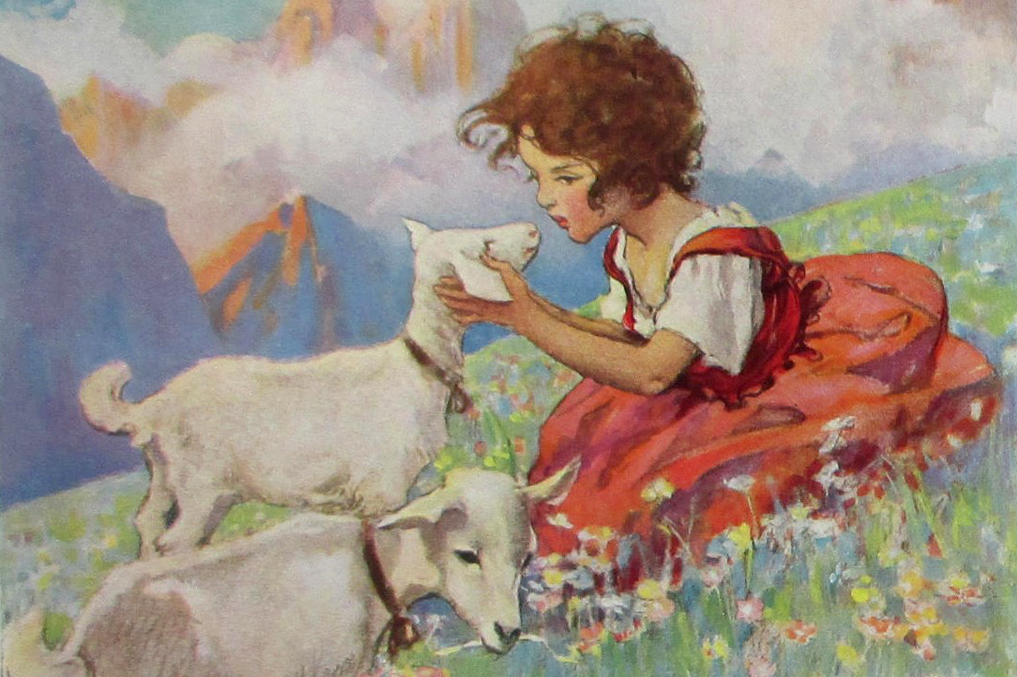
“Why do the mountains have no names, grandfather?” asked Heidi.
“They all have names, and if you tell me their shape I can name them for you.”
Heidi described several and the old man could name them all. The child told him now about all the happenings of the day, and especially about the wonderful fire. She asked how it came about.
“The sun does it,” he exclaimed. “Saying good-night to the mountains, he throws his most beautiful rays to them, that they may not forget him till the morning.”
Johanna Spyri’s novel Heidi, first published in 1880, follows a young orphan girl who is sent to live with her grandfather high in the Swiss Alps. What begins as a tale of hardship quickly becomes something else entirely: a story about healing, joy, and the quiet power of goodwill.
The novel’s charm lies in its simplicity. Unlike many modern children’s stories, Heidi doesn’t conquer kingdoms or solve mysteries. She doesn’t discover that she has hidden magical powers (although, in a way, she does!). She does something more subtle and difficult: she brings the ordinary human warmth of love and joy to people who have forgotten them.
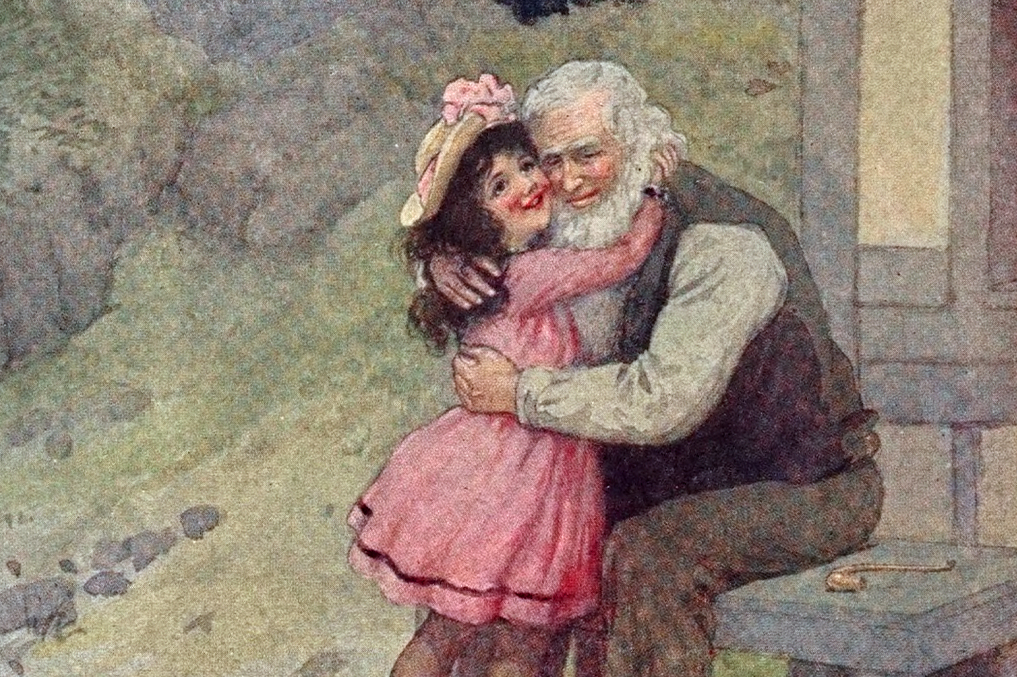
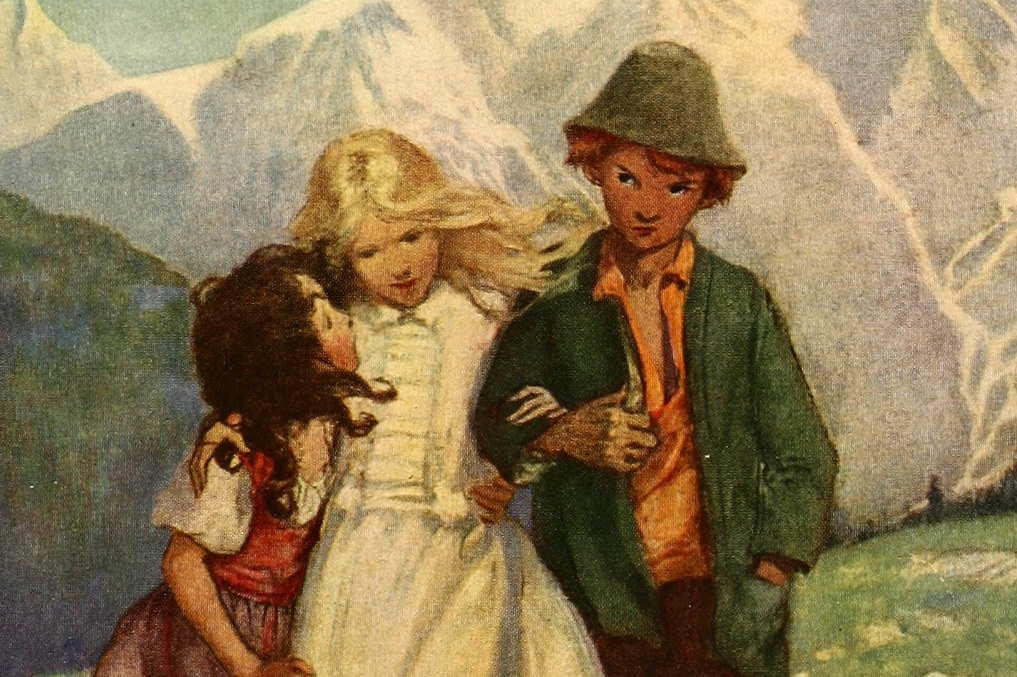
Her grandfather, a solitary man with a reputation for gruffness, softens under her presence. Peter, the goatherd, learns patience and responsibility. Clara, the frail girl from Frankfurt, discovers joy and courage she didn’t know she had. Heidi’s goodness is not loud or showy — it’s steady, sincere, and transformative. Her sincere reliance on prayer and God’s loving providence weathers trials to her faith and is an inspiration for the spiritual lives of those around her.
A quiet observer who wrote from the heart
Johanna Spyri (1827–1901) was raised in the Swiss village of Hirzel, surrounded by rolling hills and farms within the rhythms of a rural community. Her mother was a poet and musician. Stories and songs filled their home with a deep appreciation for nature. Spyri absorbed all of it — the landscapes, the people, and the quiet virtues of everyday life.
Spyri began writing in her forties, inspired by her volunteer work with children affected by war and poverty. She saw firsthand how hardship could weigh on young hearts — and how kindness, stability, and nature could help them heal. These experiences shaped the emotional core of Heidi.
The novel was written during a period when Spyri was living in Zurich, far from the countryside she loved. Many scholars believe Heidi grew out of homesickness — a longing for the mountains of her childhood. Spyri wrote quickly, drawing on memories of summer visits to the Alps and the people she met there. The result was a story that feels both deeply personal and universally comforting.
Heidi’s restorative power
In today’s culture, everything, especially entertainment for children, feels as though it is “turned up to eleven.” Things are loud, fast, and full of overwhelming stimulation. Every story is about being special and saving the world, and each story beat that lasts more than 30 seconds loses the viewer.
There is a deeply restorative effect that can immediately be felt when reading Heidi; her simple delight at fresh goat milk, rolls, and cheese; her wonder at the sun setting on the mountains; and her deep devotion to seeking the good of the simple people around her: these are human-scale delights.
If you’re looking for a book that offers warmth, wisdom, and a breath of mountain air, Heidi is waiting — high on the slopes, where the sun is bright and the heart can rest. Listen to a preview of our Heidi audiobook here.
This audiobook and many other classics, including Aesop’s Fables, Winnie the Pooh, the Just So Stories, Tom Sawyer, Alice in Wonderland, Treasure Island, The Secret Garden, The Wind in the Willows, Sherlock Holmes, The Call of the Wild, The Three Musketeers, Sense and Sensibility, The Great Gatsby, A Tale of Two Cities, and others are being reintroduced to families through the efforts of the 1000 Good Books Project. Their affordable, trustworthy, comprehensive library of audiobooks is inspired by Professor John Senior’s list of what he termed the “thousand good books.” The 1000 Good Books Project hopes to give families the resources to form the minds and hearts of the next generation with the classic literature of the past. Check them out and see if audio books can be a window into a larger world of literature for you and your family!
Related Posts

Road trips to celebrate America 250
By Jessica Nardi

Caramelized Corn Ribs with Lime Crema
By Calista Boskus