Johnny Cash’s ‘American V’: An unexpected soundtrack for November
Published on October 31, 2026
In the Catholic Church, the month of November is dedicated to the holy souls in Purgatory. The faithful are encouraged to pray and offer sacrifices for these holy souls, to reflect on the reality of death, and to gain indulgences for oneself and for the souls in Purgatory.
Besides prayers and sacrifices, one of the ways we can enter into the mystery of death and redemption is through the fine arts, especially music. While there are an abundance of beautiful Requiem Masses, folk and country music often take a stark, honest look at death, with more accessible melodies and lyrics. One of my favorite albums with these themes is Johnny Cash’s “American V: A Hundred Highways.”
Tender, vulnerable simplicity
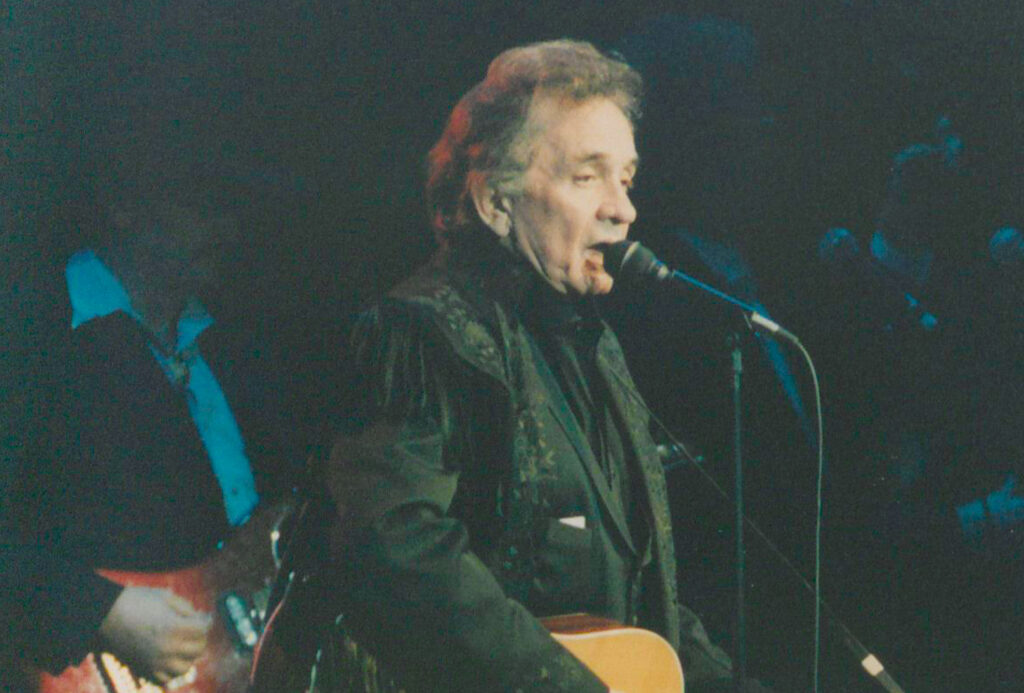
The posthumous album was released in 2006, three years after Cash’s death at age 71. The album was recorded in the months leading up to his death and is full of the tenderness, sorrow, and joy of a Christian ready to face death bravely. His gravelly voice adds a layer of vulnerability and intimacy, and the simple melodies with pared-down instrumentals deepen the rich simplicity of the album.
Haunted in life and death
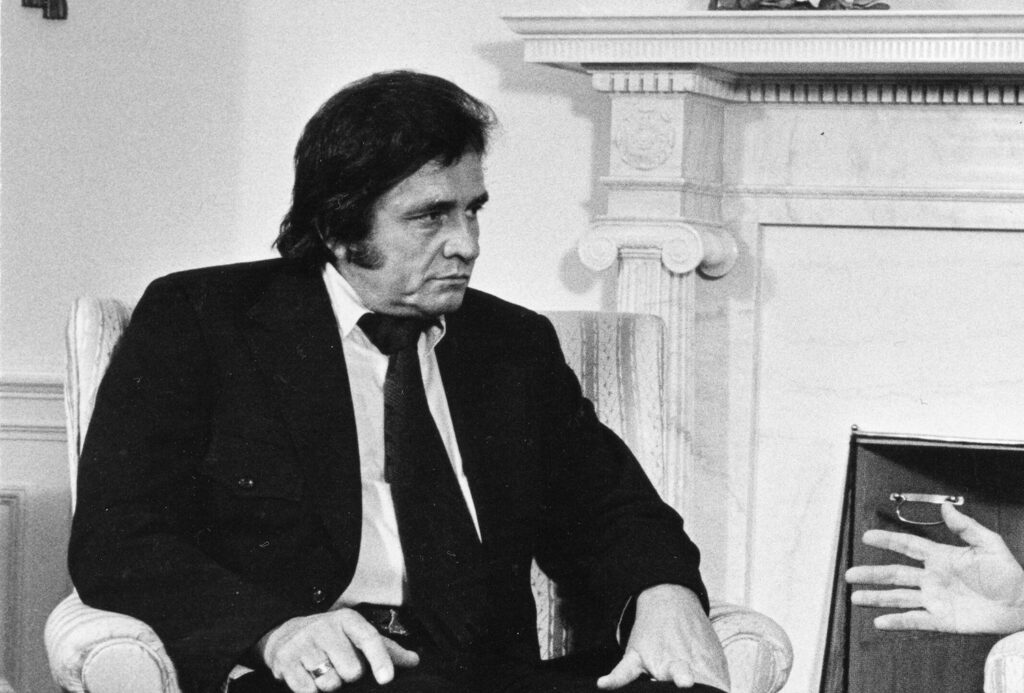
Cash was haunted by death from a young age. He was born into a family of Arkansas sharecroppers in 1932, during the Great Depression. When he was 11, his beloved older brother Jack was nearly sawed in half and struggled for a week before he died. Johnny was fishing while his brother was injured and was haunted by survivor’s guilt for the rest of his life.
Despite this harrowing experience, Cash’s parents, devout Baptists, remained faithful and encouraged Johnny in his faith. He enlisted with the Marines in 1950 and married his first wife, Vivian Liberto, in 1954 after his term of service ended. They moved to Tennessee so Johnny could pursue his musical career, but for about a decade, he grappled with alcoholism, drug abuse, and infidelity. Liberto divorced him in 1968.
At the lowest point of his life in 1967, Cash tried to kill himself by crawling into Nickajack Cave and staying there until he died. But he had a spiritual experience while inside the cave that led to his conversion.
“I thought I’d left [God], but he hadn’t left me. I felt something very powerful start to happen to me,” he wrote of the experience later, “a sensation of utter peace, clarity, and sobriety. . . . There in Nickajack Cave I became conscious of a very clear, simple idea: I was not in charge of my destiny.”
Sin, grace, redemption, perseverance
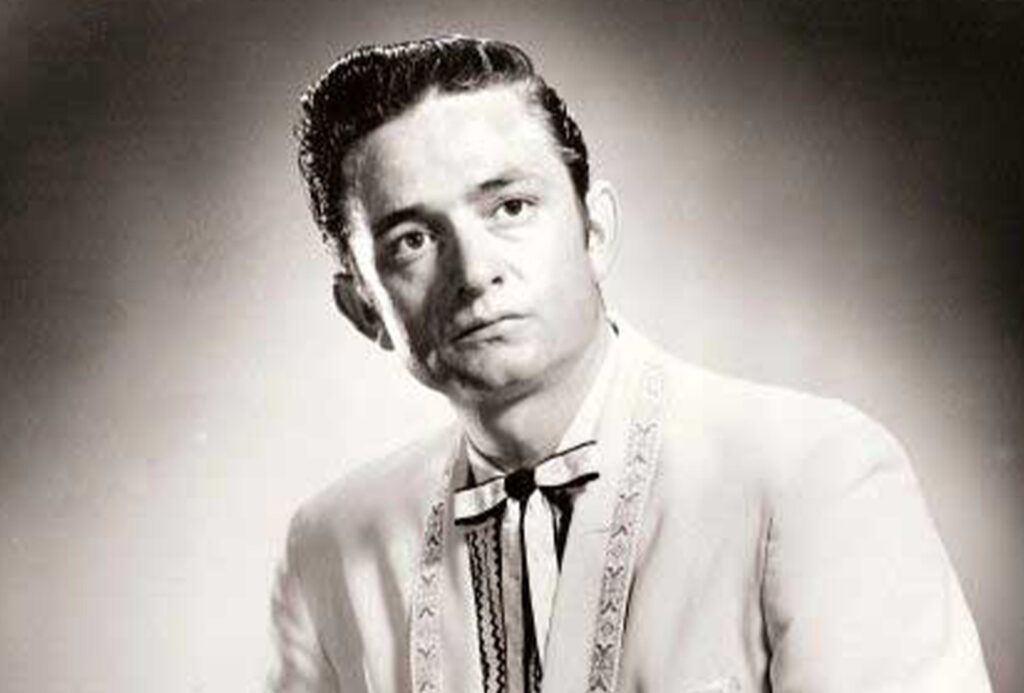
Cash’s music often reflects the themes of his own life: sin, grace, redemption, and perseverance. His final album grapples with the reality of death, the reality and life-altering impact of love, and the need for repentance.
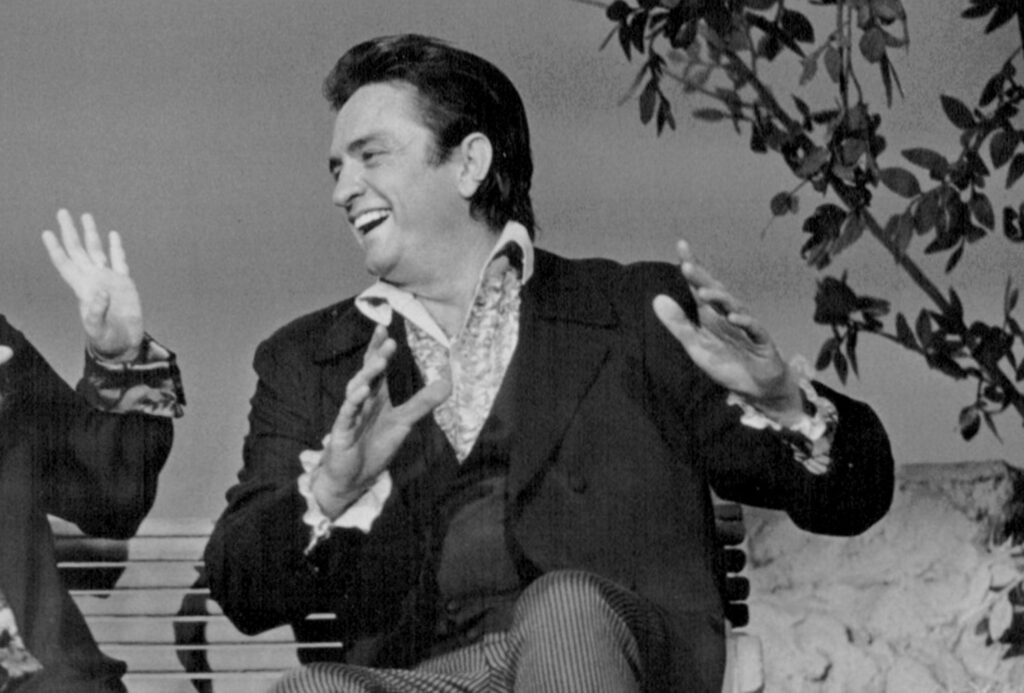
In the first track, “Help Me,” Cash sings the haunting lyrics written by Larry Gatlin:
“I never thought I needed help before / Thought that I could get by – by myself / But now I know I just can’t take it any more / And with a humble heart, on bended knee / I’m begging You please for help.”
In times of health or when we haven’t stumbled into grave sin, it can be easy to become prideful, self-reliant, or forgetful of the rich mercies of Our Lord. But when we look death in the eye, we realize the reality and gravity of our sins. We also realize the weakness of our body and are brought to our knees, begging for Our Lord’s grace.
Hope for the sinner
The second track, “God’s Gonna Cut You Down,” is Cash’s rendition of an existing folk song. While the melody is haunting and threatening, it is not just a threat of hellfire to sinners. Instead, it offers hope for the sinner by sharing Cash’s own conversion, similar to that of the apostle Paul’s.
“I’ve been down on bended knee, talkin’ to the man from Galilee / He spoke to me in the voice so sweet / I thought I heard the shuffle of angels’ feet / He called my name and my heart stood still / When he said, ‘John, go do My will!'”
The next track, “Like the 309,” was the last song written by Cash, just three weeks before his death. Less haunting than some of his other songs on the album, he faces death with humor and an almost joyful anticipation. He sings about a train, the 309, coming to take his body after death.
“A chicken in the pot and turkey in the corn / Ain’t felt this good since jubilee morn / Talk about luck, well I got mine / Asthma coming down like the 309,” he sings, reminding the audience that for the Christian man, death isn’t the ending and does not need to be a cause of terror.
Repentance and grace
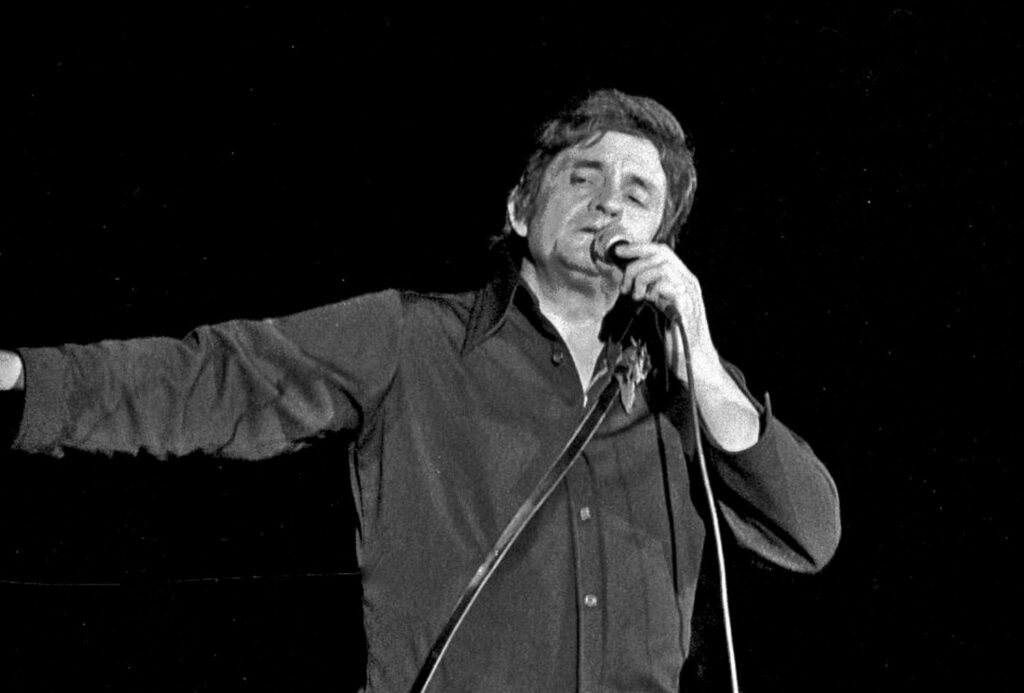
“I Came to Believe” offers a quintessential Cash reflection on repentance and grace. He sings that after failing to solve his problems on his own, he found the love of Our Lord.
“And I came to believe in a power much higher than I / I came to believe that I needed help to get by / In childlike faith I gave in and gave him a try / And I came to believe in a power much higher than I.”
The album ends with Cash’s cover of “I’m Free From the Chain Gang Now,” a ballad about a man after his time in prison. It can be taken as an analogy for the life of a sinner looking forward to Heaven, freed from sin and death through Our Lord’s sacrifice.
Memento mori
So after you attend All Souls Mass and say a prayer for your departed loved ones, as you drive to work, run errands, or putter around the house in a contemplative mood, try giving “American V” a listen. It may not be Mozart or Faure, but it still offers an honest look at death, sin, and Heaven. Like much of Cash’s music and life, it embraces the Christian motto “memento mori” to remember death.
Related Posts
Better than the werewolves: Reclaiming All Hallows’ Eve
By Johanna Duncan



Beauty is not a luxury
By Rosie Hall