‘Heaven in Stone and Glass’: A review
Published on October 10, 2026
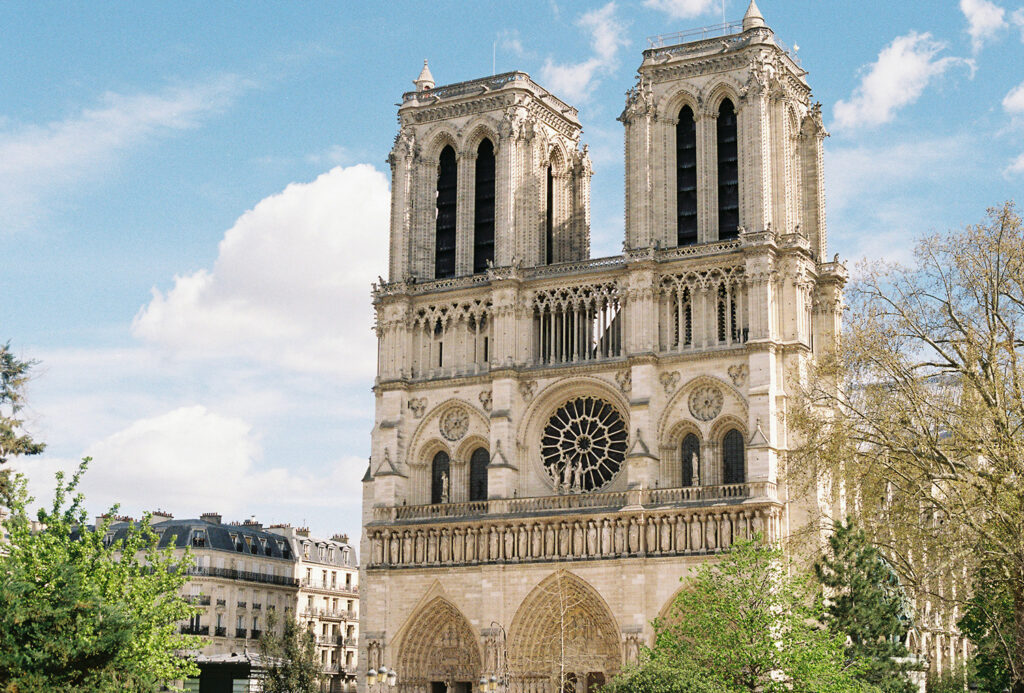
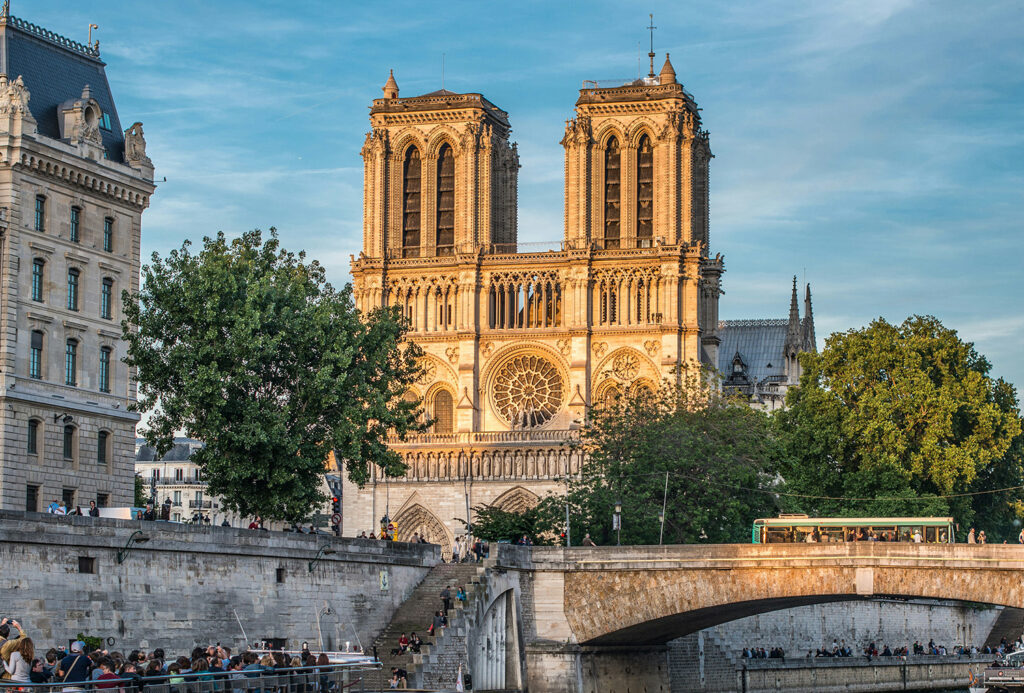
Most of us still remember the shock we felt on April 15, 2019, as we watched the roof of Notre-Dame burn. News outlets all over the world showed Parisians running into the streets in shock, disbelief, and a sense of helplessness as flames consumed the masterpiece. Faithful and non-faithful alike mourned the loss of something irreplaceable.
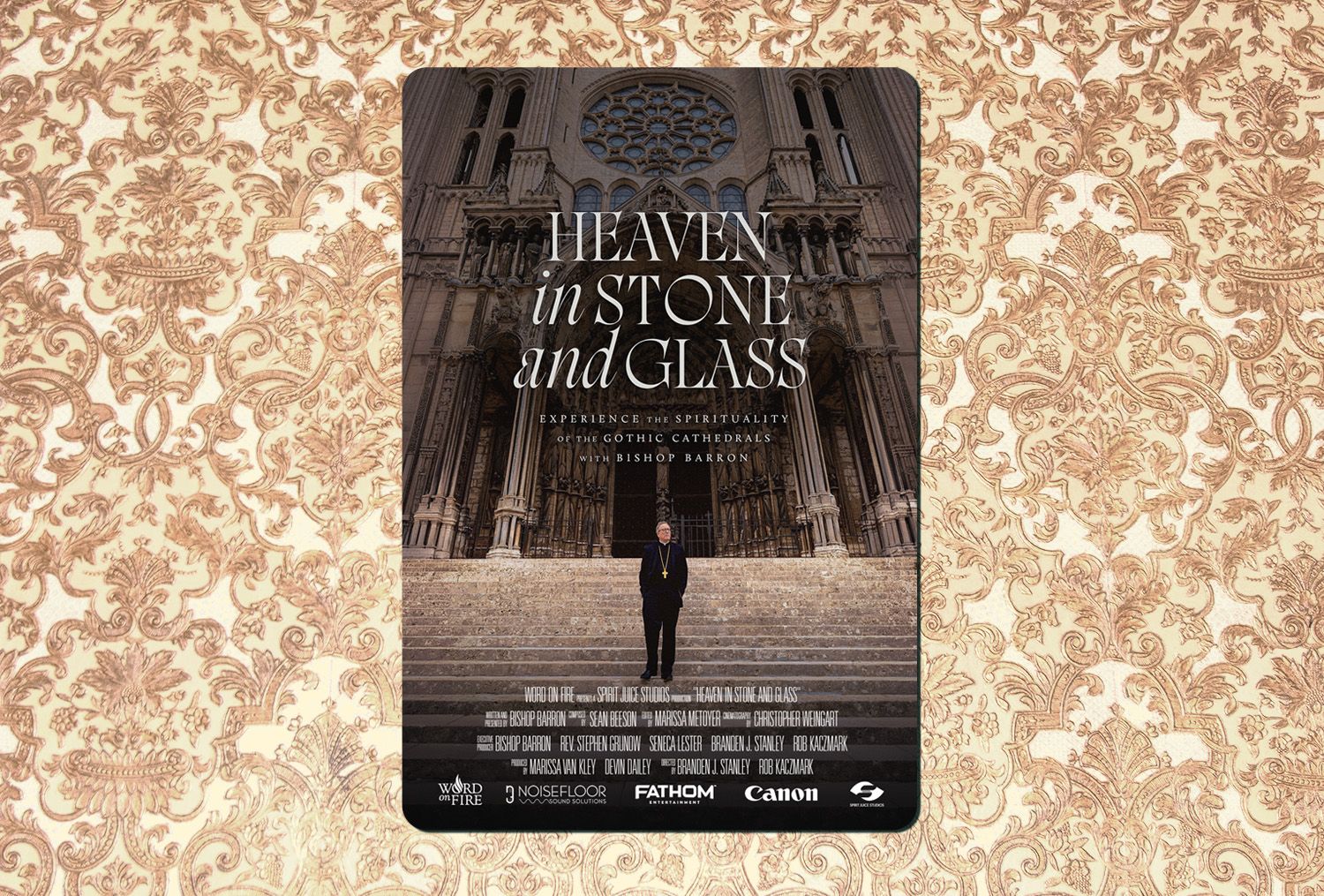
Bishop Robert Barron and Word on Fire created the film Heaven in Stone and Glass as a response to the emotional shock we culturally felt on that day. This powerful documentary dives into why the Cathedral of Notre Dame and some other medieval masterpieces provoke such strong feelings in us.
Beauty leading somewhere
Word on Fire’s first-ever theatrical release, produced with Spirit Juice Studios, takes viewers through the French cathedrals of Amiens, Chartres, Notre-Dame, Reims, and Saint-Denis. The documentary is partially a travel journal, going from city to city to visit the impressive churches at the city centers. It also offers an intro to art history, exploring the stained glass windows, vaults, and even tile designs that beautify these sites. It even dives into the medieval theological principles that inspired this kind of architecture. But overall, the film is an experience of traveling through time and understanding why medieval France bothered with such massive and intricate constructions. This journey to the past brings us back to the present as it points out why and how these cathedrals are still valuable today.
Bishop Barron’s answer is that beauty leads somewhere. He argues that our capacity to build sacred architecture is evidence of a longing for God placed in every soul. According to Barron, experiencing beauty is “a route of access to the Lord.” The cathedrals were not created as mere monuments to civic pride. They were catechisms. In an age when most people could not read, the facades told the great stories of the Bible.
An introduction to cathedrals
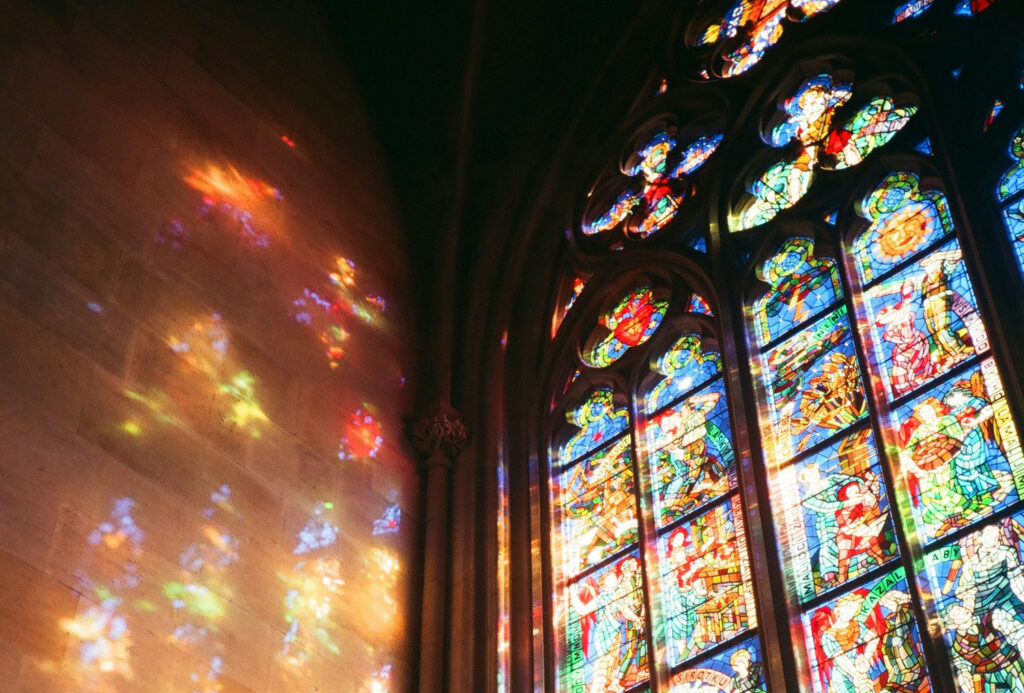
The cinematography deserves its own praise. The camera captures the sheer enormity of these spaces in a unique way. The light pouring through colored glass is notoriously hard to film, and here it glows and comes alive with cinematic special effects that highlight the unique beauty of the glass. For anyone who has never stood inside Chartres, this is the closest thing to it short of a plane ticket.
More to see
My only criticism is that a few sections were repetitive and while I think much more could and perhaps should have been included, it is understandable that not everything can make the cut given how complex and rich these cathedrals are. Heaven and Stone in Glass is an introduction to the endlessly fascinating world of cathedrals that leaves the viewer wanting to see and learn more.
A few things the film leaves out are worth looking into afterward:
- First, these cathedrals were not originally the gray stone we see today. Laser-cleaning at Amiens in the 1990s revealed that the western facade was originally painted in multiple colors, and since 1999 a light show has projected those reconstructed colors back onto the stone.
- Second, Gothic cathedrals typically follow a cruciform plan, with the altar at the east end facing the rising sun and Jerusalem, where Christ was raised. Every cathedral was a cross laid across the city, marking it as Christian ground. Even the entrance carried meaning: The central west portal often depicts the Last Judgment, so the faithful symbolically entered the heavenly sanctuary at the end of time, passing beneath Christ’s judgment seat.
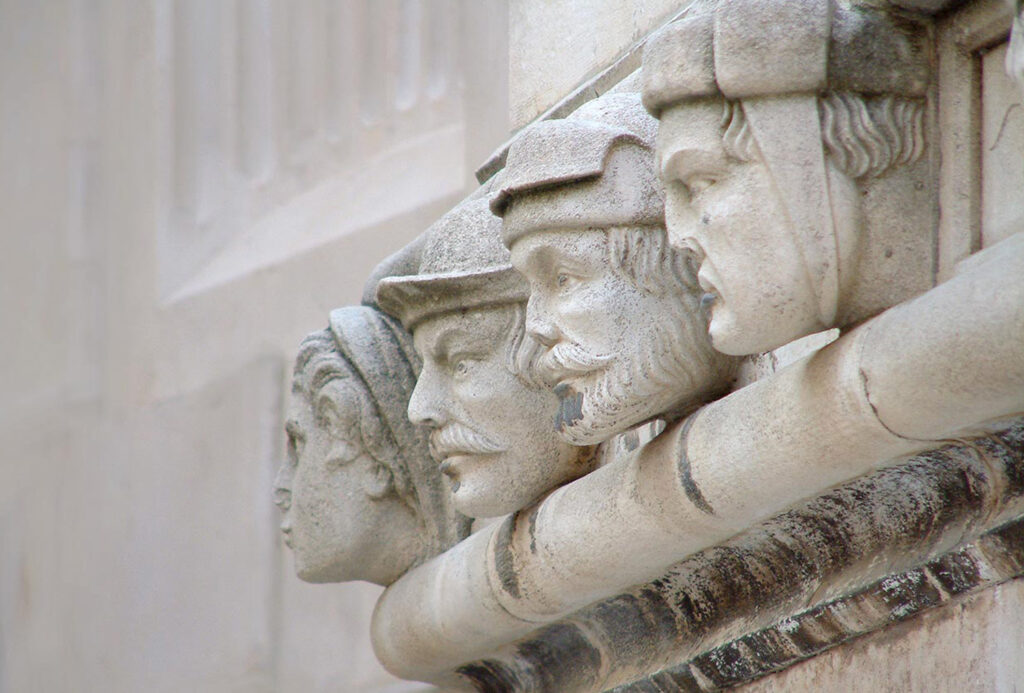
- Third, these were community projects. We all know they were largely built by the ultrawealthy, but it was never just by them or for them. On a trip to Croatia, I was struck by the Cathedral of St. James in Sibernik, which is encircled by sculptures of the faces of the people who helped build it. One of those faces is the architect’s, but no one knows which one.
Worth every second
None of these omissions weakens the film. If anything, they prove its point: There is so much to see and absorb in these cathedrals, and they are worth every second spent doing so. The more we learn about them, the more we inevitably learn about God and His relationship with us and the people who built them.
Heaven in Stone and Glass is for anyone who wants to understand the purpose and cultural relevance of these enormous constructions and why they’re worth preserving and enjoying their breathtaking beauty.
Related Posts

How to host the coziest fall bonfire party
By Calista Boskus
9 unique wedding gifts for your loved ones
By Lindsey Fedyk

The me-culture is holding back vocations
By William Nardi