5 herb plants every kitchen needs (and how to grow them!)
Published on September 16, 2026
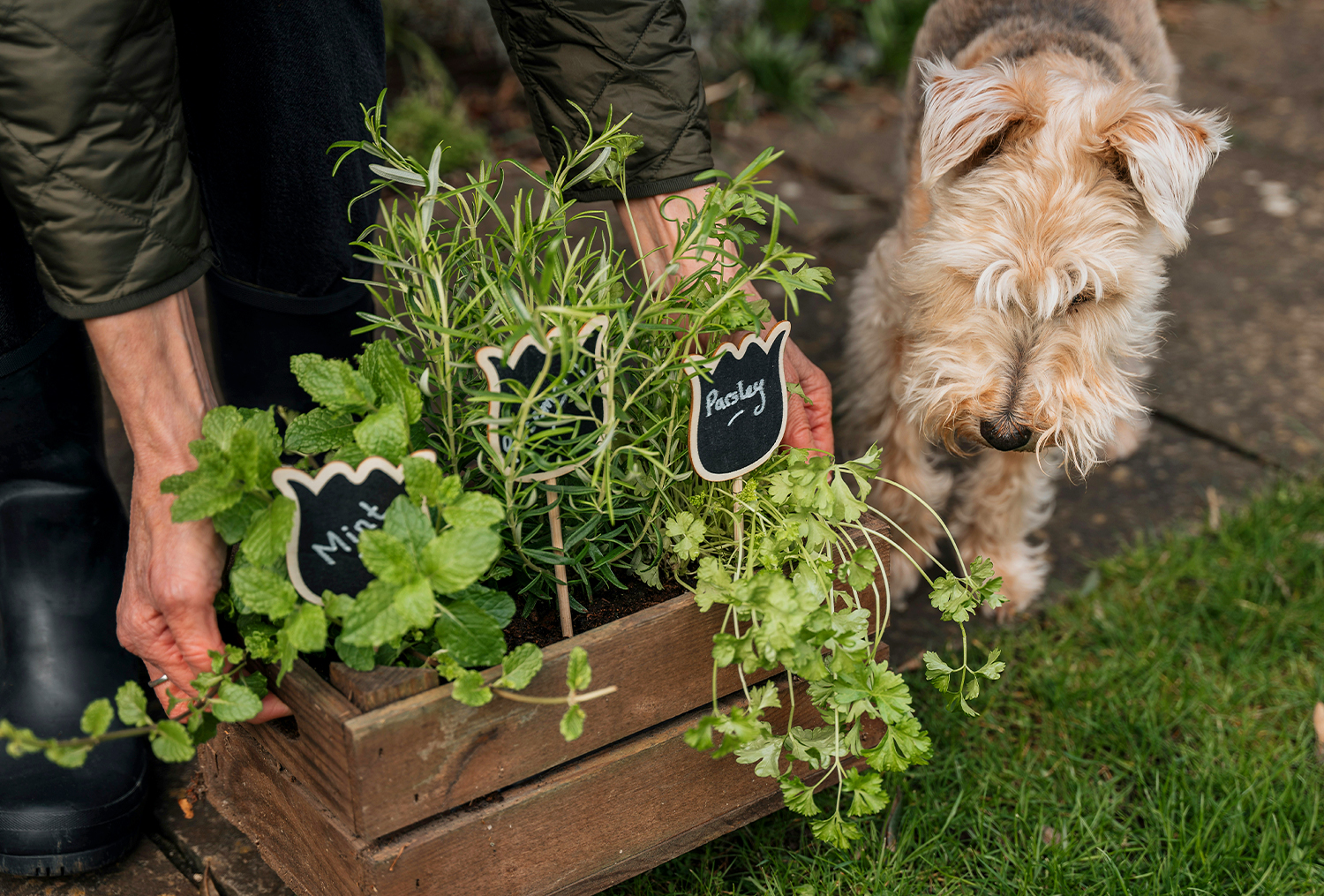
There is nothing quite like reaching over to your windowsill or hanging porch basket, pinching a handful of fresh basil, and tossing it into a simmering tomato sauce. Growing your own culinary herbs instantly elevates daily cooking, saves money at the grocery store, and adds vibrant green life to your home.
Best of all, you don’t need a sprawling backyard plot to enjoy a kitchen garden. Whether you have an expanse of garden raised beds or a cozy apartment countertop, these five versatile herbs thrive in pots and baskets, and are delightfully easy to grow!
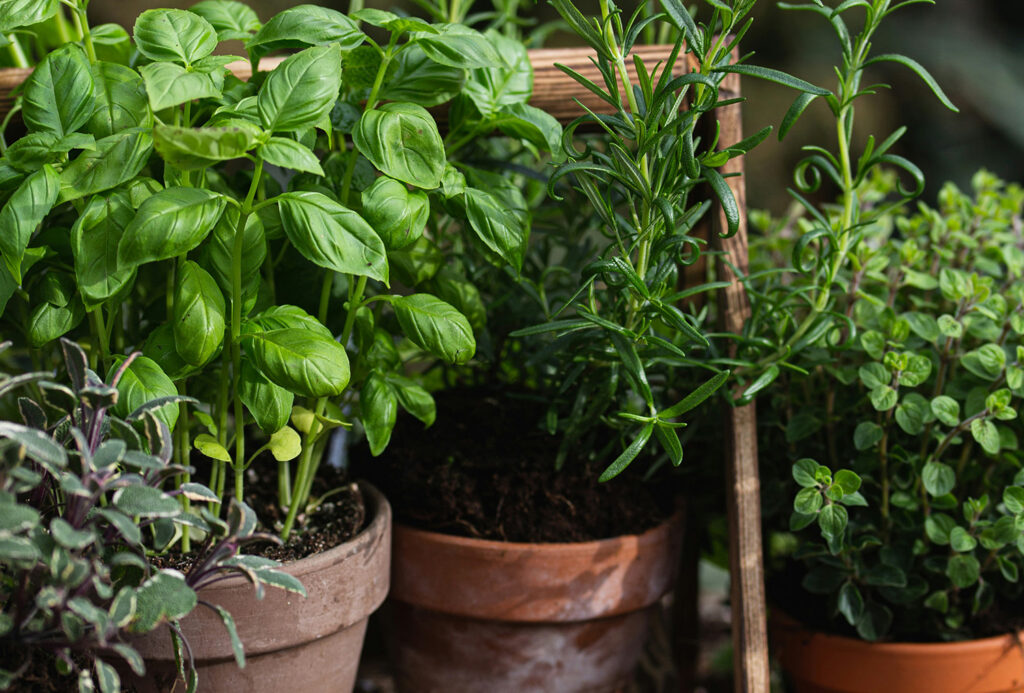
The 5 essential kitchen herbs to upgrade your meals
1. Flat-leaf or curled Italian parsley
Parsley is the ultimate culinary workhorse, adding clean, bright flavor and color to soups, grain bowls, roasted meats, and marinades.
- How to grow: Parsley prefers a range of partial to full sun, at least 6 hours of direct sunlight to thrive, and a little shade to prevent it from drying out. Unlike woodier herbs, it appreciates consistent moisture, so watering every 1-3 days is a good gameplan.
- Pro-tip: Harvest the outer stems first near the base of the plant, allowing young inner leaves to keep growing from the center.
2. Basil
The undisputed king of summer cooking. Sweet basil brings vibrant flavor to fresh caprese salads, homemade pesto, cocktails, and pasta.
- How to Grow: Basil loves warmth and full sun (at least 6 hours daily). Keep the soil moist but well-drained (keep reading for tips on selecting the right pots).
- Pro-tip: Pinch off the top center leaves regularly above a leaf node to encourage a bushy plant and prevent it from flowering.
3. Thyme
A low-maintenance perennial that brings earthy, savory depth to roasted vegetables, poultry, and pan sauces.
- How to grow: Thyme is extremely forgiving and prefers well-draining, slightly drier soil with plenty of sunlight.
- Pro-tip: Don’t overwater! Thyme thrives on a little neglect so let the top inch of soil dry out completely between waterings.
4. Mint
Incredibly refreshing and versatile, mint shines in homemade teas, cocktails, fruit salads, and Mediterranean dishes.
- How to grow: Mint grows vigorously in rich, damp soil and partial to full sun (at least 6 hours of direct sunlight).
- Pro-tip: Always grow mint in its own container. If planted directly in a garden bed, its roots will quickly spread and overtake your other plants! On the other hand, this could be an advantage if you’re looking for an amazing-smelling ground cover.
5. Oregano (Mexican or Italian variety)
Whether you prefer Italian oregano for pizza and sauces or Mexican oregano for a citrusy kick in tacos and salsas, both are fantastic, low-maintenance kitchen additions.
- How to grow: Both varieties love full, warm sunlight and are happier when the soil is dryer and well drained. Let the top inch or two of soil dry out completely between waterings.
- Pro-tip & overwintering note: Italian oregano is cold-hardy, but tender Mexican oregano cannot handle frost. If you choose Mexican oregano, be sure to pot it so you can easily bring it indoors to overwinter on a sunny windowsill before cold weather hits!
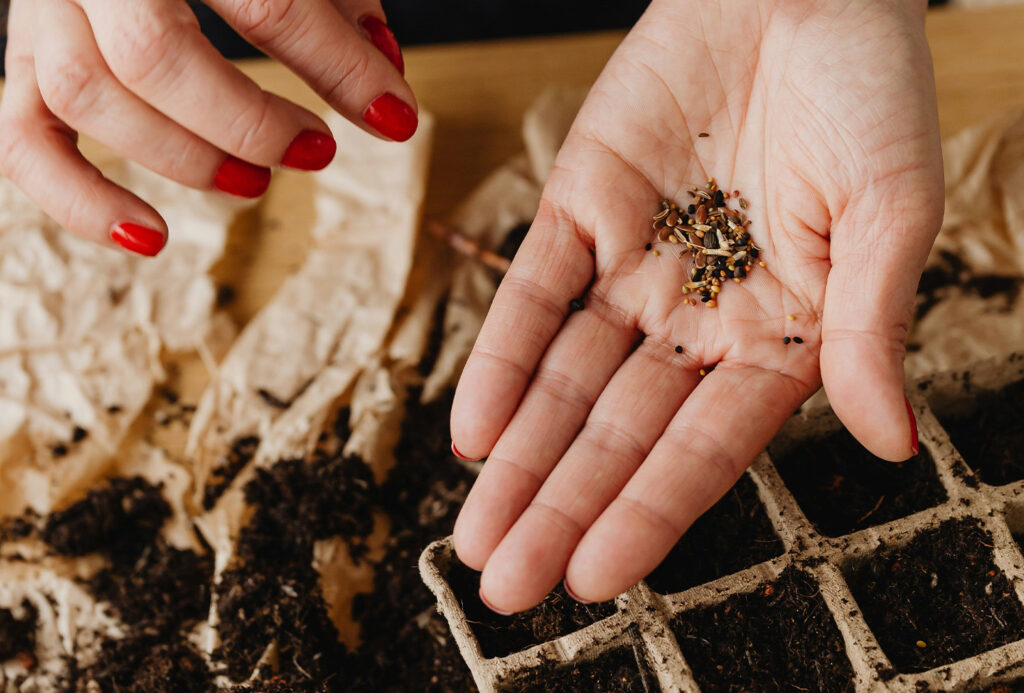
Seeds vs. Starter Plants
For slow-growing perennials like thyme, oregano, and mint, grab small $3 nursery starter pots for an instant harvest. For fast growers like basil and parsley, a cheap seed packet is effortless to start in a pot and yields an endless supply all season long.
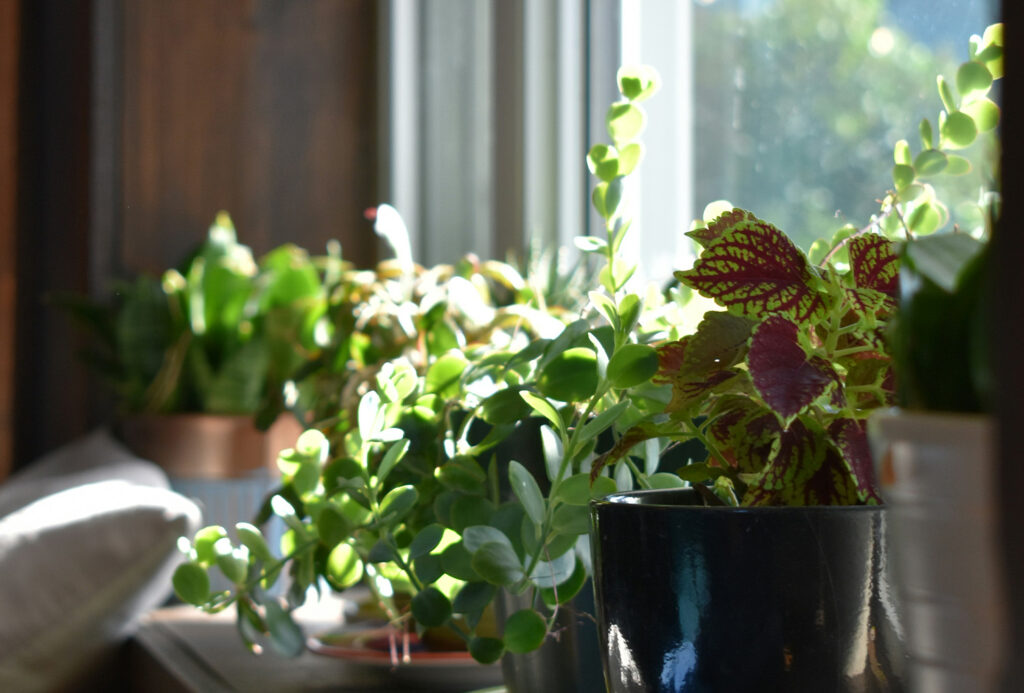
Renter & apartment-friendly growing basics
No garden bed? No problem. Herbs are incredibly adaptable and flourish in almost any container big or small as long as they get enough light and water:
- Decks, porches & patios: Place elevated raised bed planters or sturdy pots along the side of your house or back deck for easy picking right outside your door.
- Vertical spaces: Hang baskets from a sunny porch overhang or railing to maximize vertical real estate without taking up any floor space.
- Countertops & shelves: Keep small terracotta or ceramic pots right on your kitchen counter, a bright windowsill, or a sunny living room shelf so fresh flavor is always within arm’s reach.
- Prioritize drainage: Herbs dislike “soggy feet.” Always choose pots with drainage holes, and place saucers underneath to protect your countertops or windowsills.
- Maximize light: Place your pots in a bright south- or west-facing window. If your kitchen lacks natural sunlight, an inexpensive, clip-on LED grow light works wonders.
- Harvest frequently: Don’t be shy about snipping your herbs! Regular harvesting actually stimulates new, healthy foliage.
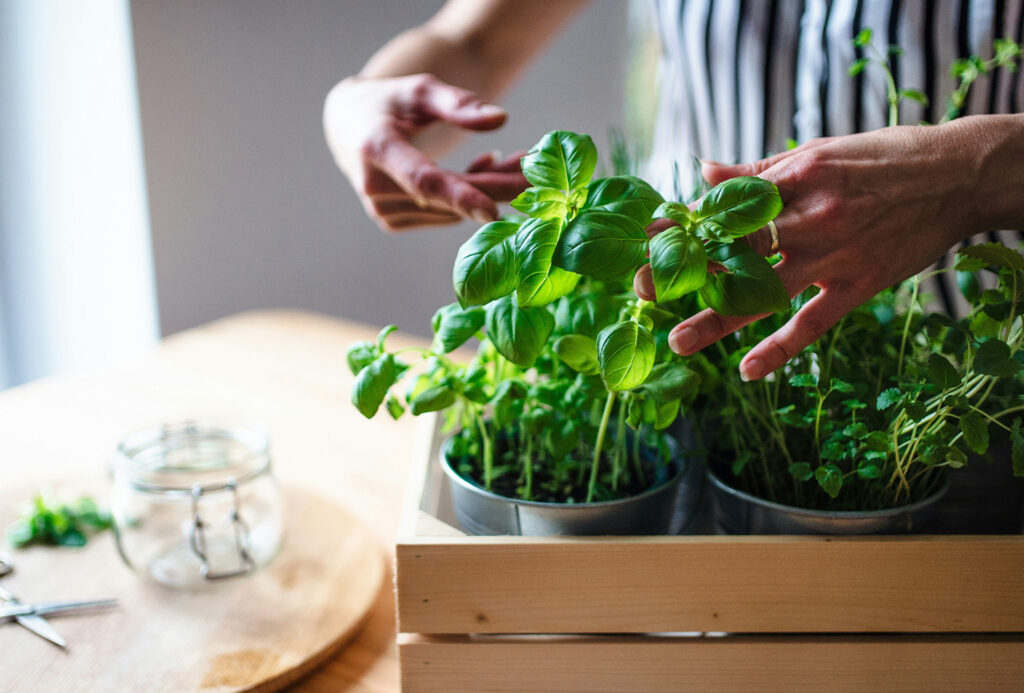
How to overwinter herbs (freshness year round without the bugs)
Don’t let cold weather end your fresh herb season! Bringing outdoor potted herbs inside allows you to harvest all winter long, but you’ll want a quick pest-proofing routine so that outdoor hitchhikers like aphids, spider mites, or gnats don’t invade your kitchen.
- Shower the leaves: A week before bringing pots inside, thoroughly spray down the foliage – especially the undersides of leaves – with a spray bottle filled with water and a few drops of mild dish soap (or organic insecticidal soap). This knocks off hidden pests gently without harsh chemicals.
- Treat the soil for gnats: Soil-dwelling larvae love indoor warmth. Drench the soil once with a solution of 1 part 3% hydrogen peroxide to 4 parts water. It’s completely safe for the roots, but it kills hidden fungus gnat larvae on contact.
- Prune & adjust water: Trim back about one-third of the plant’s growth to reduce stress as it adjusts to lower indoor light levels. Indoor plants grow slower during winter, so let the top inch of soil dry out before watering again.
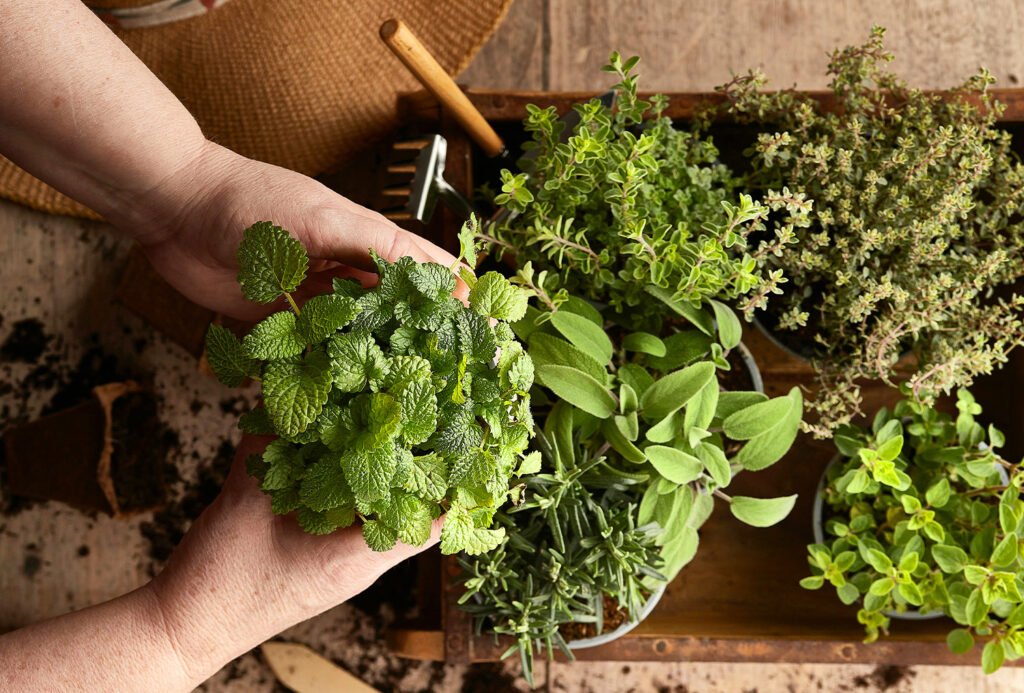
Ready to start?
Pick up two or three small starter plants from your local nursery or grocery store this weekend, clear a sunny spot on your counter, and enjoy the instant flavor upgrade in your home cooking!
Related Posts

Entertaining in the ordinary
By Calista Boskus

Fall reading challenge 2026
By Grace Porto

Beyond the slogan: How a culture of life takes root
By Ava Cilento
