Scroll-free summer: 5 ways to re-evaluate your relationship with tech
Published on June 7, 2026

In many discussions of technology, there is a temptation to evaluate technology in terms of its content alone (i.e., “Are the TV shows wholesome?” “Is this app educational?”). But according to Jeanne Schindler, homemaker and educator, the medium itself is problematic, not just the content it purveys. Jeanne argues that the smartphone is inducing a civilizational crisis whereby we are losing our capacity to be present. We are being robbed of our attentiveness to reality. The solution? A return to the real.
For Schindler, that meant linking with like-minded families in her community who would pledge not to give their children smartphones and to be intentional about their own tech usage. This group, known as “The Postman Pledge,” gathers regularly for good old-fashioned socializing through community dances, concerts, and discussions. If you are drawn to a more analog life, here are five ways to re-evaluate how you engage with your smartphone.

1. Live life outside of your pocket
When Steve Jobs introduced the iPhone in 2007, his infamous catchphrase was “your life in your pocket.” The constant accessibility of the device is part of what makes it so tempting, and yet, so limiting. Consider leaving your phone on its charger or in a designated basket all day rather than carrying it on your person. How do you feel when you are not in the same room as your phone? Can you leave your phone at home while you go on a walk around the neighborhood? If these ideas fill you with anxiety, build your way up to longer stretches of time.

2. Go old school with a landline
For Schindler’s family, the landline plays a crucial role in intentional tech use by rooting the use of a phone to their household, rather than to each individual. By doing this, communication stays grounded in the home and conforms to the natural hierarchy of the family. Parents are more aware of their children’s communication in a natural way and there is a healthy balance between what is public and what is private. Newer screen-free tech, like the Tin Can, makes landline use increasingly appealing. Children are forced to engage with this reality, rather than communicating only horizontally with their peers.
3. Get comfy with fragility
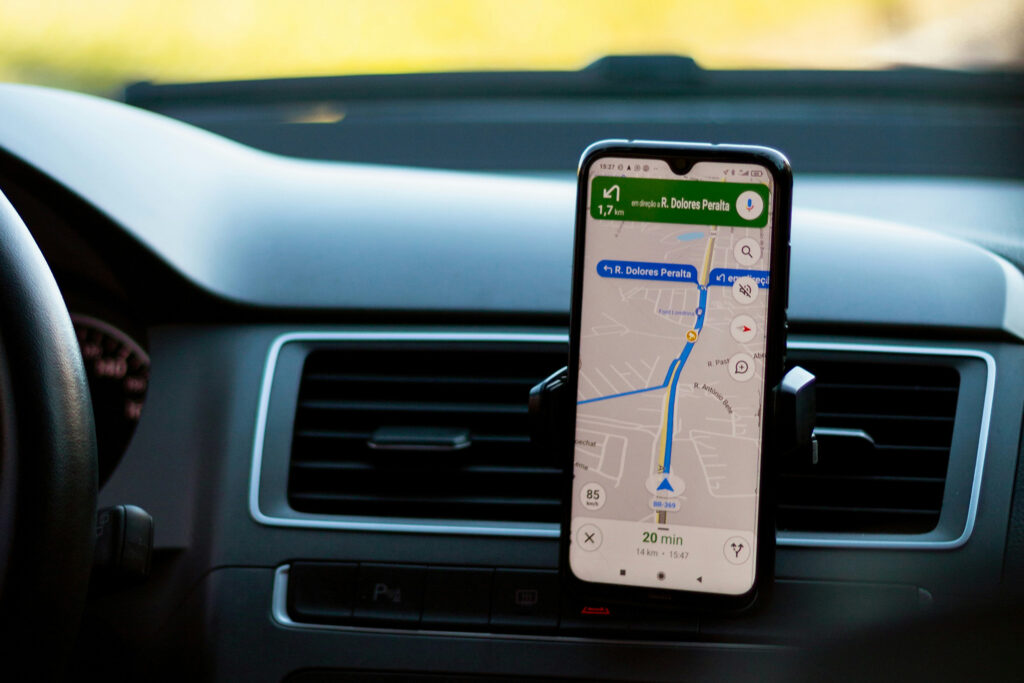
There are countless little ways that the constant companion of a smartphone provides the illusion of control and security. The built-in GPS saves us from getting lost (or worse!), having to ask a stranger for directions. The constant availability of distractions allows us to dissociate from unpleasant situations or emotions. In the end, your phone may be more of an emotional crutch than you realize! The phone cannot save us from sickness or sin; it simply allows us to forget how vulnerable we are as humans. Getting comfortable with your own humanity and mortality is essential for being more intentional in your relationship with technology.

4. Is connection your idol?
We all want to feel important, but is constant digital availability really the way to achieve that? If we buy into the lie that our notifications show us how desirable we are, it can feel impossible to detach our sense of identity from our smartphone. Ask yourself how accessible you truly need to be. Constant “connection” and attunement to reality are not the same thing. Our natural limitations of time and space can help us stay rooted in the present moment, the place where God is sustaining us. Consider how much of your time and attention you would like to devote to something communicated digitally. Can you pare down your notifications? How many times a day is reasonable for you to check texts and emails?

5. Do something real
Get out on a hike, have a real in-person conversation, see a play. These real-life experiences have been the key to the Postman Pledge community’s success. When you get out and do something unplugged, pay attention to how you feel. Do you feel free? Or do you miss your phone? Think back on some of your most impactful memories. Is using a screen part of those experiences? Get lost in something you really love, like a good book or a favorite hobby. If you can, gather up members of your own community and be inspired by the Postman Pledge’s example!
Related Posts

Weeknight decadence — Creamy Goat Cheese Pasta
By Calista Boskus

Irish Thunder: Blessed Fulton Sheen and the drama of truth
By William Nardi


5 ways to prep your yard for outdoor fun this fall
By Rose Church