Teach me how to pray: Lessons on Lectio Divina using art
Published on May 31, 2026

Sometimes, our established methods of prayer no longer seem to give us the insight we were hoping for. This could be a period of dryness, or it could be that we need a little spiritual rejuvenation to see something from a new perspective. This article is an attempt to do just that! Lectio Divina and art theory are two things that seem contradictory, yet their contrast can bring clarity to each other and to prayer.

What you see not what you know
One of the first things you learn when painting is that you need to paint what you see, not what you know. For example, you may know, when painting a plain, that the ground is flat for miles around. Yet if you paint cows standing in that field, you paint the legs further from you higher up on the page, because that is how they appear to our eyes. Or, if you look at a cloud, you may know intellectually that clouds are white. Yet if you actually examine a cloud, you see the grays, the pinks, the blues, the greens — clouds are very rarely white.
So too when you sit down to pray with the Scripture; what you know may be a good place to begin, but you need to take into consideration what is actually before you. The first step of Lectio Divina is to read, often slowly and several times. Oftentimes the passage is one that you may know well — the Beatitudes, the story of the loaves and fishes, or even the Passion. Just as in art, it can be helpful to look at the words themselves, not at what you may think you already know.

Context is key
Manipulating the way light reflects off various colors and textures is at the center of art. Colors appear differently when placed alongside other colors. Red looks redder when placed next to green, but will appear closer to orange when placed near other colors. When imitating life, it is important to not just match the colors of the subject, but also of those around it.
Often when praying over a passage, certain lines may be confusing or seem to mean a certain thing. We approach Scripture in chunks, according to the ways the chapters and lines are divided. Different Bible editions will occasionally be divided by heading as well. Reading the lines around the passage can often provide a deeper insight into the nature of the words themselves.
Contrast reveals
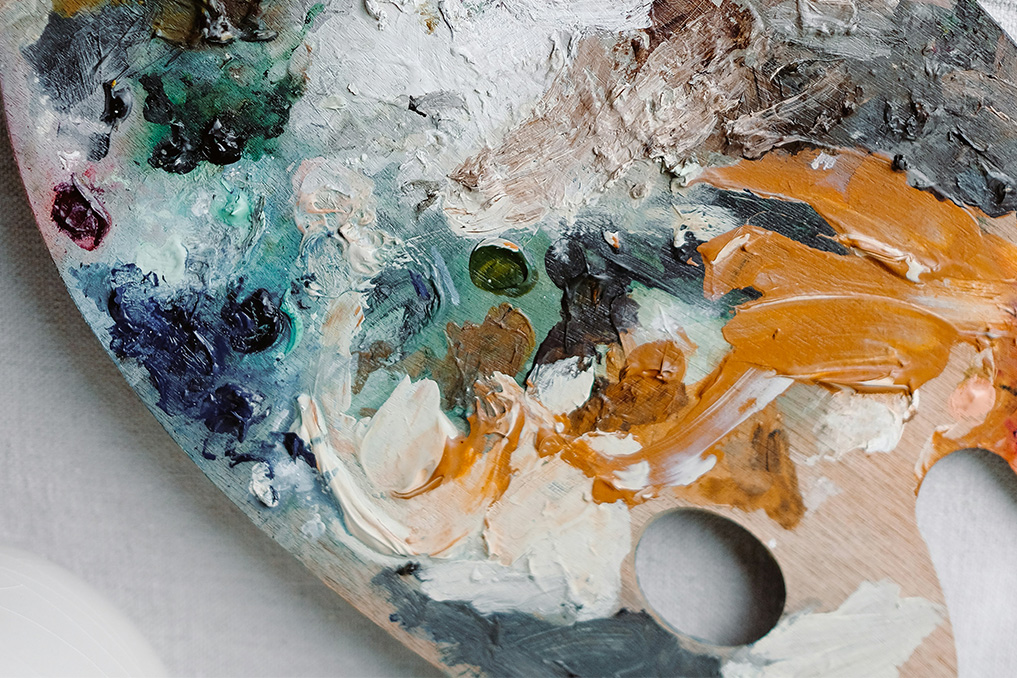
This last principle is the basis of this whole article — contrast is revealing. When an artist wants to draw your eye to something on the canvas, he puts contrasting colors against one another, or different textures together. Red and green, blue and orange, yellow and purple, all of these color combinations are opposites, and designed to draw your eye to them.
So too various Scripture passages, when placed alongside one another, can lead to a greater depth of knowledge and understanding. There is a reason that during the Mass we listen to Scripture from both the Old and New Testaments. While at times the passages can seem random, when placed alongside one another, the beauty and fullness of God’s plan is revealed in greater clarity.
Related Posts
How JP2 teaches us the concept of healthy leisure
By Ava Cilento
Accessorizing 101: How to mix and match colors and textures
By Jessica Nardi

Custody of the eyes
By Rosie Hall
Sheet Pan Spanish-Inspired Chicken & Chorizo
By Calista Boskus