Five poems about Mary to read in May
Published on May 9, 2026
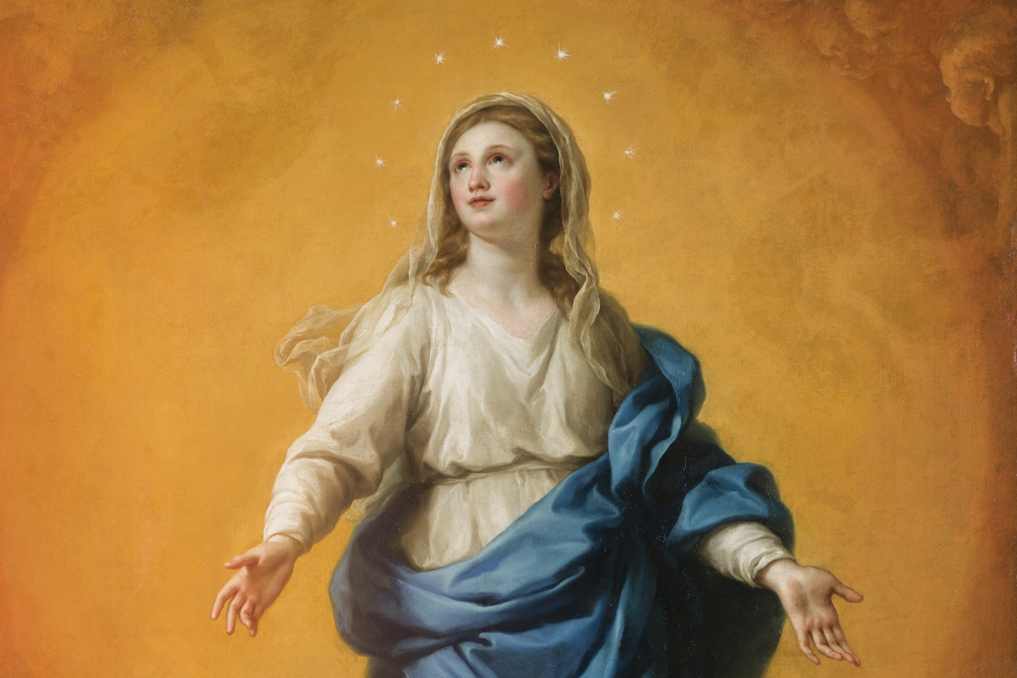
May is the month of Mary. Flowers are blooming, the sky has returned to its beautiful blue, and small children crown the girl from Nazareth as their queen. It is truly right and just, therefore, that during this month we should take some time to reflect on the role of Mary in salvation history and in our lives.
Here are five poems to read over and pray with during the month of May. Through them, may you grow closer to Mary, who, according to St. Therese, “is more mother than queen.”
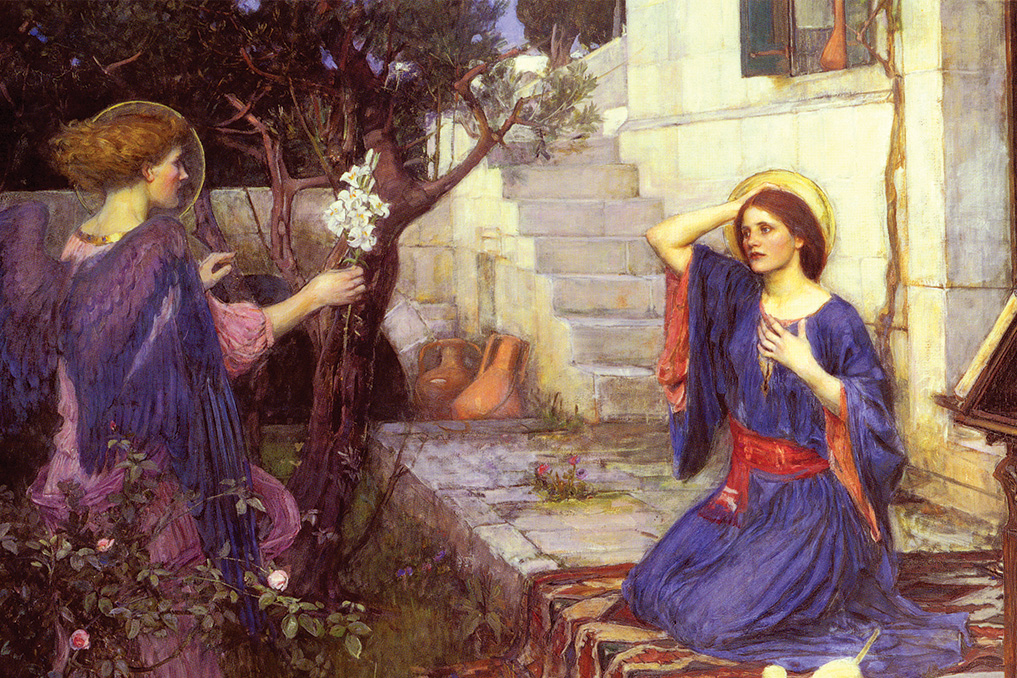
“May Magnificat”
By Gerard Manley Hopkins
Though classified as a Victorian poet, Gerard Manley Hopkins only became popular at the beginning of the 20th century when he was discovered by poets such as T.S. Eliot and W.H. Auden. A Roman Catholic priest and Jesuit, much of Hopkin’s poetry deals with religious matters. His poem, “May Magnificata,” is especially pertinent for our purposes, as it reflects on why exactly May is Mary’s month: “But the Lady Month, May, / Why fasten that upon her, / With a feasting in her honour?” The poem, a series of rhyming quatrains, is easier to read than some of Hopkins’ other works, but retains the thoughtful wonder at creation and God’s plan.
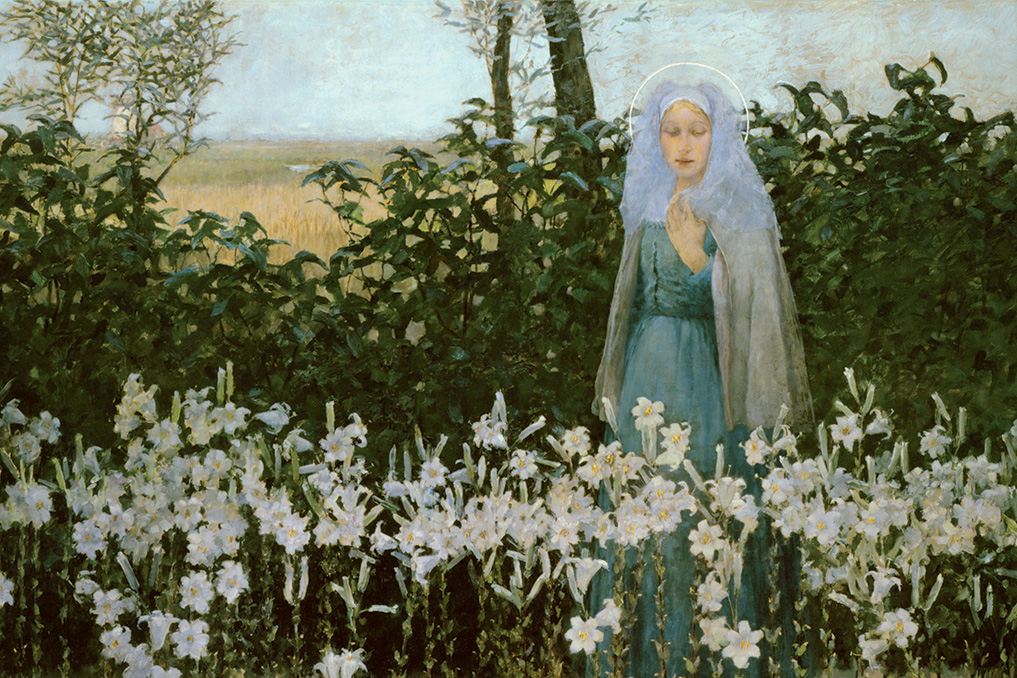
“The Virgin At Noon”
By Paul Claudel
Paul Claudel had a deep love and respect for the Blessed Virgin Mary. Born in 1868, Claudel converted to Catholicism at 18, after hearing Vespers sung in the Cathedral of Notre Dame (Our Lady) in Paris. Though he longed to enter a monastery, Claudel spent much of his life working as a French diplomat, writing poems and plays on the side. This poem, “The Virgin at Noon,” recalls a moment in the middle of the day where Claudel stops in a Church, not to pray, but “To look at you [Mary], to cry for joy, to know / That I am your son and you are there.” The poem honors the Angelus prayer, which is traditionally said at 6 a.m., 6 p.m., and of course, noon. Perhaps by reading it, we too will be inspired to stop at noon and rejoice “Because you are there for always, simply because you / are Mary, simply because you exist.”
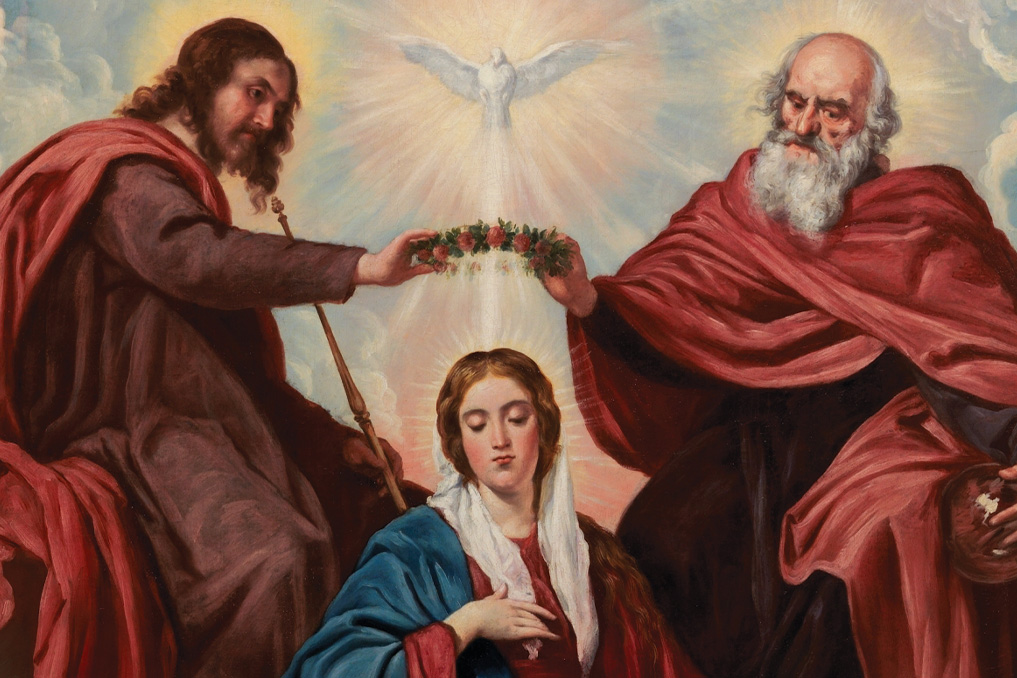
“The Virgin”
By William Wordsworth
Best known for his poem “Tintern Abbey,” William Wordsworth is one of the fathers of English Romanticism. Unlike his contemporaries, Percy Blythe Shelley and Byron, Wordsworth believed in the importance of religion and religious veneration. His sonnet, “The Virgin,” reflects on the fact that Mary, though immaculately conceived, was also a human being like ourselves. He calls her, “Our tainted nature’s solitary boast; / Purer than foam on central ocean tost” and offers a beautiful meditation on the mystery of “All that was mixed and reconciled in thee / Of mother’s love with maiden purity, / Of high with low, celestial with terrene!”
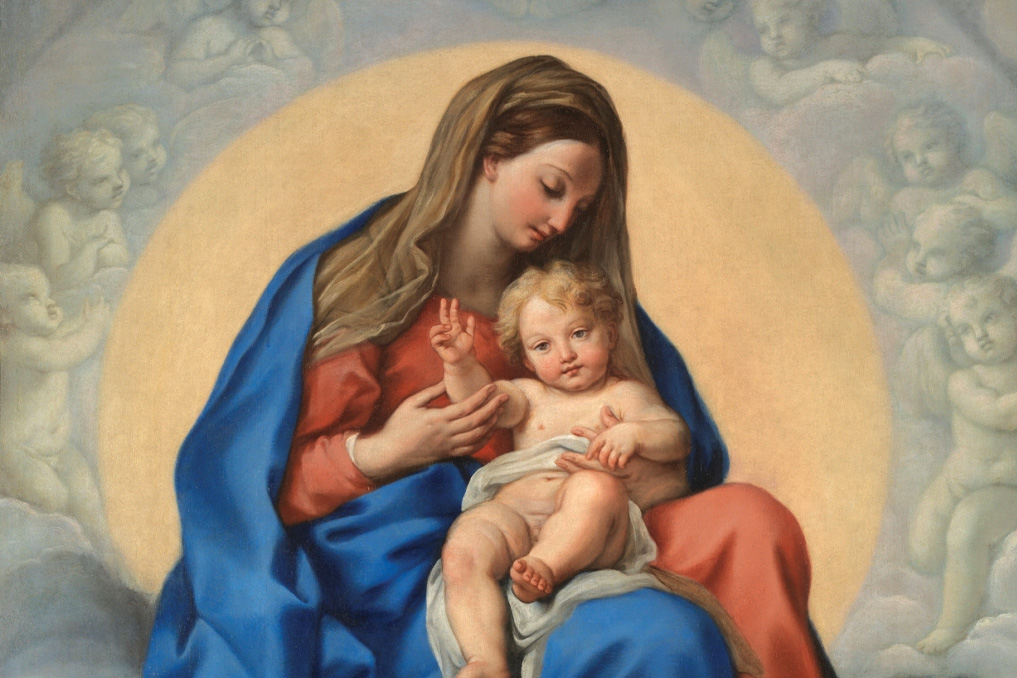
Carlo Maratta, 1680
“The Mother Mary”
By George MacDonald
Famous for his fantasy novel Lilith and his children’s book series The Princess and the Goblin, George MacDonald was a Scottish author, poet, and minister. Authors such as J.R.R. Tolkien and C.S. Lewis took inspiration from MacDonald’s highly imaginative, faith-filled writing. In his poem “The Mother Mary,” MacDonald meditates on the role of Mary in creation history in four stages – the Incarnation, the childhood of Jesus, His ministry, and finally, revelation. It begins, “Mary, to thee the heart was given / For infant hand to hold, / And clasp thus, an eternal heaven, / The great earth in its fold.” The poem offers deep insight into Mary’s role as the go-between of earth and Heaven, and Mary’s role as mother, but also something more.
“The Blessed Virgin Mary Compared to a Window”
By Thomas Merton
One of the best-known Catholic authors of the 20th century, Thomas Merton was a Trappist and a prolific religious writer. Though his later years leave Catholic audiences questioning his authority as a spiritual mentor, his early writings, such as “The Blessed Virgin Mary Compared to a Window,” contain deep spiritual insight. In it, he depicts Mary as a spotless window, with “no shame of original dust.” He uses the cross beams of a window as an image of the role of the cross in Mary’s life: “the geometry of my cross, / Whose frame and structure are the strength / By which I die, but only to the earth, / And am uplifted to the sky my life.” The poem is creative and offers a fresh perspective on Mary and her role in salvation.
Related Posts
How JP2 teaches us the concept of healthy leisure
By Ava Cilento

Accessorizing 101: How to mix and match colors and textures
By Jessica Nardi
Custody of the eyes
By Rosie Hall

Sheet Pan Spanish-Inspired Chicken & Chorizo
By Calista Boskus