Marginalia: Why you should write in your books
Published on March 4, 2026
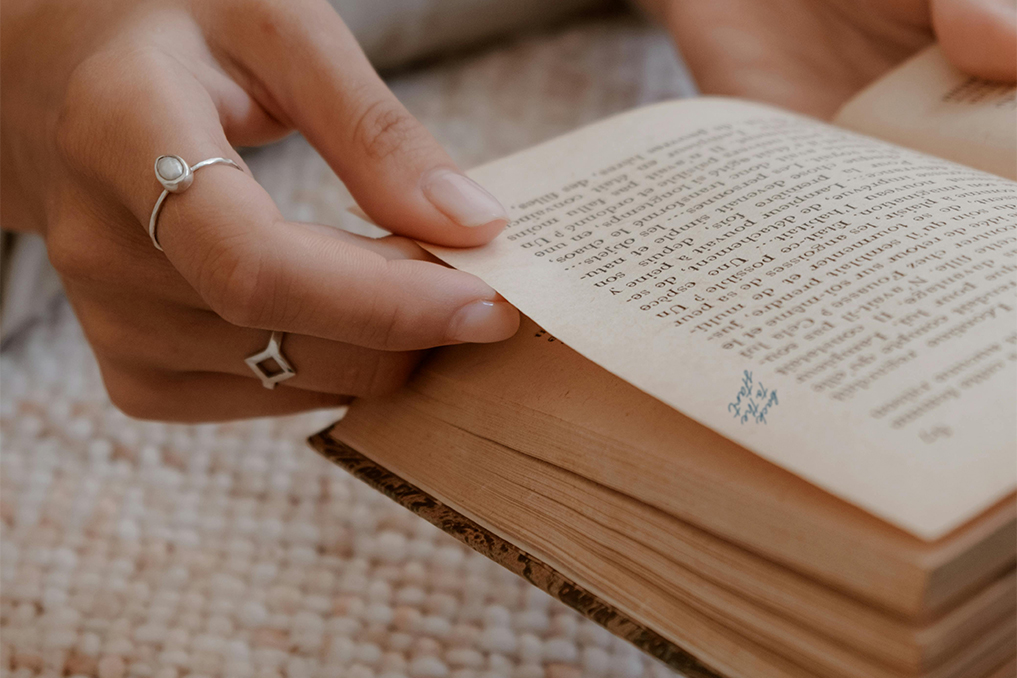
I turned the worn pages of T.S. Eliot’s essays, researching for a rather lengthy paper. My college library, built inside a medieval Church in Oxford, tends to be cold, so I was still wearing my winter coat and hat as I read. The book in my hand was well loved for a library book, with various underlinings and comments in the margins. My favorite exchange was in three different pens and handwritings, and went something like this:
“Eliot what are you talking about? This makes no sense, stop trying to talk about science!”
“Maybe he’s just channeling Proust?”
“You’re the one who doesn’t understand science, you twat.”
Laughing to myself, I was reminded of one of the reasons why I love to write in books — though not library ones. This little conversation had made its way through at least three sets of hands, with three very different takes on the writing. It made the text come alive in a new way and emphasized the fact that texts are dialogues. Are you scandalized by writing in books? Keep reading and I hope to convince you to begin your own practice of marginalia.
Historically justified
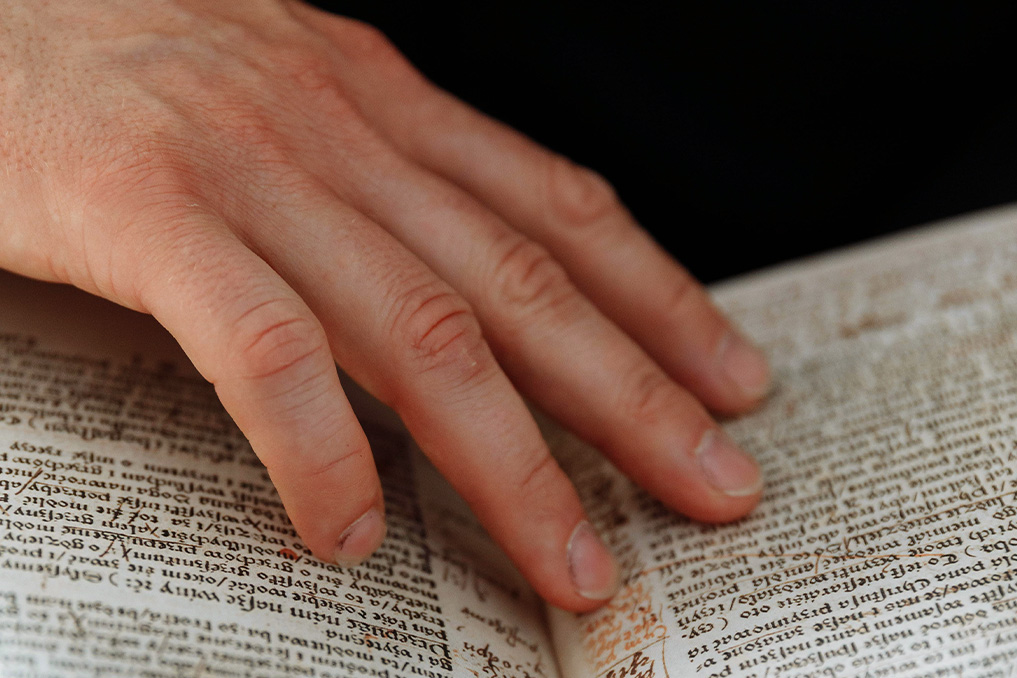
Writing in the margins of books, or “marginalia” as the academics call it, dates back to the illuminated manuscript. Monks would write notes or addendums in the margins for the next reader or student, and the practice of creating elaborate drawings which spanned up and down the pages began, in part, with doodling in the margins.
Later, as books became cheaper, famous authors and commonfolk alike would write marginalia. Samuel Taylor Coleridge is famous for his page-side comments, and Mark Twain had some viciously witty commentary in his books. The southern author famously retitled his copy of Landon D. Melville’s Saratoga in 1901 the “Droolings of an Idiot.” You too could be as bold with your commentary. After all, famous authors do not have the monopoly on witticisms.

Turn reading into a conversation
Whether you realize it or not, reading is just listening to one side of a conversation. The author has something to say to you, the reader. Writing in the margins turns the monologue of the author into a dialogue – you have the opportunity to comment on whatever it is that you are reading, to “speak back” to the author with your own questions, comments, or complaints.
This turns the reading experience into something active, forcing you to think about and develop opinions about what you have read. You are not just listening, you are listening and responding, even if that response is merely “wow!” or “?”

A memory tool
When you turn a passive monologue into a dialogue, you remember better what it was that you read. How often do you finish a book and then promptly forget everything about it? I have books on my shelf that I cannot recall for the life of me, but the books that I write in I remember. I remember the fight I had with Samuel Richardson in Pamela, the deep thoughts dredged out of me by Fyodor Dostoevsky’s The Idiot, and the heartbreak I experienced at the end of Seamus Heaney’s translation of Beowulf.
When you write in your books, you take ownership of the experience of reading, making it yours and recording your reactions in a way that makes you remember them. However, if you don’t remember them, you can always pick the book up again and read over your notes, continuing the dialogue where you picked up — and even argue with your past self!
Your future self will thank you
When I was 18, my mother and I switched Bibles – I wanted something smaller and easier to transport, she wanted larger text that was easier to read. Both of us wrote and underlined in our Bibles, and even now I find small notes and marks from my mother who read and prayed over the same passages.
When you mark a book, you are speaking not just to the author, but to whomever will come afterward. Reading my mother’s marked-up Bible gave me deep insight into who she was and how she prayed, passages she struggled with or loved. Rereading books that I have marked gives me insight into my own past self – my misunderstanding of the text or lights and inspirations that I had forgotten.
I don’t keep a journal (though I have tried and tried). However, my little library has become my journal, and I can look back and read all the books and notes that have made me who I am today. I hope that someday my future children can read these same books and receive insight into their mother, finding out who she was, and what she loved.

What is a book?
Now, I am well aware that some of you probably still disagree with me. Books are expensive and you want a clean slate to read from. I will admit, some of my beautiful antique hardbacks sit pristine and untouched on the shelf. However, to my mind the purpose of a book — paperbacks especially — is to be lived with. They are not museum artifacts. My paperbacks get shoved into pockets, get sandy at the beach, live in the bottom of my purse waiting for a spare moment, and yes, are constantly being marked by pens.
This doesn’t mean that I don’t respect the books. My books are my friends who have changed me, inspired me, and challenged me since I first learned how to read. However, if I waited for pristine conditions in which to read them, I would never read at all. If they sat glossy and stiff on the shelf then they would be failing to fulfill their telos, their purpose, which is to be read and loved and lived in. So, dear reader, mark up your books, get your thoughts on the page. You will become a more thoughtful engaged reader if you do.
Related Posts
The non-sewers’ guide to All Saints’ Day costumes
By Grace Porto

How JP2 teaches us the concept of healthy leisure
By Ava Cilento

Accessorizing 101: How to mix and match colors and textures
By Jessica Nardi

Custody of the eyes
By Rosie Hall