A tour of Oxford
Published on January 25, 2026
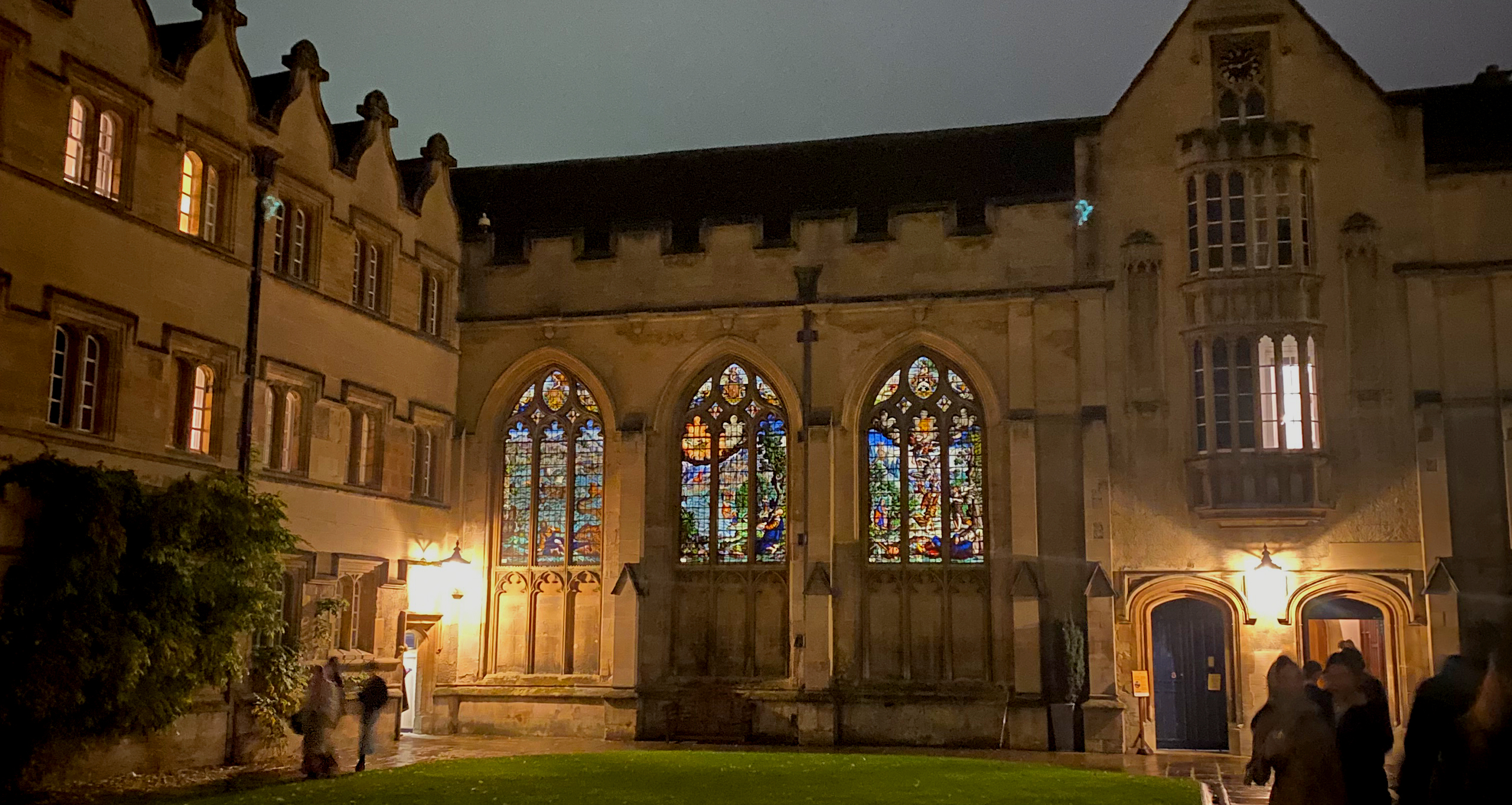
“I wonder anybody does anything at Oxford but dream and remember, the place is so beautiful. One almost expects the people to sing instead of speaking. It is all like an opera.” – WB Yeats
There’s nowhere in the world quite like Oxford. Gothic spires scrape the sky, students in trench coats linger outside pubs with pints in their hands, the ghosts of historical and literary figures haunt every corner. There are buildings in every style of British architecture, students from every country in the world, and more than 3 million books. From the Bridge of Sighs to the Tower of St. Mary’s, Oxford is full of wonder, mystery, and history.
I came to Oxford to get my Master of Studies in Modern English Literature. C.S. Lewis, J.R.R. Tolkien, Dorothy Sayers, Percy Shelley, Oscar Wilde, T.S. Eliot, Lewis Carroll, and even Dr. Seuss were all former students. Though my career and writing repertoire is much more modest than those mentioned here, I would love to show you around my university and introduce you to some of its highlights.
History
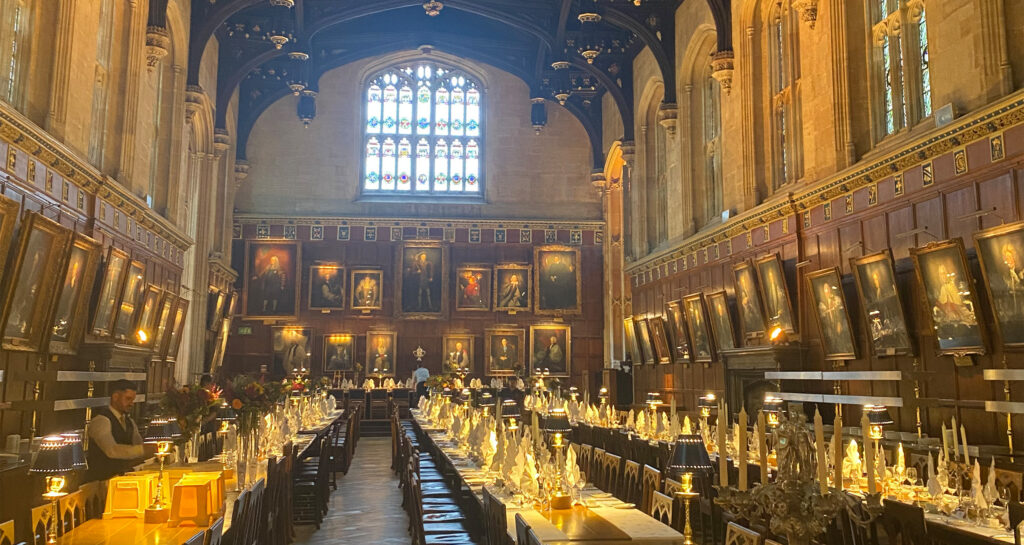
Oxford is one of the oldest and most prestigious universities in the world. Founded in the 11th century, the town gets its name from its location at the convergence of the river Thames with the river Charwall. The local oxen would ford the river there, and small oxen are still engraved onto many of the lampposts of the town. Because of the rivers, punting is a common pastime of the students and the annual rowing competitions are famous worldwide.
Originally a heavily ecclesiastical institution, Oxford went through some trouble during the English Protestant reformation, with martyrs from both religious denominations dying in its streets. During the English civil war, Charles I chose Oxford as his capital. In more recent history, Hitler forbade the Germans from bombing Oxford as he intended to make the town of learning his own capital when he conquered England. As a result, much of the town retains its patchwork architecture, some of which dates back to the University’s founding around the year 1040. The antique glasswork makes Oxford’s windows sparkle in the sunlight, giving the town an ethereal and whimsical feel.
Colleges
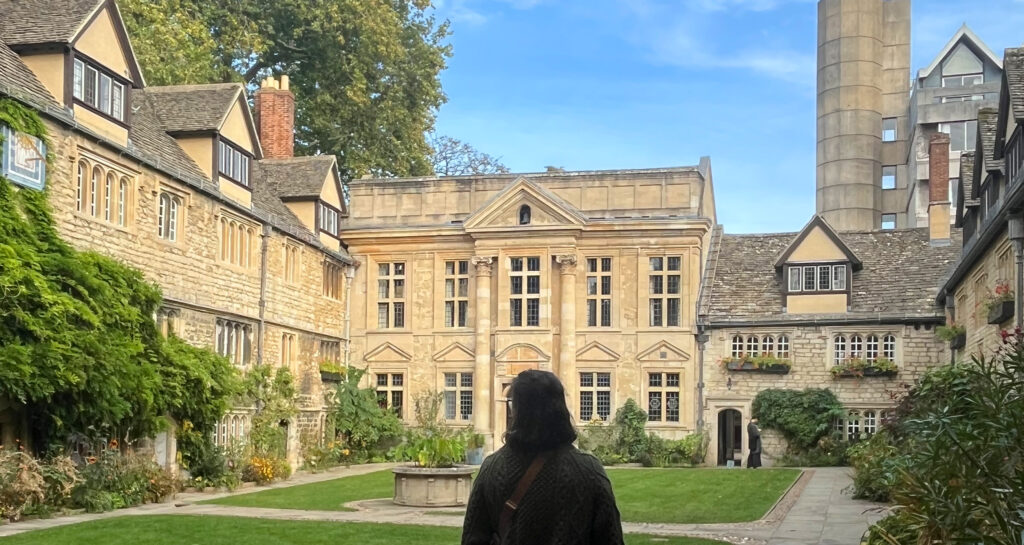
The University is made up of 39 different colleges, which caused me some confusion as an American, where “college” and “university” are synonymous. I often find it easiest to explain the colleges as the university version of the house system found in some high schools and most well known because of Harry Potter. In fact, several of the most famous Harry Potter movie scenes were filmed at Oxford.
Each student is assigned to a college, some more prestigious and better funded than others, and each one has its own flair and feel. My own college, St. Edmund Hall, is known for occupying one of the oldest parts of the city, with buildings dating back to the 1000’s. It is also one of the only medieval “halls” still in existence, and proudly flaunts its medieval roots with a trumpeting herald who appears to have come straight from the halls of King Arthur. If you get the chance, touring these different colleges can be an excellent way to get the feel for Oxford and see some beautiful architecture.
Top three hidden gems
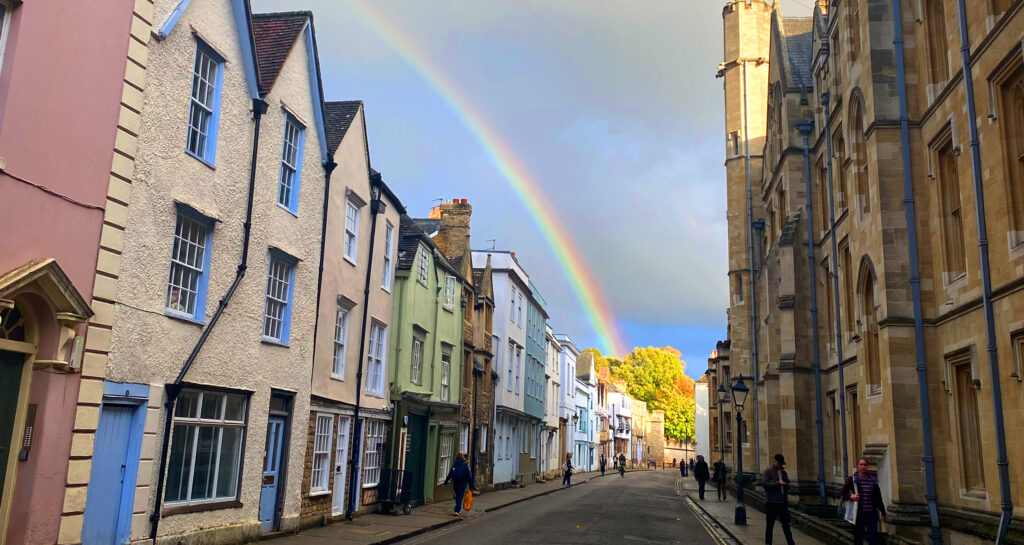
It is difficult to choose which of the amazing and historical features to mention here because exploring Oxford is so much fun; I have therefore chosen three little things which may not be so well known!
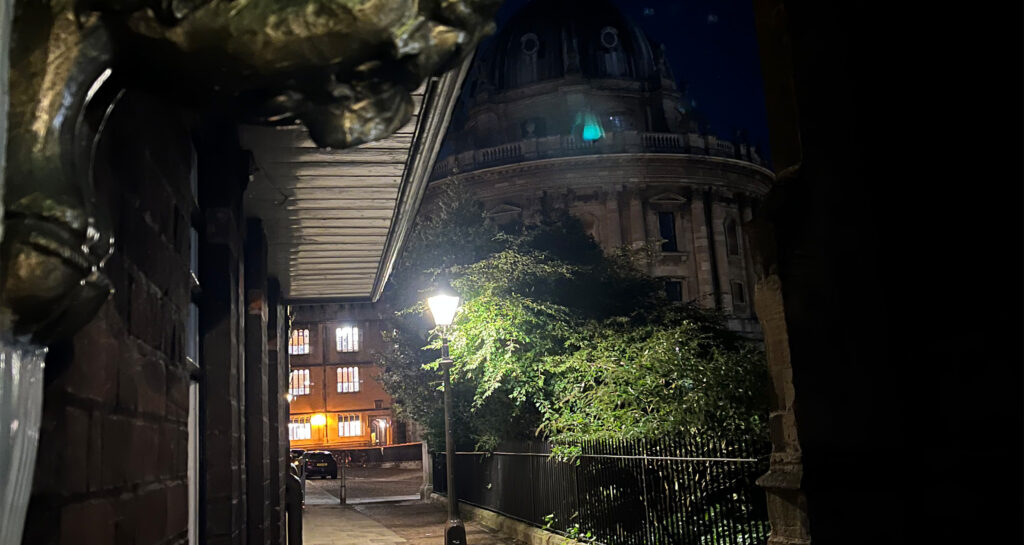
1. C.S. Lewis’ lamppost
Famous Christian author, Clive Staples Lewis, attended Oxford as a student and then went on to become a professor at Magdalen College. Perhaps Lewis’ most famous books are his children’s series the Chronicles of Narnia. Walking around Oxford, it is easy to see where he got much of his inspiration, however there is one spot in particular where legend has it the idea first struck him.
If you leave Oxford’s Cathedral Church St. Mary’s and enter St. Mary’s Passageway, the small street between High street and the Radcliffe Camera, there is a door directly opposite you. The lintels of the door are two fauns upholding the overhang above the door, and on the door itself is the face of a lion. Not only that, but if you turn to your right there is a singular lamppost which at night glows brightly. It is said that this combination of architecture was the spark which began Lewis’ book The Lion the Witch and the Wardrobe, in which fauns, lions, and lampposts are critical features.
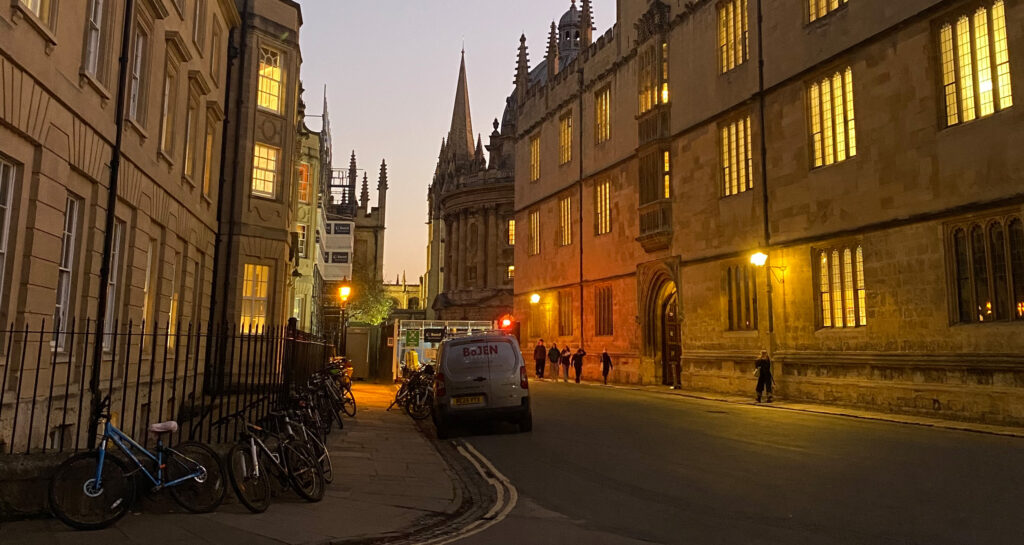
2. Alice’s Shop
Charles Lutwidge Dodgson was a professor at Christ Church College Oxford in the latter 1800’s. A co-worker of his had several small daughters who Dodgson would entertain sometimes, telling them tall tales, taking them punting on the Charwall River, walking around the botanical gardens, and visiting a small curiosity shop packed full of knicknacks. Later, Dodgson wrote down these little stories which had entertained the middle daughter Alice most especially. He published them under the pseudonym Lewis Carroll, with the title Alice’s Adventures in Wonderland.
You can still go and visit all the places which inspired Carroll’s book, and the small curiosity shop which fascinated Alice so much has been converted into a little shop full of Alice mugs, shirts, and books. Keep your eyes peeled as you walk along the Charwall – perhaps you will spot a white rabbit!
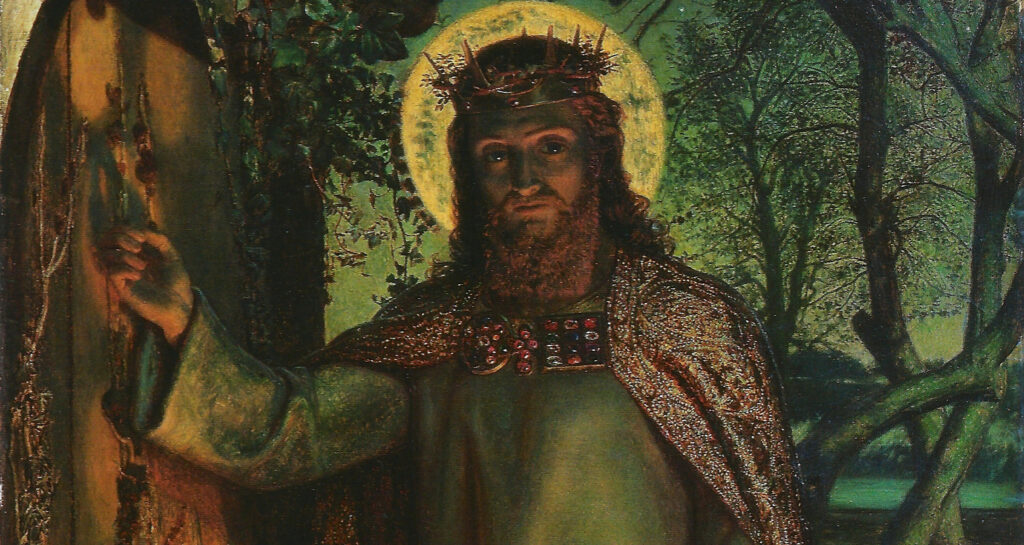
3. The Light of the World
One of the most beautiful hidden gems Oxford has is hidden in the Keble college chapel. This beautiful painting by William Holman Hunt was painted in 1853, and depicts Christ, crowned with thorns knocking at a door. The door has no visible handles, is rather overgrown with thorns, and cannot be opened from the outside. This door represents the human soul, which Christ will not take by storm, but which he is always seeking to enter in his gentle way. Hunt captures beautifully the scene from Revelation 3:20 “Behold, I stand at the door and knock; if any one hears my voice and opens the door, I will come in to him and eat with him, and he with me.” The painting is a reminder that Oxford was an ecclesial school first, has been home to faithful Christians for centuries, and that Christ is still knocking at the hearts of all those who visit.
Related Posts
The non-sewers’ guide to All Saints’ Day costumes
By Grace Porto
How JP2 teaches us the concept of healthy leisure
By Ava Cilento

Accessorizing 101: How to mix and match colors and textures
By Jessica Nardi

Custody of the eyes
By Rosie Hall