What Raye’s new song “Where is my husband” reveals about feminine desire
Published on December 12, 2025
Disclaimer: This song does contain one expletive. Parental guidance encouraged.
Two chart-topping British artists with dramatically different approaches to their art are revealing similar deep truths about feminine desire. This fall, Olivia Dean released her newest album, “Art of Loving,” to wild success. Conversely, Raye’s single “Where is My Husband” released Sept. 16 was swept under the rug.
While Olivia Dean, who evokes Audrey Hepburn, focuses on comforting love songs and personal reflections about becoming her best self in and out of relationship, Raye is more Marilyn Monroe meets Amy Winehouse boasting female empowerment. While Dean continues to rise in the charts for her talent, Raye chose a more blunt approach with her latest single. She tells listeners that despite being driven, strong, and a girl’s girl, she does in fact yearn for a man by her side. Even Raye finds that “girl bossing” has left her empty-handed in the romance department, and it may not be her fault.
Raye’s song isn’t about female empowerment. It actually shouts into the void a different question: What has Western culture done with the helpmate, and where can he be found?
The British songstress recounts her waiting for Mr. Right and frankly getting frustrated:
“While I’ve been reviewing applications
Wait ’til I get my hands on him, I’ma tell him off too
For how long he kept mе waiting, anticipating
Praying to the Lord to give him to my loving arms
And despite my frustrations
And he must need me (he must need me)
Completely (completely)
How my heart yearns for him”
Raye isn’t just another woman in the spotlight pining away for true love or mourning a break-up. She’s expressing the desire to be loved totally. She is pining for what Pope John Paul II calls “original solitude” where God had a unique relationship with women precisely because He created woman last. She is the pinnacle of creation and created to be a person that is in relation with and to others.
Women are often facilitating interpersonal relationships, connecting and gathering friends, planning coffee dates and navigating tensions and joys within family life. Women nurture one another through encouragement, deep conversations, laughter, and are naturally gifted with strong emotional intelligence.
Adam yearned and longed for flesh of his flesh, bone of his bone. Simply put, Eve was created to be desired, to give of herself, and to will the good of another. She is beautiful to behold and is desired. This leads to Raye’s frustration as she yearns to be in a relationship with another and give of herself. But where is he?

The masculine and feminine disparity
The term “girl boss” was coined in 2014, by Sophia Amoruso, the founder of fashion retailer NastyGal, in her memoir entitled #Girlboss. It’s the idea of not only breaking the glass ceiling, but climbing through it. It promoted a hustle culture of workaholic, college-educated women who aspired to be CEOs and to be just as successful as men. The “girl boss” movement coincides with third-wave feminism that has brought about a pop culture where we can see the reign of female empowerment. The Spice Girls’ motto was “girl power,” and Laura Croft’s powerful combat gave any man a run for his money. Even Disney’s Cheetah Girls’ song “Cinderella” complains about not wanting to be the damsel in distress any longer.
In the 2010s, the promotion of women in STEM (science, technology, engineering and math) fields became mainstream in elementary education. While previously a male-dominated field, as of a Pew research study in 2018, half of the STEM workforce is now women. Because women are so relational, it’s no surprise that 77% of healthcare practitioners and technicians are women, according to another study.
Bottom line, women are advancing far more than men in our culture. And it’s causing problems. What’s fascinating is that the fruit of this issue is being seen in women’s love lives.

The girl bosses of the world are left lonely
Educated, beautiful, and strong women have all their bases covered, except someone to share their life with. They did all the right things, focused on their career, sought self-fulfillment through solid female friendships, hobbies, and personal health, but cannot find a male partner who is their equal.
Like Eve right before the fall, some single women begin to doubt if God is holding out on them. Is someone out there for me amidst men being exposed to pornography, the constant swiping of dating apps, and women throwing themselves at men for all the wrong reasons? For the single girls (and men) out there, holding out for an ideal seems impossible. Raye’s song sassily and succinctly asks the question single women wonder to themselves: Does a partner that is compatible with me exist? For the Christian girls out there, the question is twofold, not only where is he, but is he in sin? But most, including Raye, wonder, “how long do I have to wait?
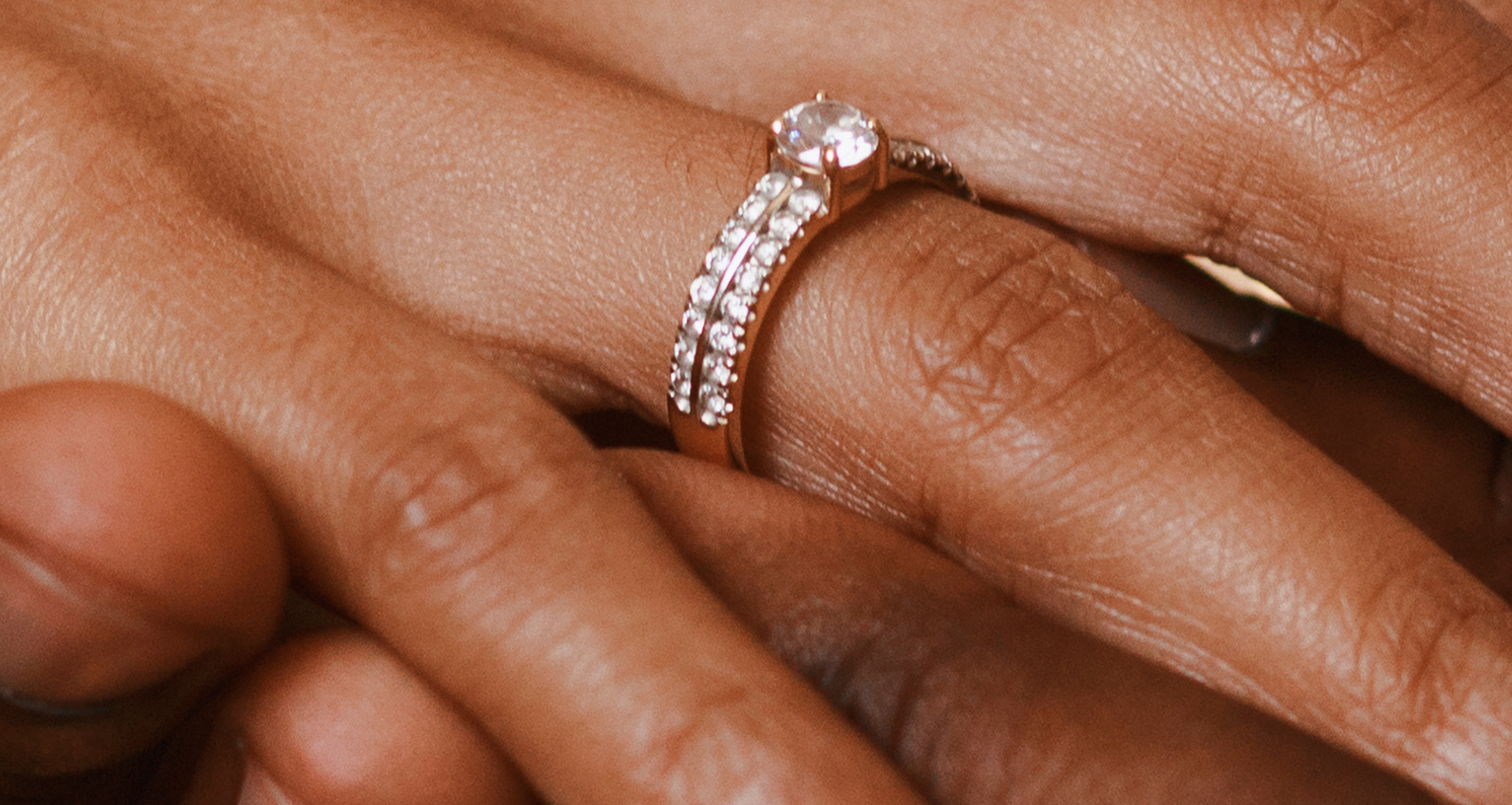
Raye’s song about wanting a husband and “a big and shiny diamond” on her wedding finger isn’t a callback for female oppression but an innate longing to love and be loved. A wedding band isn’t just a beautiful accessory, it signals commitment and everlasting love. The love that is old-school, monogamous, and worth fighting for.

What men are up against
What’s concerning is that the men we so desire are harder to come by and the odds are stacked against them to succeed. And younger men agree.
According to a study of King’s College London, there is a gender divide. Young men are noticeably less positive about young women. The study explains that 37% of men aged 16 to 29 say “toxic masculinity” is an unhelpful term. It makes sense considering the impact of the #MeToo movement where women spoke out about sexual assault. With this backdrop, the good men out there are especially hesitant for fear of making a woman uncomfortable. Someone I went on a date with once told me he was worried about paying for the check for fear of offending his date.
Another problem is the lack of men’s media that uplifts and teaches men to be authentically masculine. No wonder Jordan Peterson and Joe Rogan gained such notoriety. Despite some glimmers of hope, TikTok only fuels this gender divide. One telling trend shows women pretending to be emotionally distant and manipulative, poking fun at the ways they’ve been mistreated in past flings. The trend is called “women in male fields.”
Another TikTok phenomenon is the performative male: men who adopt stereotypically feminine interests or present themselves as emotionally in tune and feminist, often to appear more desirable to women.
As LGBTQ+ visibility grows, fashion has leaned more androgynous, encouraging men to embrace “softer” aesthetics, wear more fitted clothing, and explore pursuits traditionally seen as non-masculine. This shift might not be just a fleeting trend but could be influenced by science. One study, for instance, found that women taking hormonal birth control rated less masculine-looking faces as more attractive, while women not using contraception did not show the same preference.
One in five men think being a man today is harder than being a woman, and three out of 10 believe in 20 years, it will be harder for men as a whole. A new trend in education may prove this to be true. Men represent only 42% of students ages 18 to 24 at four-year universities, down from 47% in 2011. The men who do attend college are struggling to find jobs. The unemployment rate for men ages 23 to 30 with bachelor’s degrees has increased to 6% — compared with 3.5% for young women with the same level of education, according to data analyzed by NBC News.

Despite the odds stacked against them, women want men to rise up
The girl bosses of the world are often left feeling lonely, longing for a man who is capable, reliable, and truly husband-worthy. But what does it mean to be a husband? According to Raye, it’s someone who wears a tie, takes initiative, and knows how to commit when he’s found something — or someone — worth keeping. In essence, she’s describing a man of action: one who pursues good, acts with intention, and doesn’t delay what can be done today.
Yet many modern women have been told that to succeed, they must become like men. That’s a lie. A woman’s strength lies not in imitation, but in authenticity — embracing her own nature: her receptivity, her capacity for nurturing in all its forms, an awareness that her worth is inherent, her beauty innate, and her body’s rhythm something to be listened to, not ignored.
When women feel pressured to suppress these qualities, cynicism often follows, especially when the men they meet respond with confusion or defensiveness. After all, a man doesn’t want another man; he wants a woman.
Our culture must therefore call men to authentic masculinity, one defined not by dominance, but by gentle and measured strength,, accountability, and decisive action. There are men who already have what it takes to be husband-worthy; they just need to be encouraged and given the space to rise to it!
Related Posts

Road trips to celebrate America 250
By Jessica Nardi

Caramelized Corn Ribs with Lime Crema
By Calista Boskus

Such a good read! Thank you!
So insightful, eloquent in speech, and relatable! Phenomenal!