The losing battle of process to progress: An ode to making tea
Published on February 20, 2026
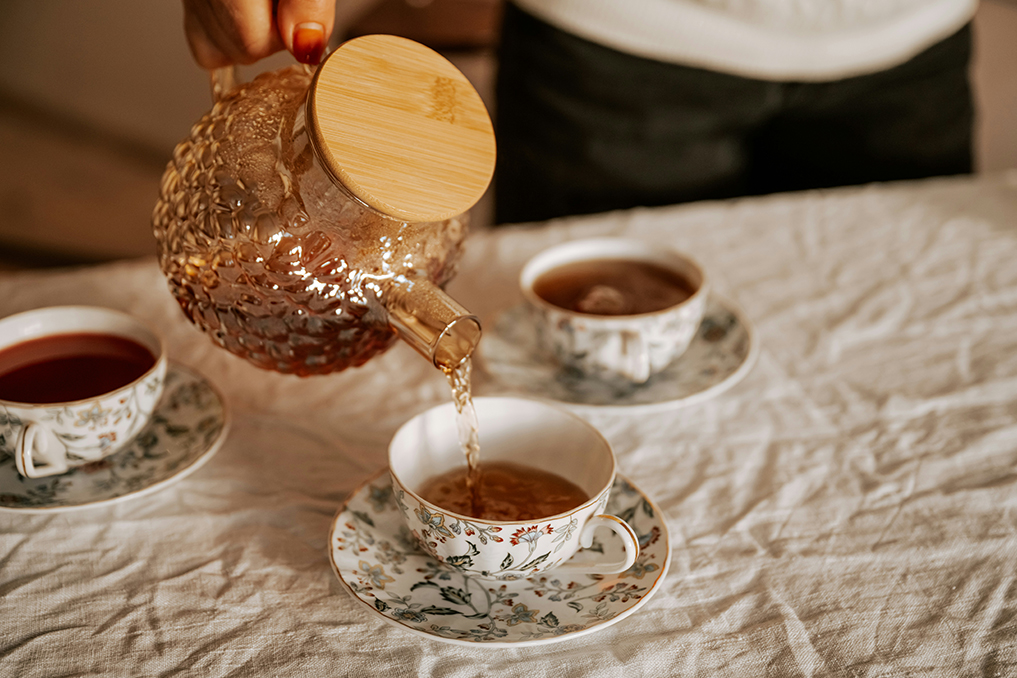
The need for tea
Last year I went with a friend of mine to watch The Lord of the Rings (extended editions) while house-sitting. The two dogs that came with the house, Spartacus and Fred, kept us company. Fred spent most of his time looking anxious and hiding under the couch. Spartacus, however, was a cuddler, and I spent a lovely morning, afternoon, and evening watching the story unfold, cuddling a dog, and pretending to do my college homework.
In the midst of this movie marathon I craved a cup of tea.
I am a self-proclaimed tea drinker. T.S. Eliot’s line: “I have measured out my life in coffee spoons,” could very easily apply to myself, if one substitutes “coffee” for “tea.”
I entered the kitchen, a dark midcentury modern affair, that seemed out of place in sunny Florida. Among all the glistening gold accents, black cabinets, and modern appliances, I couldn’t find a tea kettle — not even an electric one! I recognize that tea drinkers are relatively unrepresented when considering Americans’ preferred beverages, but still, no tea kettle at all in a shiny modern kitchen?
My dear friend, to satisfy my need for tea and curtail my rant, directed me to a small metal spigot beside the sink. It spit out boiling water instantly, and I could make tea quickly and efficiently – no kettle needed.
I was immediately and unexpectedly furious. My friend, who had probably been wishing to stop a rant before it began, was subjected to another she was not prepared for. The small stupid spigot became for me a symbol of the death of patience and process in America.
Instant gratification
Instant gratification: We have heard these words shouted from the rooftops of the homes of intellectuals for years now. Our cellphones are faster, the internet is faster, our cars are faster, the expressway is faster, taking your classes in three years gets you through college faster, ads for how to make a million dollars fast, and on and on and on. Americans are obsessed with speed, with progress, and that’s all very well and good. I like progress.
Indoor plumbing is perhaps my favorite sign of progress. I like that I can look up the word “bouleversement” and discover its definition, origins, and pronunciation within seconds (a violent inversion, French, bull-ver-say-mon). I like that I can order my food through an app when I am feeling particularly, poetically, and romantically anti-social. I would like to progress to a stage where I am not having to duel a machine in an intense battle of wits whenever I need to print something. Yet there are some circumstances in which the progress is cutting out the process which is the purpose of the thing.
What do I mean? Well, now we are back to tea.
The beauty of process
The point of tea, in my opinion, is not so much the drinking of it — that is only half the delight. Rather, the true delight of tea is the experience of it.
Filling a kettle with water, setting the water to boil, waiting, listening as water hums, then bubbles, then spits, then boils, then roils, until the little whistle is singing, and your mind has been called away from its wandering to the task at hand.
Then you make your selection, ideally loose leaf. You fill the petite tea diffuser with a tiny spoon and drop it carefully into your cup of choice — carefully selected for the season, the time of day, or simply the mood.
(I have a mug I purchased from a local artisan in the Adirondack mountains. The deep glossy blues and browns remind me of diving into a lake in the crisp mountain morning, with the fog on the water and the mountains gazing, narcissus-like, at their own reflection in the glassy lake.)
Then in goes the water, and the steam fills your nostrils and fogs your glasses. Then you wait. Once more your mind is allowed to wander, to the cares of the day, to a memory of long ago, to the mysterious future, perpetually wrapped in the cellophane of potential. Or, you simply let your mind go blissfully blank, resetting your soul.
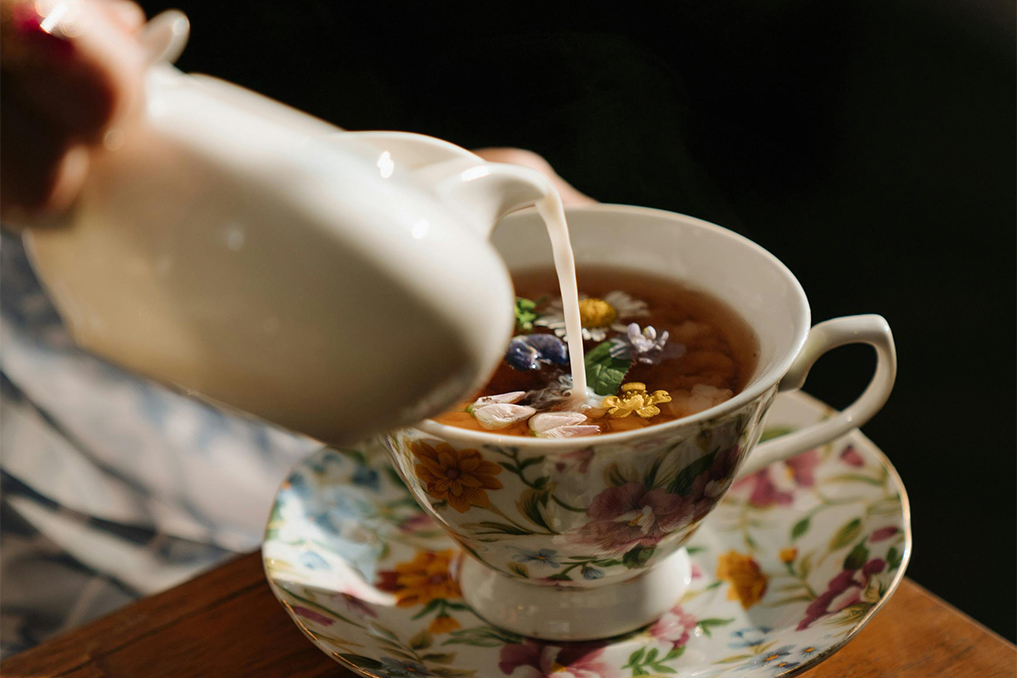
Then you add your honey, your milk, or drink it pure — unadulterated by additives. You personalize this already personal experience, knowing precisely how much milk and how much honey. These intimate details that only those dear to you will care to learn.
Then you find a place to sit, a book to read, settle in for that meeting, or re-open that paper file — refreshed because of your little, 10-minute break in which you made some tea.
The sinister spigot destroyed this delicious process.

The rise of efficiency
Yes, I understand that it is more efficient. But is efficiency the only measurement of success? The most efficient process doesn’t always equate with the best process.
One phrase that I’ve heard time and time again as a writer is how to make the sentence more efficient. Grammarly, God bless her electronic soul, has saved me from many an embarrassing typo. Yet, she is just as much to blame. I cannot tell you how many times this useful tool has highlighted one of the above sentences because it is not efficient.
In his book, Farnsworth’s Classical English Style, Ward Farnsworth addresses the question of efficiency. He agrees that according to the modern critic of writing: “Their advice usually treats just one aim as really important: efficiency. The best writing is the clearest and most concise period.” He goes on to say that this directive originates in the writer’s goal: Get the point across. Never mind the fact that how a point is communicated adds a great deal to the content of the message. As Marshall MacLuhan writes in his book Understanding Media: The medium is the message. Farnsworth concludes: “But though efficiency is the most important value in most kinds of writing, it isn’t the only value… writing can be clear and energetic, clear and dramatic, clear and full of fire. It can also be clear without any of those qualities.”
In our daily communications, speed and efficiency have also taken priority. Gone are the days of addressing a letter: “My dear sir.” Gone are the days of creatively finding the words to express what we feel.
For example: We no longer tell people, “you made me laugh out loud.” The phrase has lost its meaning and visionary power, reduced simply to “lol.” It fails even to express what we experienced, the meaning divorced from the words. What it usually means is that we were vaguely amused by the cat meme someone sent us, and know that they expect a reaction. Here is a reaction saran wrapped for us in the dry unimaginative amalgamation of the letters: l, o, and l. It is not genuine; it is not a process. When was the last time you laughed out loud? When was the last time you listened long enough to let the process take its course? But, by all means, use lol – it’s more efficient after all.

Reclaim process
So much of what is beautiful is sacrificed on the altar of practicality. Whether it be concrete buildings in place of marble, an acronym in place of a turn of phrase, or a metal spigot of boiling water in place of a tea kettle. It is easy to give in to the rapid speed of process and progress, and it is up to us to ensure that we make space for the beautiful, the little, the process of living which makes us human. By recognizing and treasuring these little processes, we can make space for beauty in the midst of our progressing world.
I would like to encourage you, in this final valediction, to change one moment of your day: To notice, appreciate, and guard the little beautiful processes of life. Whether you are making your bed, buying groceries, or making yourself a cup of tea, allow yourself to lean into these little moments of process. Place your throw pillows just so and turn down the covers neatly. Stop for a cup of coffee and then proceed from dry goods to dairy to meat in a steady winding path. Put the kettle on and brew a really good cup of tea. It is the little things that change the world, or at least your day, for the better.
Related Posts

Shrimp Fra Diavolo
By Calista Boskus

7 ways to dress femininely and artistically
By Ava Cilento

Lent challenges for the whole family!
By Grace Porto

40 days of Lenten art and reflection
By Rose Church